
Gray Angelfish
Pomacanthus arcuatus
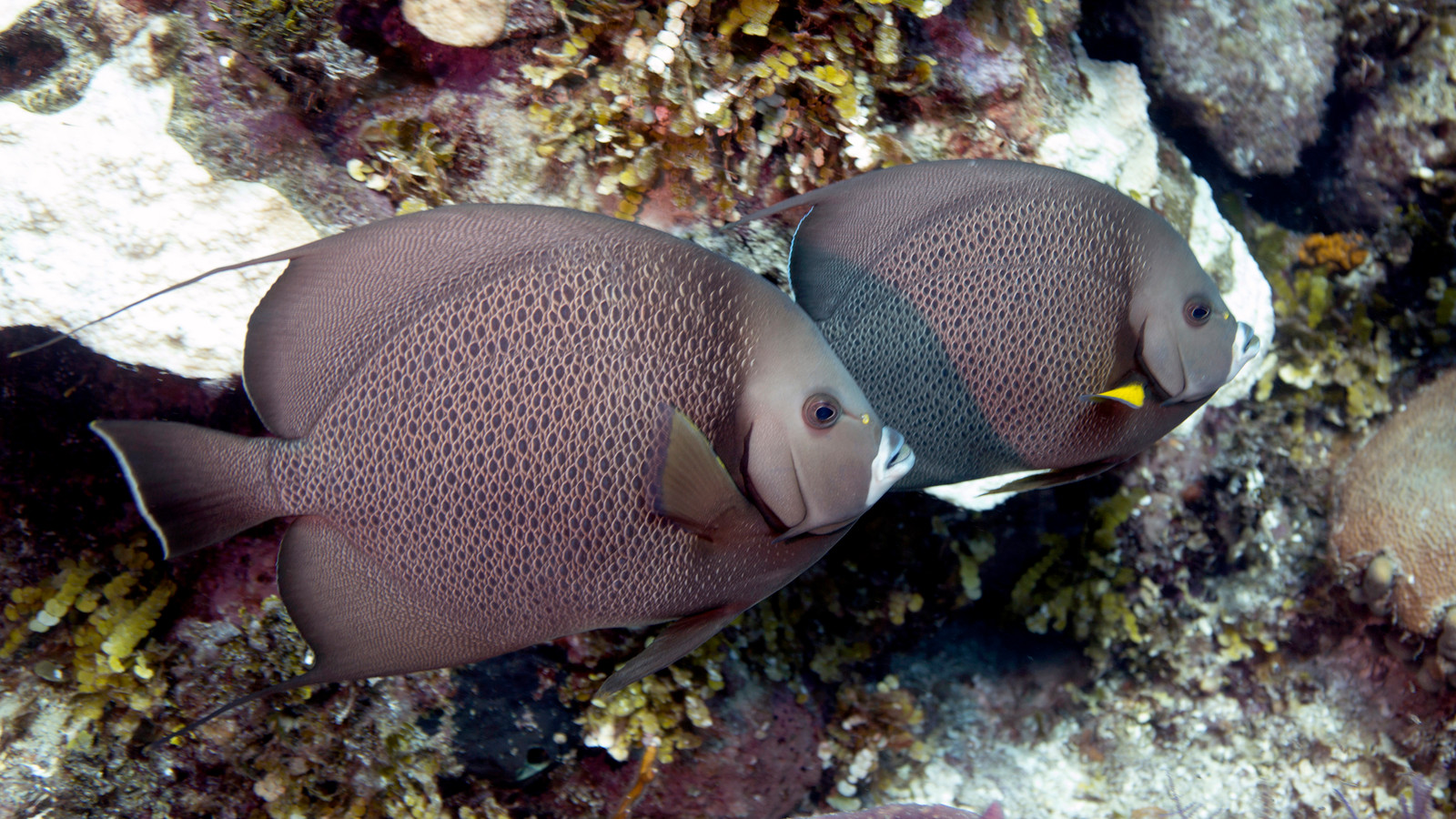
A broad, gray-brown angelfish of Florida reefs with pale scale edges and a light border along its tail.
Gray angelfish are native to Florida's warm reef waters. Adults can appear plain at a distance, but close views reveal a fine pattern of pale-edged scales.
Juveniles are dramatically different, with dark bodies and bright yellow bands. Their markings are useful for separating them from young French angelfish.
Habitat:
Coastal Waters
Area / Range:
South Florida, Florida Keys
Diet:
Sponges dominate the adult diet, with algae, tunicates, hydroids, and other invertebrates also eaten. Juveniles remove parasites from larger fish.
Behavior:
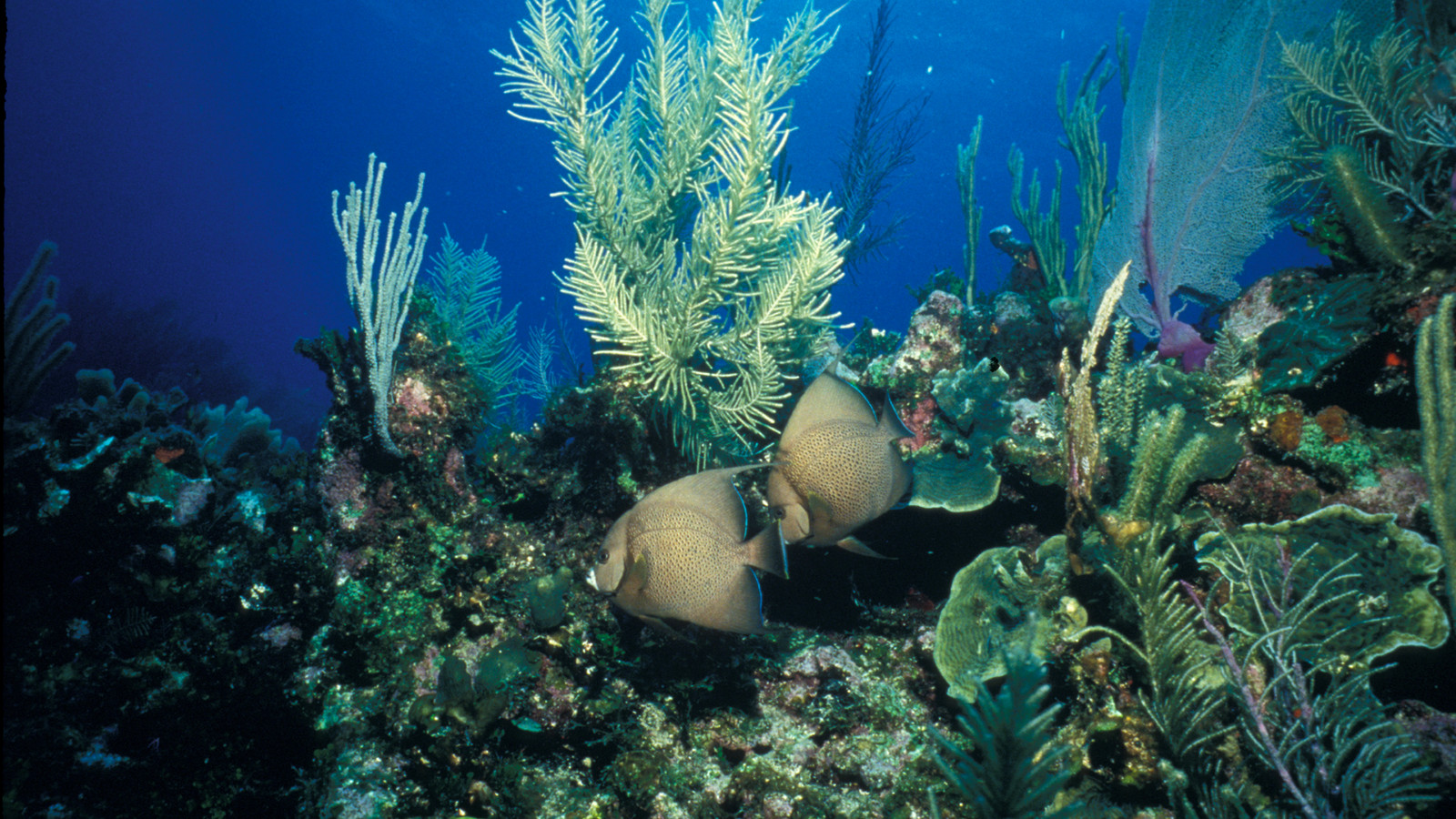
Adults often occur in pairs on reefs, using cover at night. Juveniles occupy shallower patch reefs and grassy habitats and may operate cleaning stations.
Day
Active Times:
Best time to see:
Daylight around coral reefs and patch reefs in South Florida and the Florida Keys.
Florida Native Status:
Native
Conservation Status:
Least Concern (IUCN global assessment); habitat protection and responsible collection remain important.
Safety Level:
Low Risk
Safety Information:
Observe without touching, feeding, or cornering this reef fish. Maintain safe swimming or diving practices, keep fins clear of coral, and leave shelter and feeding areas undisturbed.
Benefits to Property:
Gray angelfish participate in reef feeding and cleaning relationships. Keeping sediment and polluted runoff out of coastal waters supports their habitat.
Property Concerns:
They cause no typical damage to landscaping or structures. Collection and unsuitable aquarium care can remove long-lived reef residents without benefiting local habitat.
Fun Fact:
The yellow band on a young gray angelfish continues through the mouth region, a useful clue when comparing it with a young French angelfish.
Wildlife Laws:
Florida marine-life licensing, size, bag, gear, and closed-area rules apply to collection. Check current FWC requirements and additional park or sanctuary restrictions before taking this species.
Identification:
Adults are gray to brown with pale-edged scales, a whitish mouth, and a pale tail margin. Juveniles have yellow body bands, a yellow mouth ring, and a pale tail edge.
Credits:
- Florida Museum gray angelfish species profile
- Taxonomy or conservation reference
- FWC recreational marine-life collection rules
- Primary photo by R Vasconcellos; CC BY 4.0; bottom-aligned crop
- Primary photo license: CC BY 4.0
- Secondary photo by National Park Service; Public domain; center-cropped
- Secondary photo license: Public domain