
Gray Kingbird
Tyrannus dominicensis
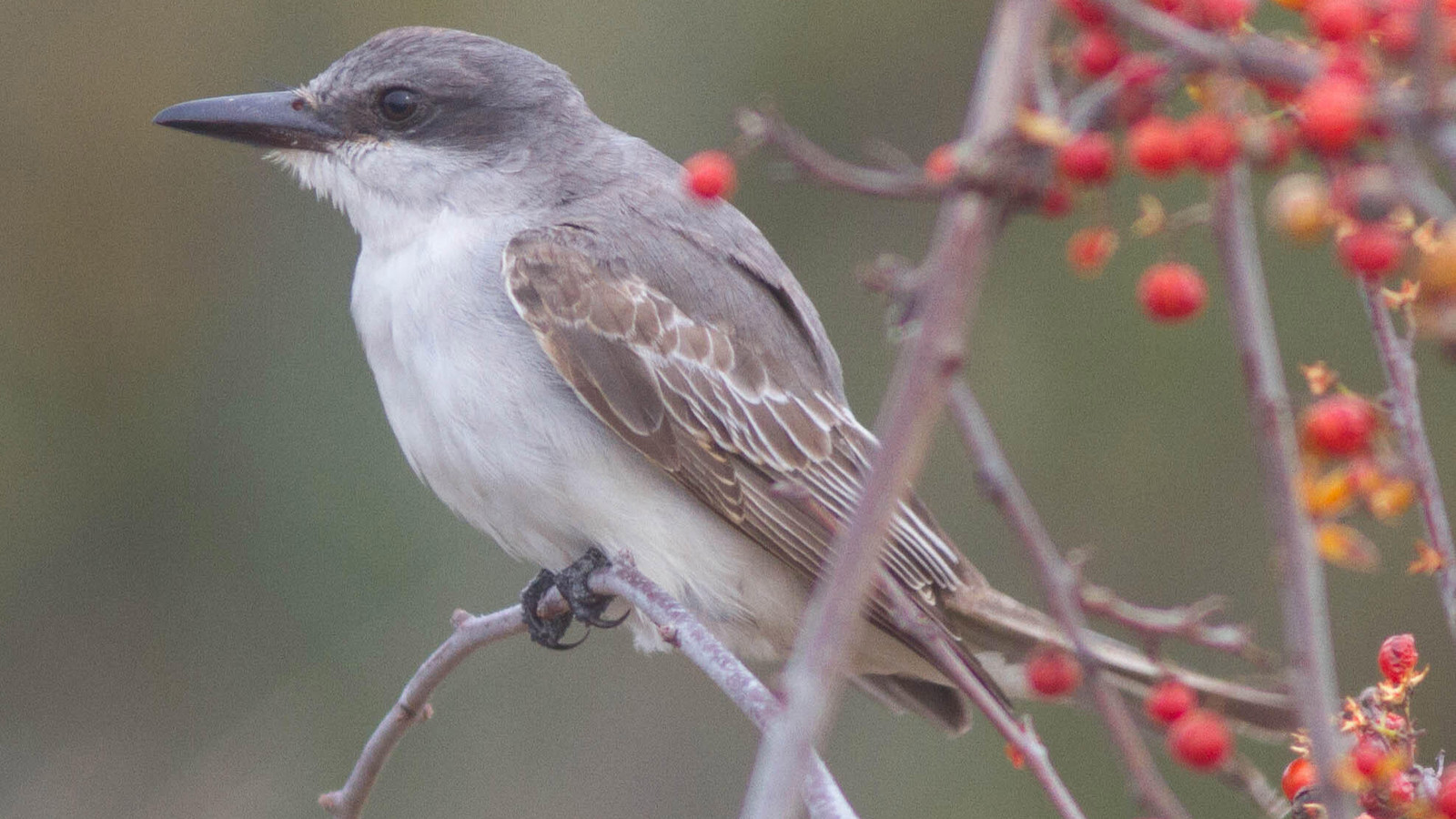
A bold coastal flycatcher that spends Florida’s warm season hunting insects from wires, treetops, and exposed branches.
Gray Kingbirds return to coastal and southern Florida during spring and remain through summer. They use mangrove edges, open neighborhoods, parks, utility corridors, and the Florida Keys.
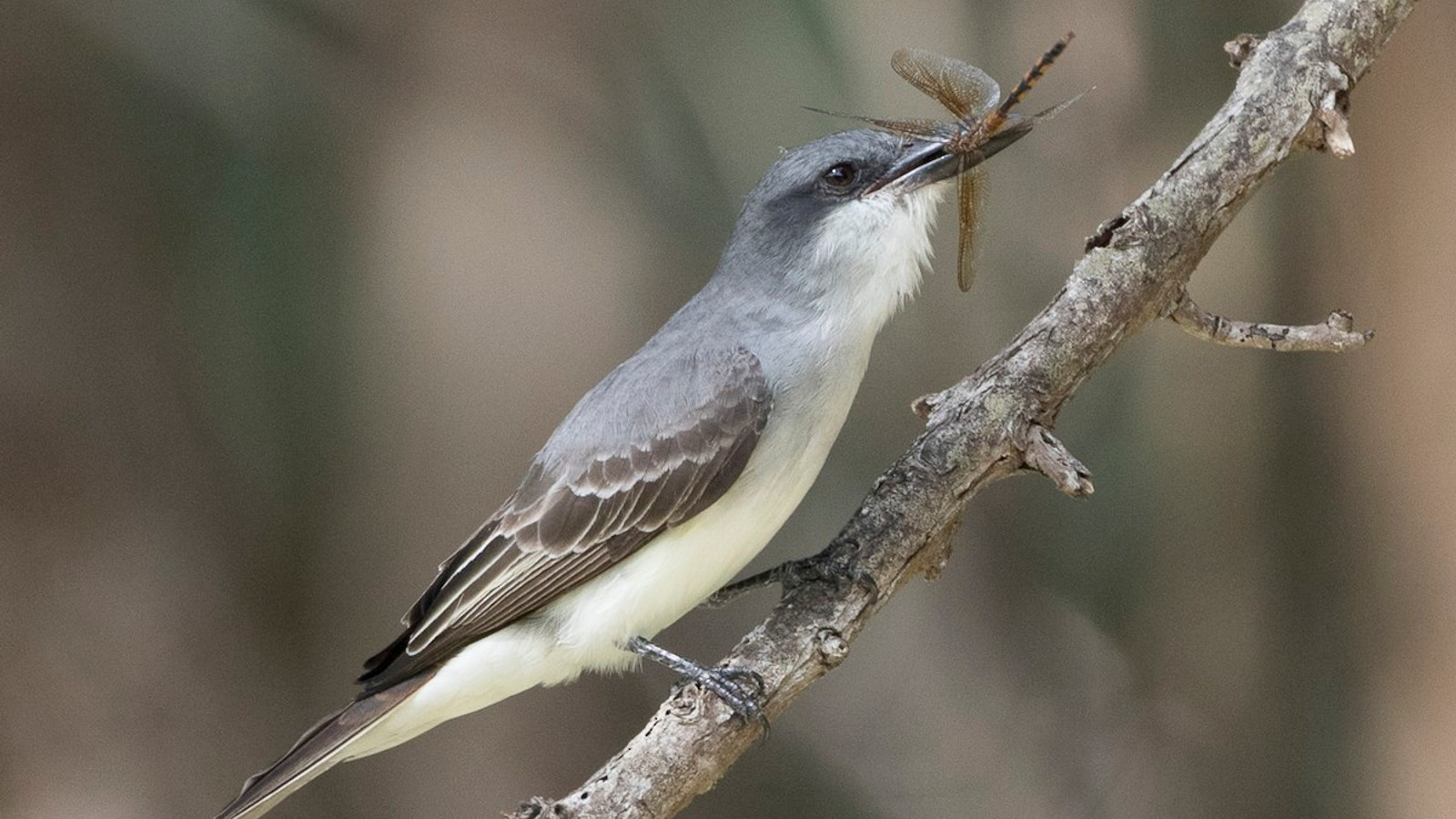
From an exposed perch, the bird darts out after large flying insects and returns to the same lookout. Native trees and open hunting space support nesting pairs.
Habitat:
Mangroves and Salt Marshes, Urban and Residential Areas, Forests and Woodlands
Area / Range:
South Florida, Florida Keys, Atlantic Coast, Gulf Coast
Diet:
Catches dragonflies, beetles, wasps, moths, and other flying insects, and also eats small fruits.
Behavior:
Perches conspicuously, makes rapid aerial sallies, and aggressively chases crows, hawks, and other intruders near the nest.
Daytime
Active Times:
Best time to see:
April through September on coastal wires, treetops, mangrove edges, and open South Florida landscapes.
Florida Native Status:
Native seasonal resident
Conservation Status:
IUCN Least Concern; Florida nesting habitat is concentrated near coasts and the Keys.
Safety Level:
Low
Safety Information:
Watch active nests from a distance. Adults may dive toward people or pets that remain close to the nest.
Benefits to Property:
Consumes many large flying insects around gardens, streets, parks, and coastal properties.
Property Concerns:
Nesting birds may defend trees, wires, or structures for several weeks. Avoid pruning near an active nest.
Fun Fact:
- It fearlessly chases much larger birds.
- The yellow crown patch is usually concealed.
- Florida marks the northern edge of its main breeding range.
Wildlife Laws:
Protected under the Migratory Bird Treaty Act. Do not harm adults or disturb active nests, eggs, or young.
Identification:
Large gray-and-white flycatcher with a sturdy black bill, dark eye mask, pale breast, and slightly notched tail. A yellow crown patch is usually hidden.