
Gray Triggerfish
Balistes capriscus
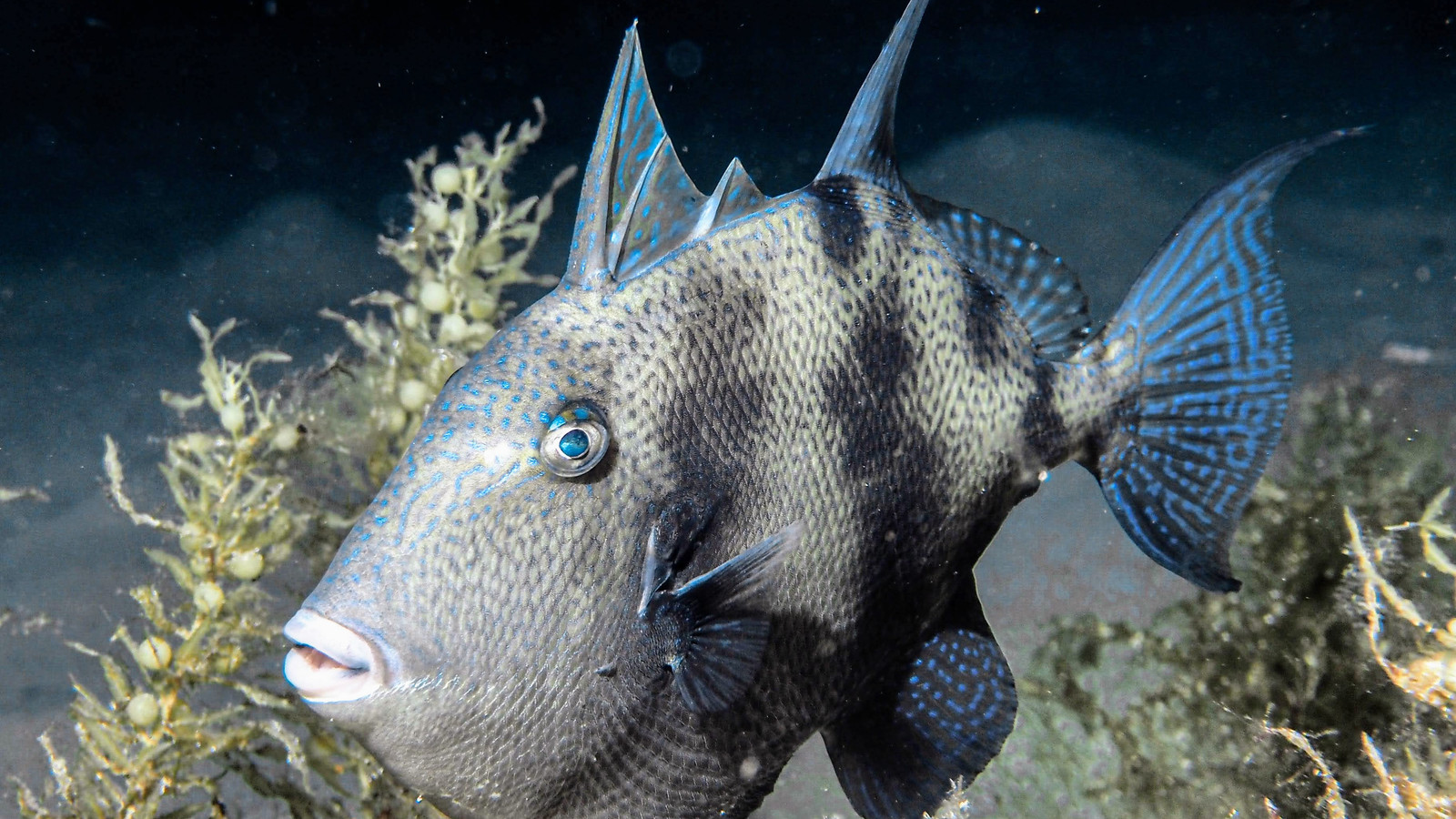
A sturdy reef fish with a locking dorsal spine, gray triggerfish patrol Florida's coastal hardbottom and reefs.
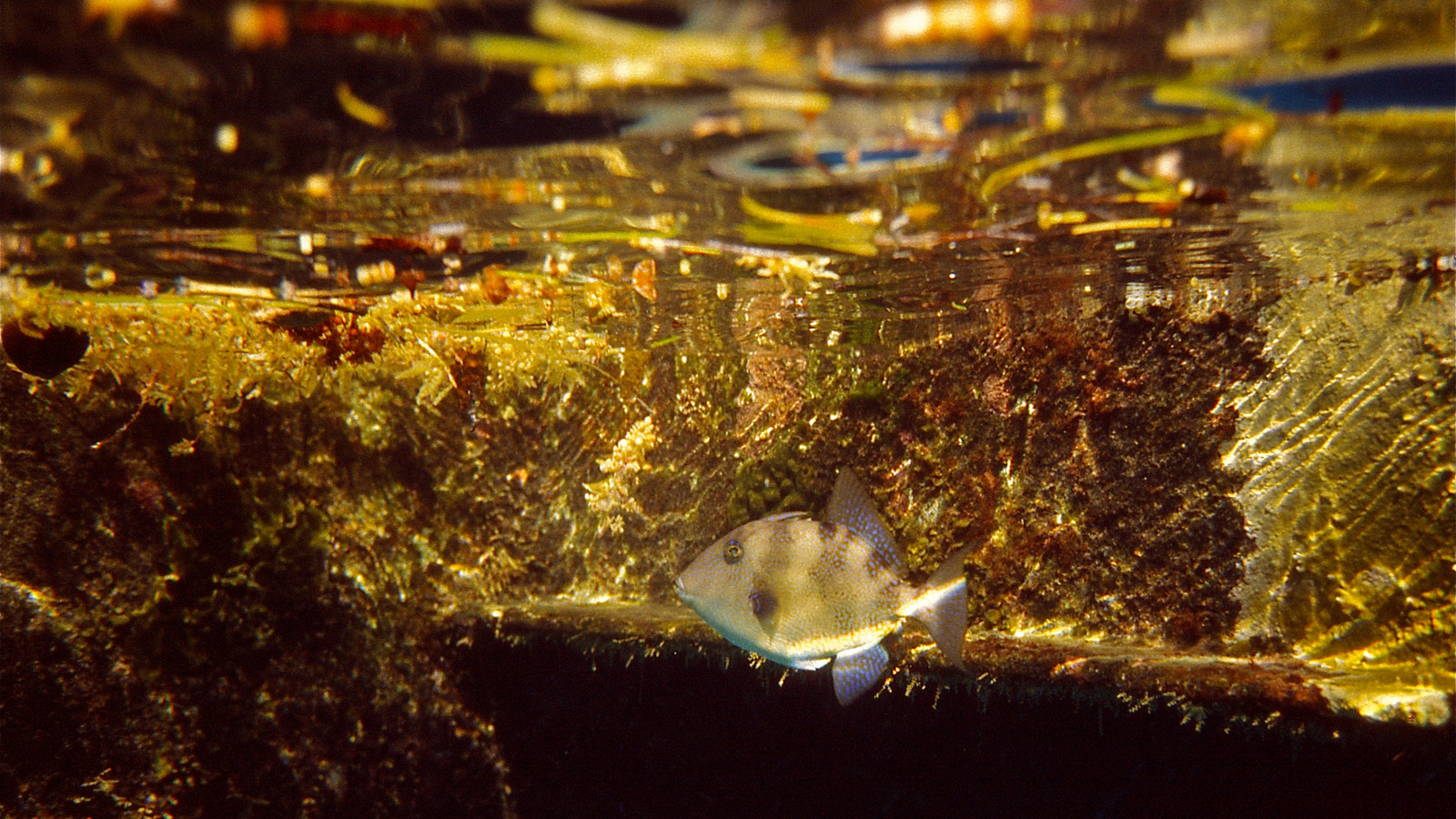
The gray triggerfish is a native Atlantic reef fish found along both Florida coasts. Adults use reefs, ledges, and other hardbottom; young fish often shelter among floating Sargassum. Its deep, compressed body, tough skin, and small powerful mouth suit a life around rocks and shelled invertebrates.
When alarmed, a gray triggerfish can wedge into a crevice and lock its first dorsal spine upright. This same spine gives the triggerfish its name.
Habitat:
Coastal Waters, Estuaries and Bays
Area / Range:
Atlantic Coast, Gulf Coast, Florida Keys
Diet:
A daytime bottom-feeder, it eats crabs, shrimp, sea urchins, sand dollars, sea stars, and mollusks. It can blow water across sand to uncover buried prey.
Behavior:
Adults usually move alone or in small groups near reefs and ledges. A threatened fish may lock its dorsal spine inside a crevice; nesting adults can defend eggs on the bottom. Juveniles may travel with floating Sargassum.
Day
Active Times:
Best time to see:
Daylight while snorkeling or diving near coastal reefs, ledges, and hardbottom.
Florida Native Status:
Native
Conservation Status:
Not currently considered threatened or vulnerable by IUCN; fishery-managed in Florida.
Safety Level:
Use Caution
Safety Information:
Give nesting fish space, and do not put fingers near the strong teeth or dorsal spines. Do not handle a fish unnecessarily. Consumption has been associated with ciguatera poisoning in some cases.
Benefits to Property:
This fish helps balance coastal food webs by feeding on bottom-dwelling invertebrates. It is also an engaging species for reef wildlife viewing.
Property Concerns:
It is a marine fish, not a typical yard visitor. Coastal property owners can help by preventing runoff and protecting nearshore habitat; anglers should check current harvest rules.
Fun Fact:
Its front dorsal spine locks upright and is released by pressing the smaller second spine, much like a trigger.
Young gray triggerfish often use floating Sargassum as nursery habitat before moving to bottom reefs.
Wildlife Laws:
Gray triggerfish harvest is regulated by the Florida Fish and Wildlife Conservation Commission. Gulf and Atlantic state waters have different size, bag, and season rules; federal waters and protected areas may differ. Check the current FWC rules before fishing.
Identification:
Look for a deep, laterally flattened gray to olive-brown body, a small mouth with strong teeth, and two dorsal fins. The first dorsal fin has three stout spines; adults may show blue spots and lines around the face and fins. Large adults can have elongated tail-fin lobes.
Juveniles may look yellower and more patterned than adults, so check the body shape and dorsal spines as well as color.