
Great Blue Heron
Ardea herodias
Its neck folds into an S shape during flight while the legs trail behind.
Its neck folds into an S shape during flight while the legs trail behind. Protected under the Migratory Bird Treaty Act. Avoid nesting colonies and active nests.
Habitat:
Freshwater Wetlands, Lakes and Ponds, Mangroves and Salt Marshes, Coastal Waters
Area / Range:
Statewide
Diet:
Fish, frogs, snakes, insects, small mammals, and young birds.
Behavior:
Stands motionless or walks slowly before striking prey with its bill.
Day, Dawn, and Dusk
Active Times:
Best time to see:
Look during day, dawn, and dusk in suitable Florida habitat.
Florida Native Status:
Native
Conservation Status:
Protected migratory bird
Safety Level:
Harmless. Keep Distance
Safety Information:
Protected under the Migratory Bird Treaty Act. Avoid nesting colonies and active nests.
Benefits to Property:
Controls fish, frogs, rodents, and other small prey.
Property Concerns:
May take ornamental pond fish.
Fun Fact:
Its neck folds into an S shape during flight while the legs trail behind.
Wildlife Laws:
Protected under the Migratory Bird Treaty Act. Avoid nesting colonies and active nests.
Identification:
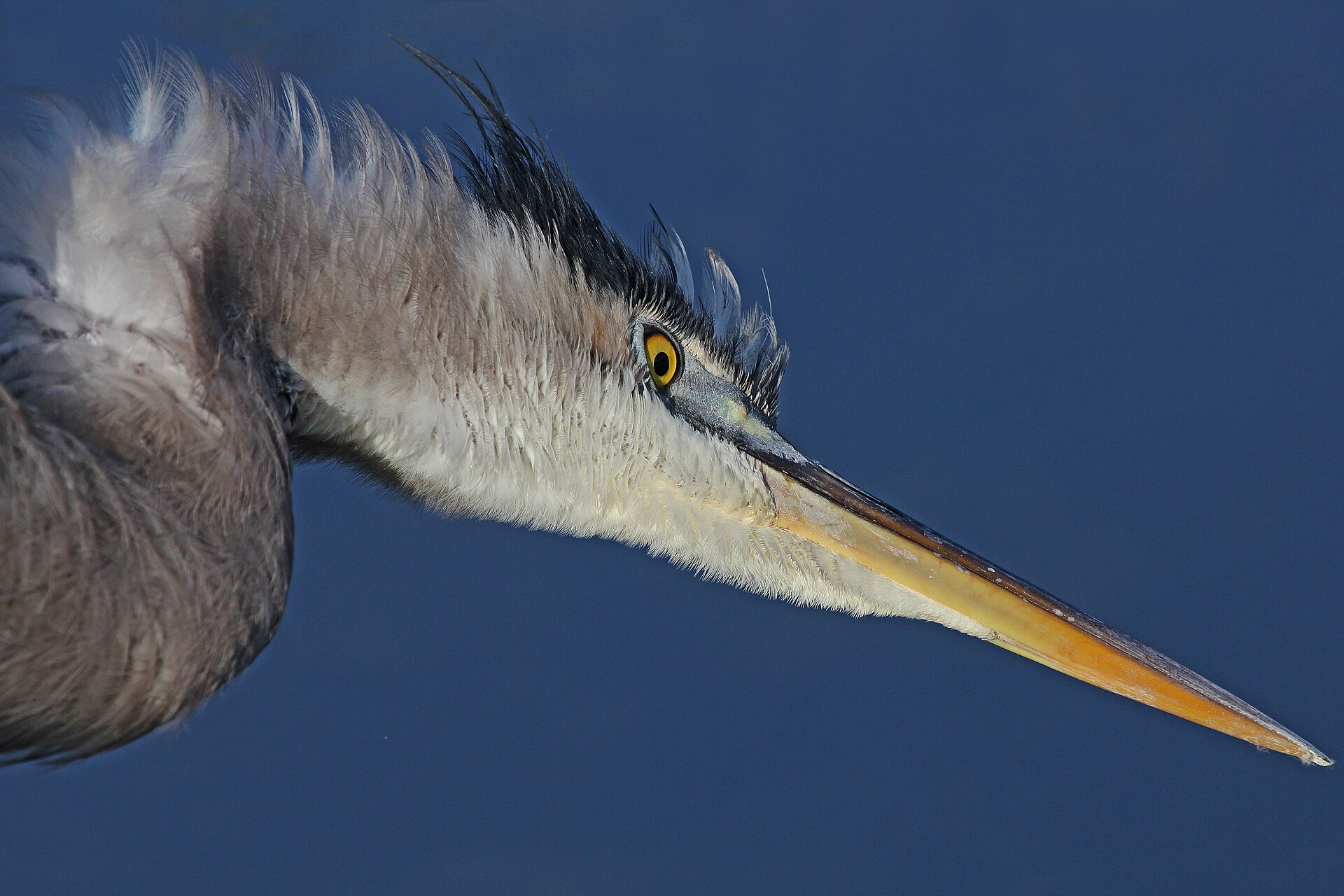
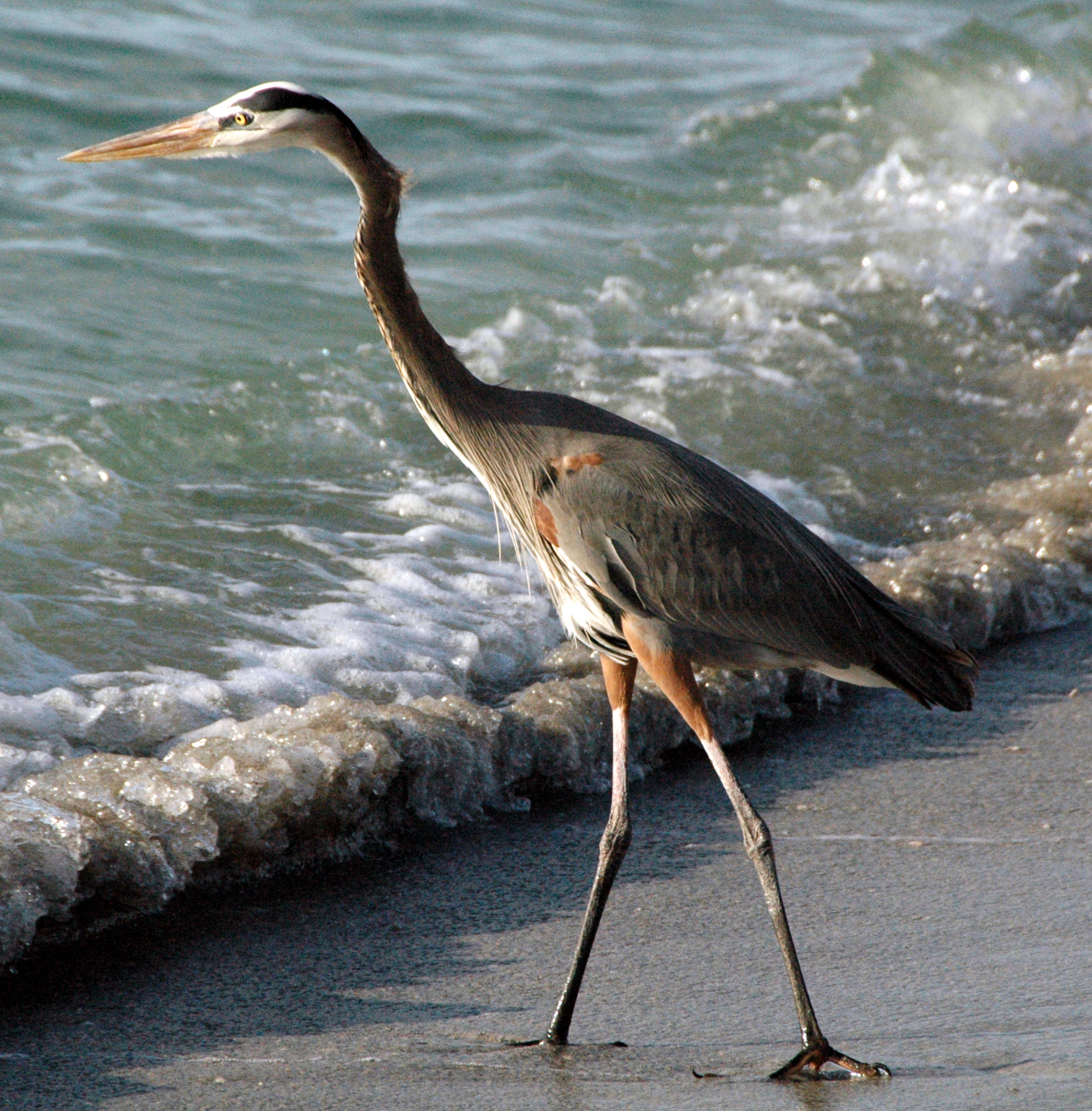
Very large blue-gray heron with long legs, an S-shaped neck, and a heavy pointed bill.
Credits:
Facts: wildlife reference. Images: primary image and secondary image, Wikimedia Commons.