
Great Blue Skimmer
Libellula vibrans
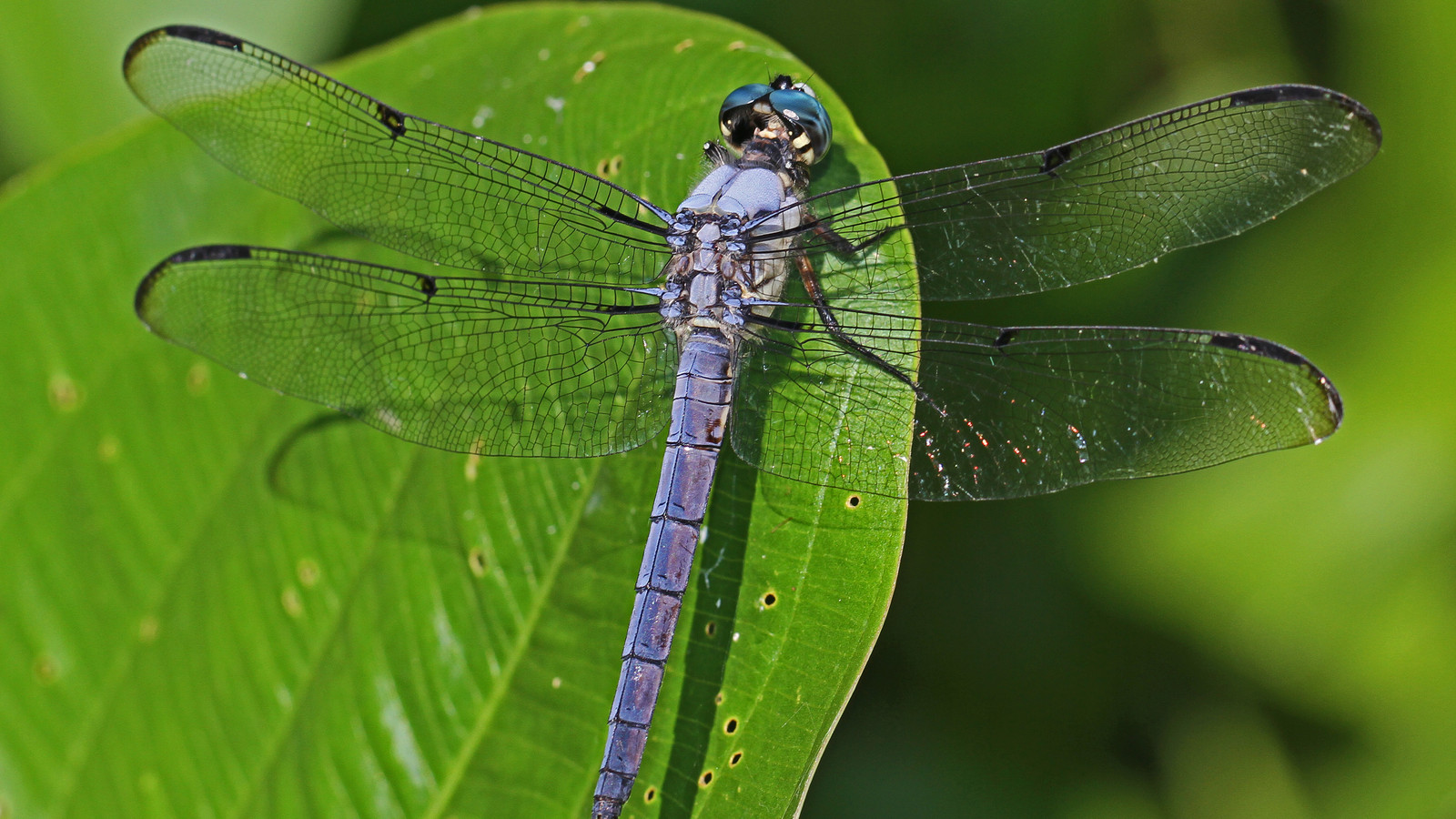
A large woodland dragonfly of shaded ponds, swamps, and slow streams, with mature males turning powdery blue.
The great blue skimmer is one of the largest North American skimmer dragonflies. It favors wooded wetlands and shaded, slow or still water, often perching on trunks, branches, and broad leaves at the forest edge.
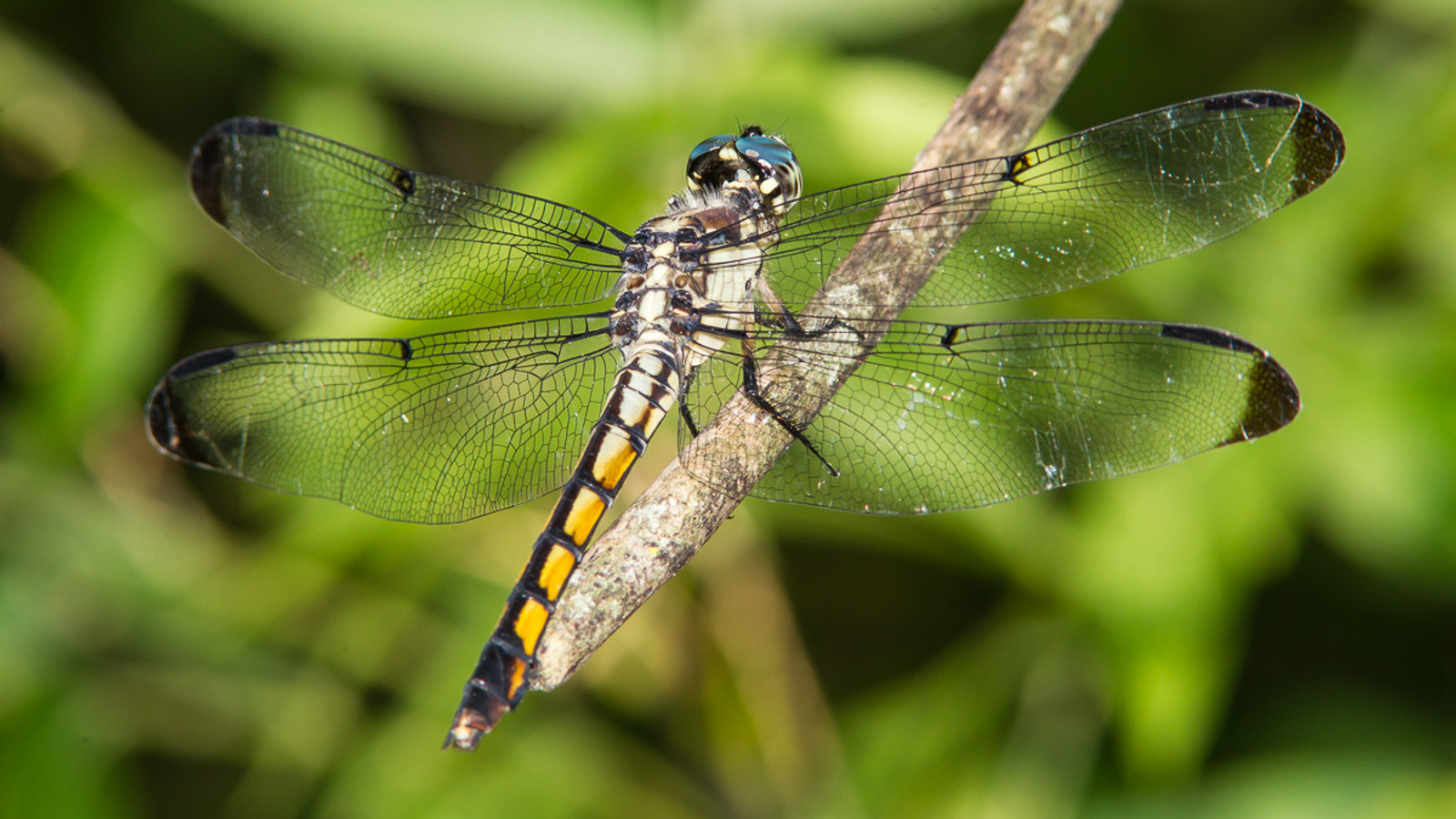
Mature males develop blue pruinescence over the thorax and abdomen, while females and young males retain brown and yellow patterning.
Habitat:
Forests and Woodlands, Freshwater Wetlands, Lakes and Ponds, Rivers and Springs
Area / Range:
Statewide
Diet:
Adults hunt mosquitoes, flies, moths, and other flying insects from perches. Aquatic nymphs ambush insect larvae, tadpoles, and other small prey.
Behavior:
Adults make short flights from a favored perch and often return to the same spot. Males patrol breeding habitat along shaded water; females lay eggs over the water.
Day
Active Times:
Best time to see:
Warm daylight hours beside wooded ponds, swamps, and slow streams
Florida Native Status:
Native
Conservation Status:
Common in suitable habitat and not federally listed
Safety Level:
Harmless
Safety Information:
Great blue skimmers do not sting and pose no danger to people or pets. Handle only when necessary because dragonfly wings are easily damaged.
Benefits to Property:
Adults remove flying insects and their aquatic young help regulate pond invertebrates, supporting a diverse wetland food web.
Property Concerns:
They cause no property damage. Loss of shaded shoreline vegetation, wetland drainage, and broad-spectrum pesticides can reduce local numbers.
Fun Fact:
The great blue skimmer is the largest member of its genus in much of the Southeast. Its species name vibrans refers to vibrating or quivering.
Wildlife Laws:
Protect dragonflies by preserving shoreline plants and avoiding pesticide drift into water. Collection rules may apply on parks, preserves, and other public lands.
Identification:
Mature males are large and blue-gray with dark wing tips and a pale face. Females and immature males are brown with a broad yellow abdominal stripe and yellow side markings. Adults are commonly 2 to 2.4 inches long.