
Great Purple Hairstreak
Atlides halesus
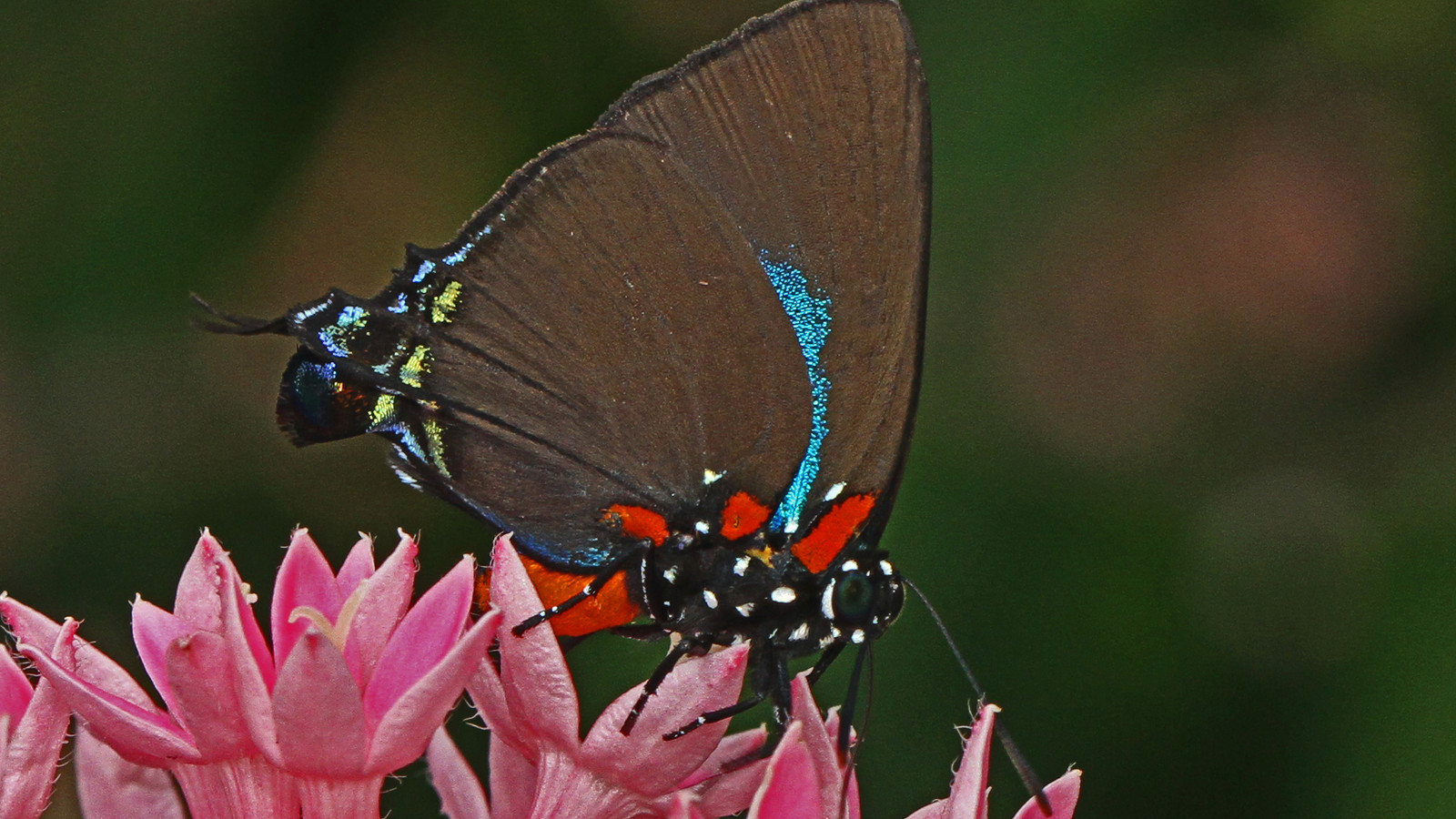
A striking native butterfly with iridescent blue upper wings, orange spots below, and caterpillars that depend on mistletoe.
The great purple hairstreak, also called the great blue hairstreak, is a native butterfly associated with trees bearing oak mistletoe. Despite its common name, the upper wings are iridescent blue rather than purple.
Adults visit flowers for nectar and may be seen year-round in Florida, though they can be easy to miss high in the tree canopy.
Habitat:
Forests and Woodlands, Urban and Residential Areas
Area / Range:
North Florida, Central Florida
Diet:
Caterpillars feed on oak mistletoe, Phoradendron leucarpum, in the southeastern United States. Adults take nectar from many flowers, including beggarticks, wild plum, goldenrod, and saw palmetto.
Behavior:
Males perch in treetops during the afternoon while seeking mates. Females lay eggs on mistletoe, and mature larvae leave the host to pupate in bark crevices or leaf litter.
Day
Active Times:
Best time to see:
Daylight year-round in Florida, especially at nectar flowers near trees with oak mistletoe; males may be high in the canopy in the afternoon.
Florida Native Status:
Native
Conservation Status:
Native; no specific statewide imperilment noted in the cited UF/IFAS profile.
Safety Level:
Low Risk
Safety Information:
Harmless to people. Observe without handling its delicate wings, and avoid unnecessary insecticide use around nectar and host plants.
Benefits to Property:
Adult nectar visits contribute to native butterfly diversity in flowering landscapes. Mistletoe-bearing trees provide the caterpillar's essential host plant.
Property Concerns:
Larvae require oak mistletoe, a tree parasite that some property owners manage. Removing all mistletoe from a site also removes this butterfly's local breeding resource.
Fun Fact:
Its familiar name is misleading: the bright upper wings are blue, not truly purple. Each hindwing carries two tails of unequal length that are characteristic of hairstreak butterflies.
Wildlife Laws:
Observe and photograph rather than collect in parks or preserves without checking site rules. Check current state and local regulations before collecting wild butterflies.
Identification:
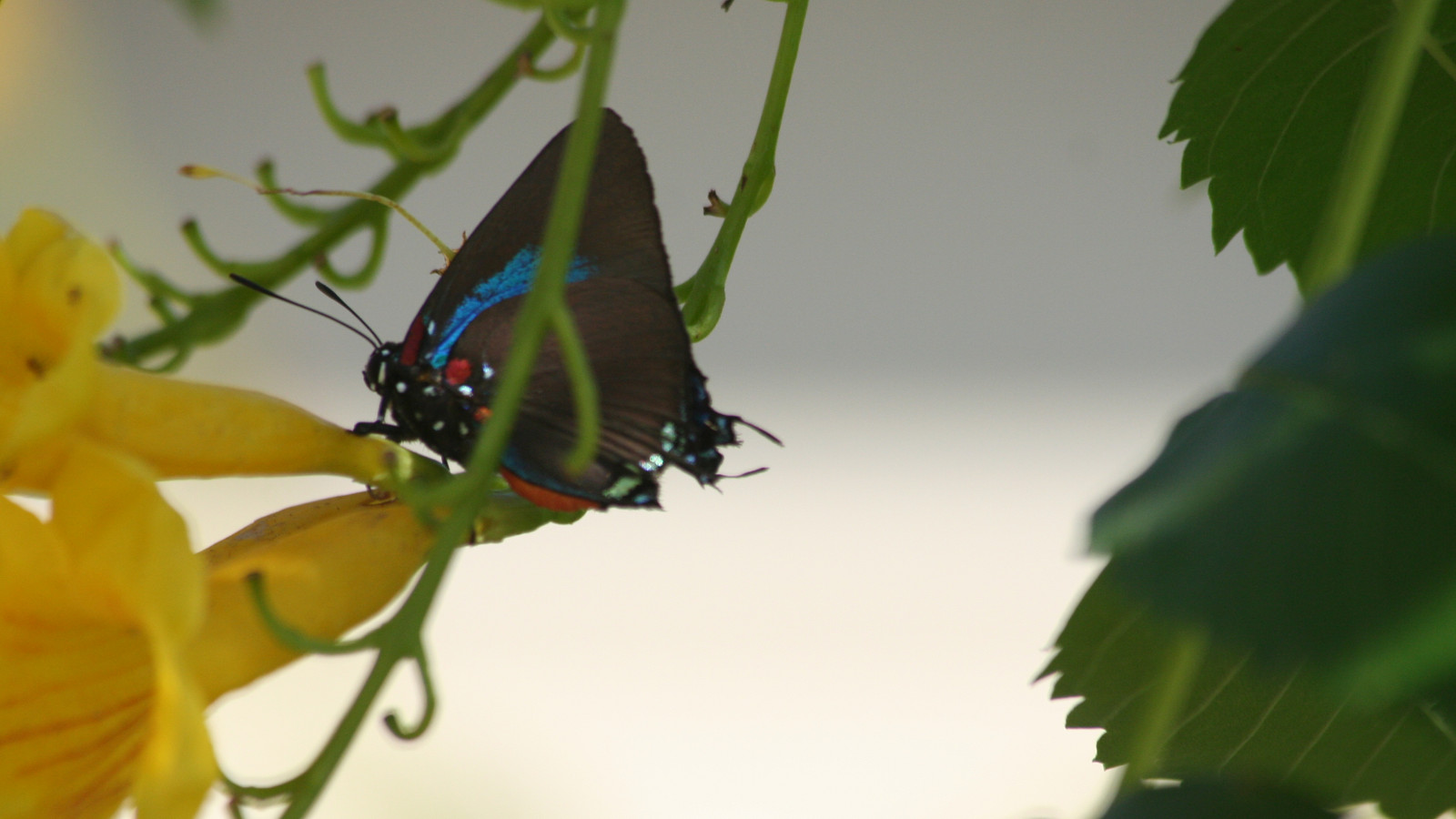
Adults have a wingspan of about 1.25–1.5 inches. Blue upper wings have dark borders; the dark undersides show bright reddish-orange basal spots and blue-green markings near two unequal tails on each hindwing. The underside of the abdomen is orange.