
Green Anole
Anolis carolinensis
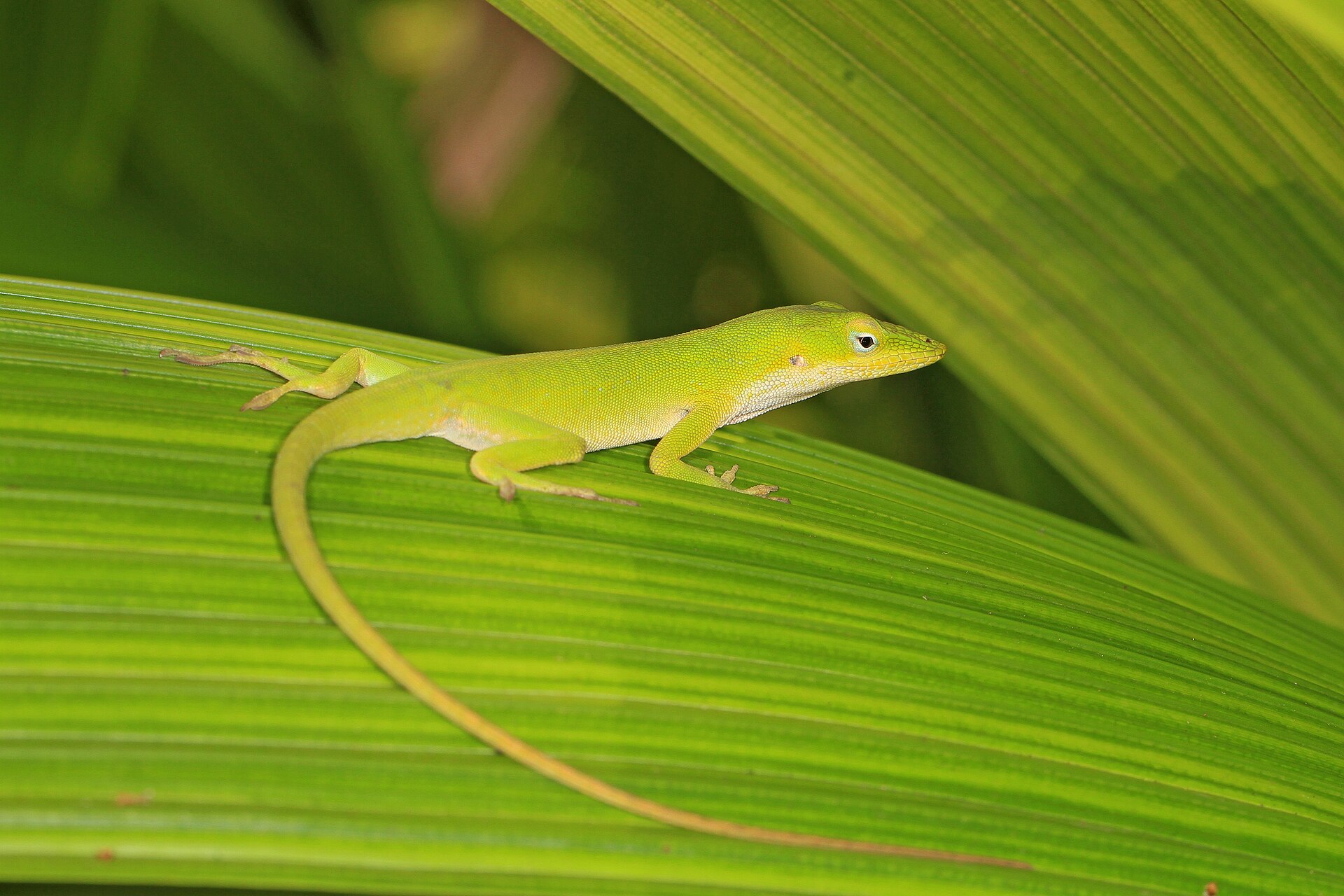
The green anole is Florida’s only native anole and a beneficial predator of insects and spiders in trees, shrubs, and gardens.
Green anoles live in natural and suburban habitats across Florida. They climb well and spend much of their time above the ground on shrubs, vines, fences, and trees.
The introduced brown anole often occupies lower surfaces. Green anoles respond by moving higher into layered vegetation.
Habitat:
Forests and Woodlands, Urban and Residential Areas
Area / Range:
Statewide
Diet:
Green anoles eat beetles, flies, moths, small roaches, spiders, and other small invertebrates.
Behavior:
They hunt from elevated perches, defend territories, perform head bobs, and extend the dewlap during courtship and territorial displays.
Day
Active Times:
Best time to see:
Warm daylight hours on shrubs, trees, fences, and sunny leaves.
Florida Native Status:
Native
Conservation Status:
Common native species facing competition from introduced anoles.
Safety Level:
Harmless
Safety Information:
Observe without handling. Provide layered shrubs and avoid broad pesticide use if you want to support anoles and their insect prey.
Benefits to Property:
Green anoles eat many insects and spiders. Their presence adds visible native wildlife to a Florida-friendly landscape.
Property Concerns:
Green anoles cause little property damage. Cats and pesticide exposure pose greater risks to the lizards.
Fun Fact:
Despite being called American chameleons, green anoles are not true chameleons. Color shifts respond to temperature, stress, activity, and surroundings.
Wildlife Laws:
The green anole is native wildlife. Avoid unnecessary capture, collection, or harm and follow current state wildlife rules.
Identification:
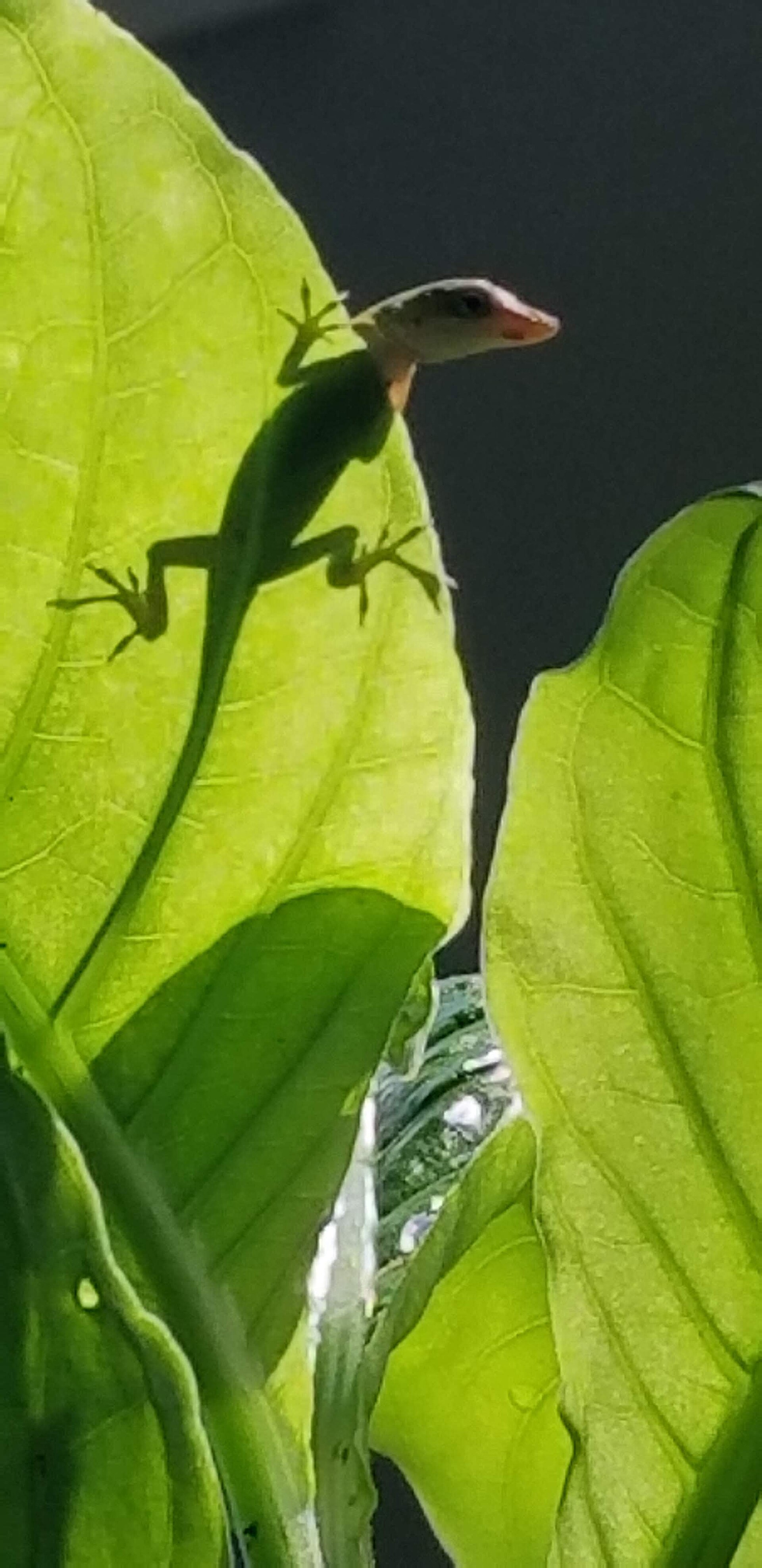
Green anoles shift between bright green, brown, and gray. Adults reach 5 to 8 inches. Males display a pink or reddish throat fan called a dewlap.
Credits:
Facts: UF/IFAS Gardening Solutions. Images: green anole portrait and native Florida green anole, Wikimedia Commons.