
Green-Winged Teal
Anas crecca carolinensis
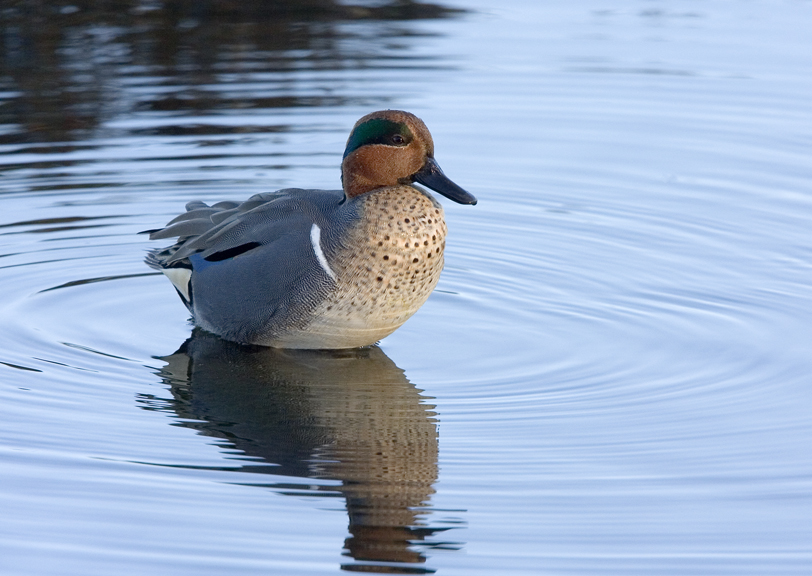
A small dabbling duck of Florida's winter wetlands, with males showing a chestnut head and green eye stripe.
Green-Winged Teal are small ducks that use shallow marshes, flooded fields, and estuarine edges during migration and winter. They often gather in flocks with other dabbling ducks.
The North American form is sometimes treated as a subspecies of the Common Teal and sometimes as a separate species. The green wing patch is easiest to see in flight.
Habitat:
Freshwater Wetlands, Estuaries and Bays, Mangroves and Salt Marshes
Area / Range:
Statewide
Diet:
Seeds of wetland plants, aquatic vegetation, and small aquatic invertebrates are taken in shallow water and muddy margins.
Behavior:
Teal dabble and tip forward in shallow water rather than diving. Flocks move between feeding areas and sheltered resting sites.
Day
Active Times:
Best time to see:
Fall through early spring in shallow wetlands and flooded fields
Florida Native Status:
Native Migratory Bird
Conservation Status:
Widespread migratory waterfowl; wetland quality and regulated harvest are important to its management.
Safety Level:
Harmless. Respect Nests
Safety Information:
Harmless to people and pets. Observe from a distance and avoid feeding or chasing flocks.
Benefits to Property:
Teal add wildlife diversity to healthy wetlands and participate in wetland seed and invertebrate food webs.
Property Concerns:
They do not harm landscapes. Avoid feeding ducks, dumping debris into wetlands, or disturbing roosting flocks.
Fun Fact:
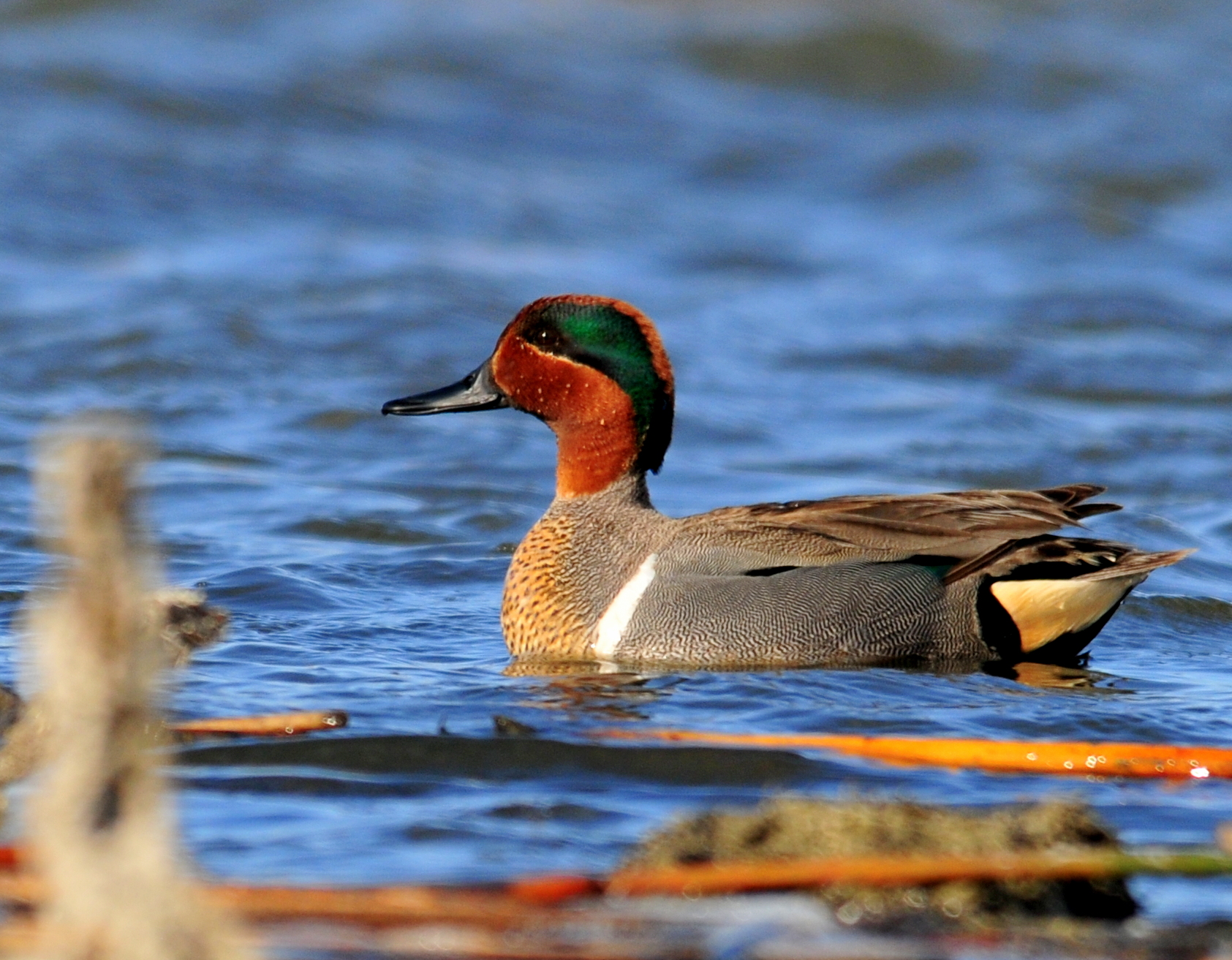
This is among North America's smallest dabbling ducks. A male's vertical white side stripe helps distinguish the American form from the Eurasian form.
Wildlife Laws:
Green-Winged Teal are regulated migratory game birds. Hunting is allowed only under current federal and Florida seasons, limits, licenses, and permit requirements. Do not take or possess birds outside those rules.
Identification:
Breeding-plumage males have a chestnut head, broad green patch behind the eye, gray body, and vertical white stripe on the side.
Females are mottled brown. Both sexes have a bright green wing speculum that may be hidden while the bird rests.