
Hogfish
Lachnolaimus maximus
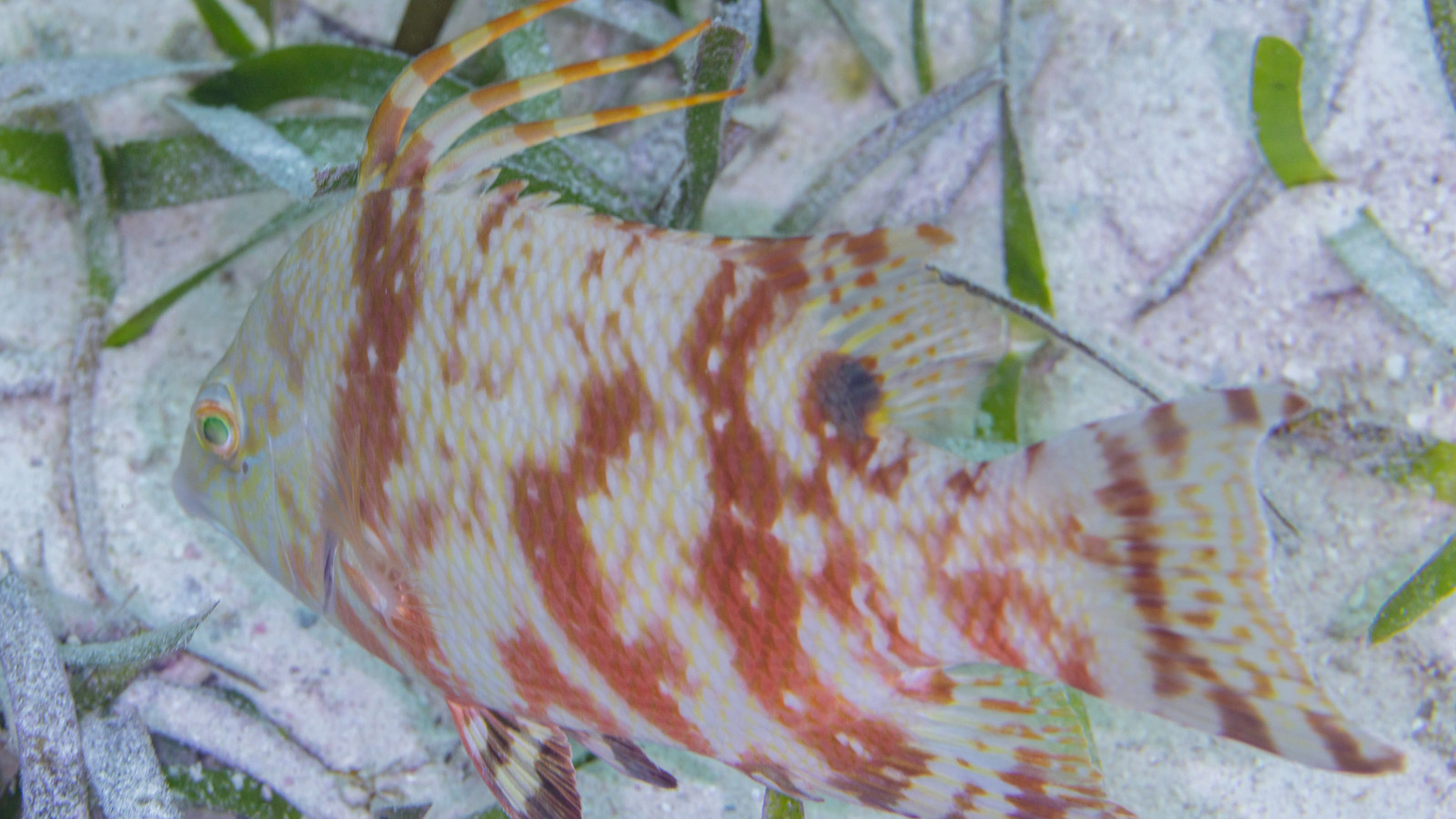
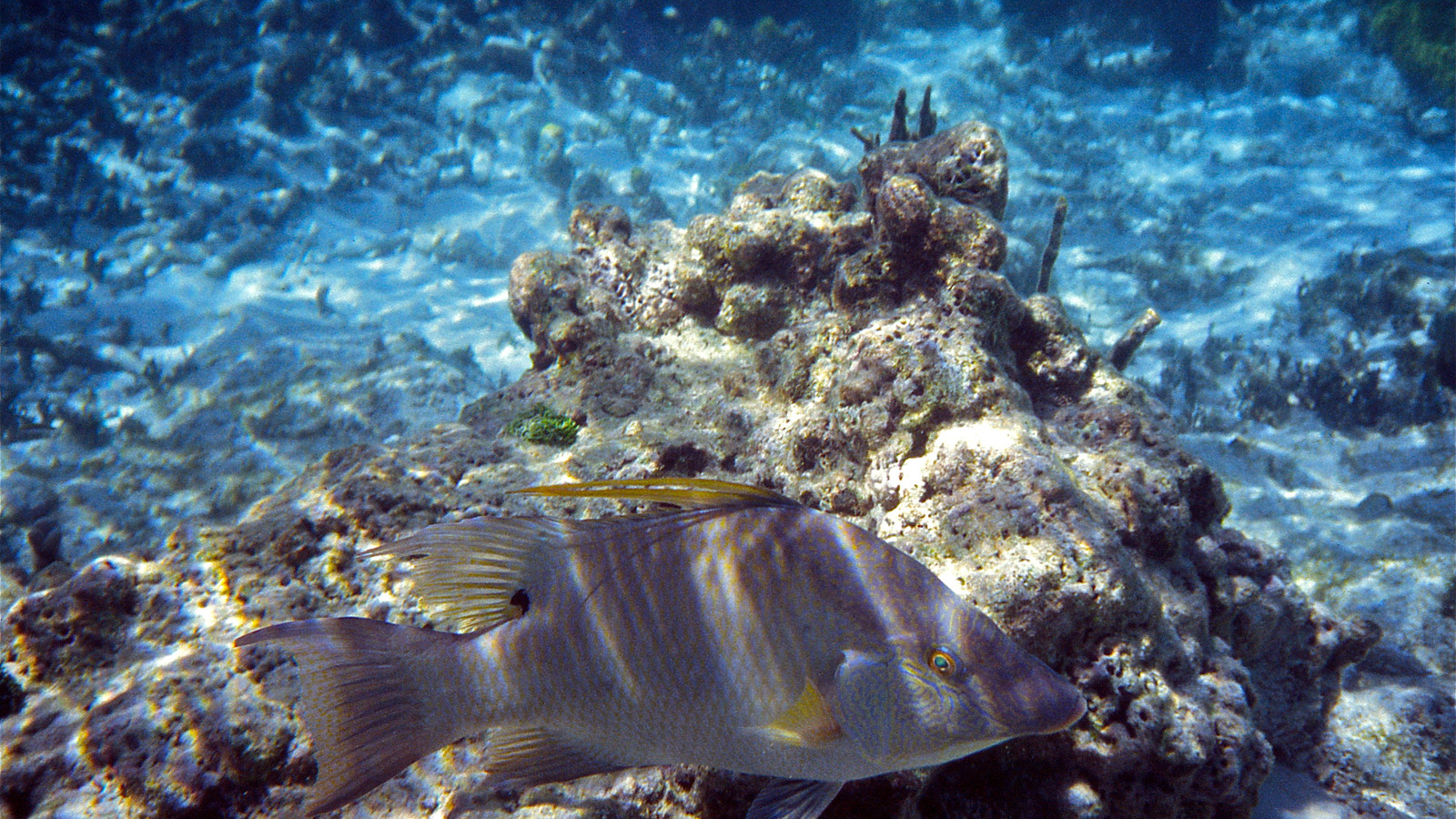
A large native wrasse with a pig-like snout, elongated dorsal spines, and a habit of rooting through sand for crabs, mollusks, and sea urchins.
Hogfish are native western Atlantic wrasses found on Florida reefs and hard bottom. Their long, pig-like snout and protrusible jaws are specialized for searching the seafloor for buried prey.
Juveniles often use seagrass beds, including areas of Florida Bay, while larger adults are strongly associated with reefs and open hard bottom.
Habitat:
Coastal Waters, Estuaries and Bays
Area / Range:
South Florida, Florida Keys, Atlantic Coast, Gulf Coast
Diet:
Hogfish use their snout and jaws to root out mollusks, crabs, sea urchins, and other bottom-dwelling invertebrates from sand, rubble, and reef structure.
Behavior:
They forage by day, often swimming close to the bottom and turning over loose material in search of prey. Hogfish are protogynous hermaphrodites: individuals begin life as females, and some later change into larger males that maintain social groups.
Day
Active Times:
Best time to see:
Daylight over reefs, hard bottom, rubble, or nearby seagrass in South Florida and the Florida Keys.
Florida Native Status:
Native
Conservation Status:
Native reef fish managed through regional size, bag, and seasonal harvest rules because it is vulnerable to fishing pressure.
Safety Level:
Safe With Normal Fishing Care
Safety Information:
Hogfish normally pose little risk to swimmers and divers. Anglers should use normal hook and spine care, follow current harvest rules, and keep fingers away from the fish's strong jaws.
Benefits to Property:
By consuming crabs, mollusks, and sea urchins, hogfish contribute to the structure and balance of reef and hard-bottom food webs.
Property Concerns:
It creates no typical land-property problem. Heavy fishing can reduce local numbers and the abundance of large males, making compliance with regional harvest limits important.
Fun Fact:
Hogfish are wrasses, not snappers, despite the old common name hog snapper. They can change sex from female to male, and their pig-like snout gives both the fish and its genus their familiar identity.
Wildlife Laws:
Hogfish harvest is regulated by region, with current minimum-size, bag-limit, season, and reef-fish gear requirements. Atlantic and Florida Keys rules differ from Gulf rules, so anglers should check the current FWC hogfish page for the exact location and date before fishing.
Identification:
Hogfish have a high, strongly compressed body; an elongated snout; thick lips; and the first three dorsal spines extended into long streamers. Color varies with age, sex, and surroundings from pale mottled tan or reddish brown to darker adults, but a dark spot near the rear of the dorsal fin is typical.