
Indigo Bunting
Passerina cyanea
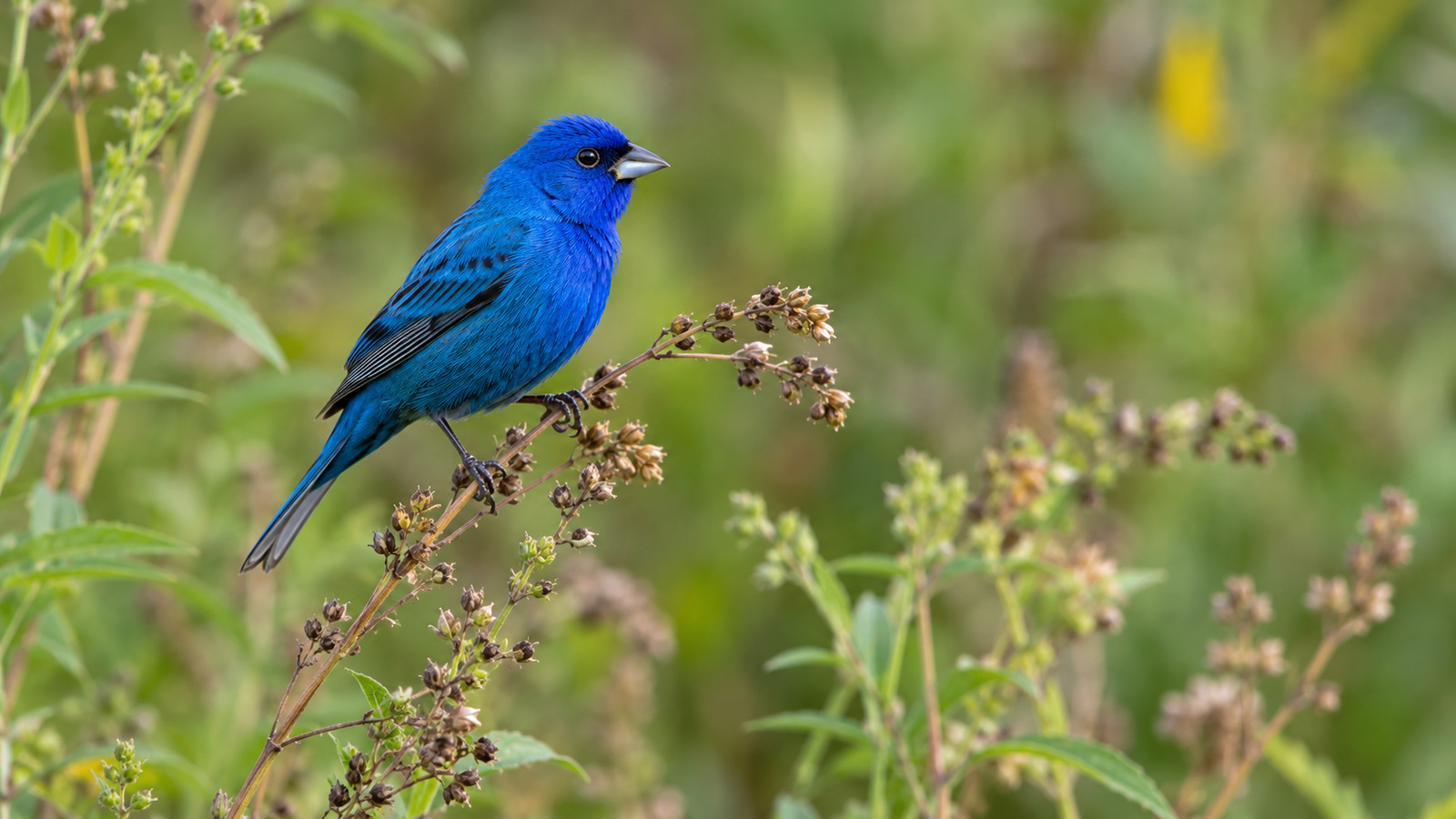
Indigo Buntings are sparrow-sized migratory songbirds, with brilliant blue breeding males and subtly streaked brown females moving through Florida's brushy edges and fields.
Indigo Buntings use weedy fields, hedgerows, brushy roadsides, woodland edges, and recovering clearings. In Florida they are especially noticeable during spring and fall migration, while some winter in the southern part of the state.
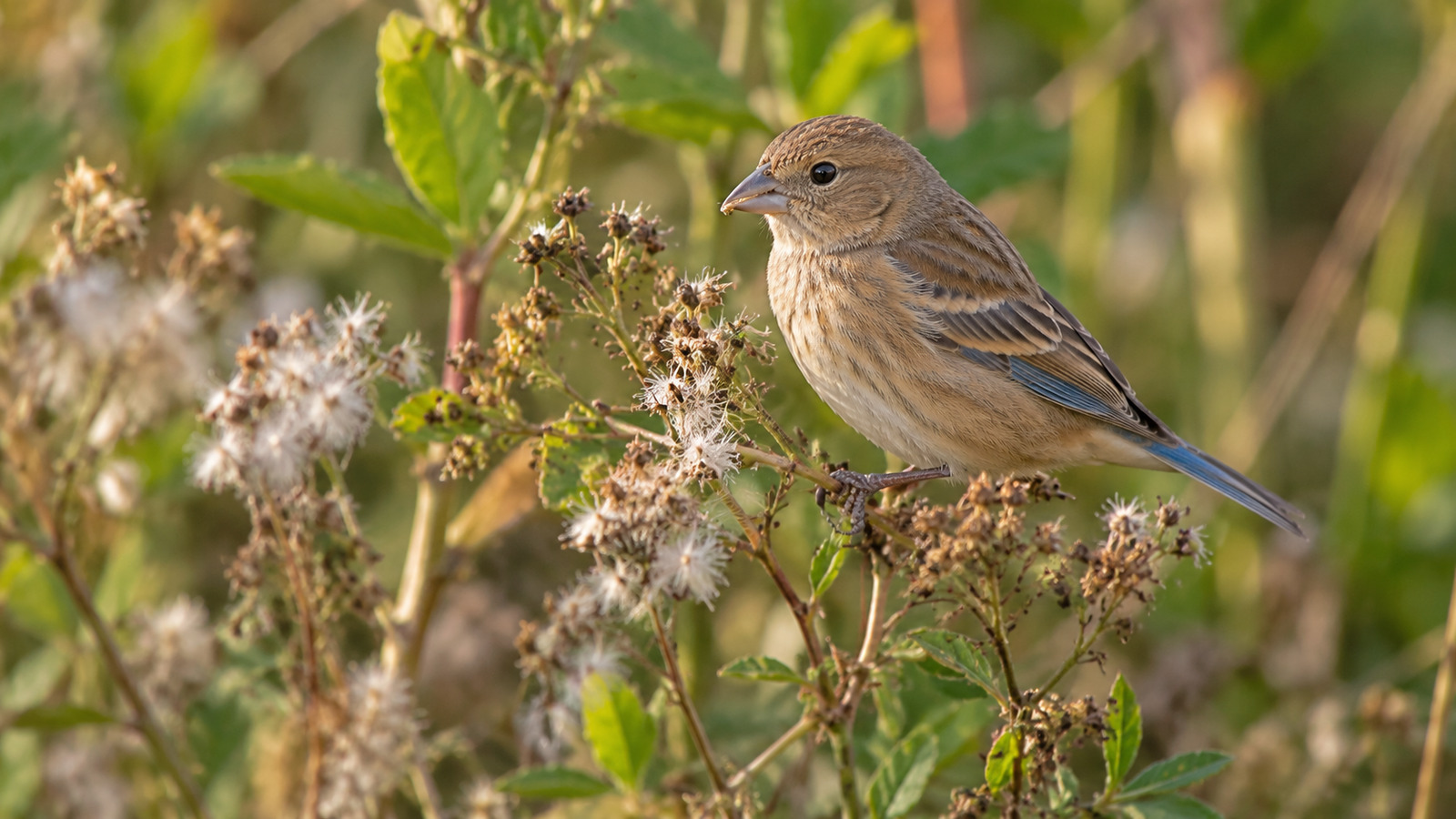
Breeding males appear intensely blue even though their feathers contain no blue pigment; microscopic feather structure reflects blue light. Females and young birds rely on brown camouflage while feeding low among grasses and shrubs.
Habitat:
Grasslands and Agricultural Areas, Forests and Woodlands, Scrub and Dry Prairie, Urban and Residential Areas
Area / Range:
Statewide
Diet:
Small seeds, berries, buds, spiders, and insects. Summer prey includes caterpillars, grasshoppers, aphids, cicadas, beetles, and other invertebrates, while migrating and wintering flocks feed heavily on grass and weed seeds.
Behavior:
Indigo Buntings hop on the ground, cling to seed-bearing stems, and glean insects from low vegetation. Singing males choose exposed perches, while migrants often forage in loose flocks in fields, lawns, and shrubby openings.
Day
Active Times:
Best time to see:
Early morning during spring and fall migration along brushy field edges, hedgerows, weedy roadsides, and woodland openings.
Florida Native Status:
Native Migratory Bird
Conservation Status:
Low conservation concern overall, although long-term breeding surveys indicate a substantial population decline since the 1960s.
Safety Level:
Harmless. Respect Nests
Safety Information:
Indigo Buntings pose no danger. Observe from a respectful distance, keep cats indoors, and avoid clearing dense low vegetation when an active nest is present.
Benefits to Property:
They consume insects and weed seeds and add seasonal biodiversity to native plantings, field edges, and other lightly managed open areas.
Property Concerns:
They do not damage buildings or landscapes. Broad pesticide use, frequent close mowing, and removal of all shrubby cover reduce food and stopover habitat.
Fun Fact:
Indigo Buntings migrate at night and use patterns of stars to help navigate. Their brilliant blue color is structural rather than produced by blue pigment.
Wildlife Laws:
Protected by the federal Migratory Bird Treaty Act. Do not capture, harm, possess, or disturb the birds, active nests, eggs, or young without appropriate authorization.
Identification:
Breeding males are entirely indigo blue with a slightly richer blue head, a small silver-gray conical bill, and a short rounded tail. Females are warm brown above and paler below with faint breast streaking, a whitish throat, tan wingbars, and occasional blue highlights in the wings, tail, or rump.