
Io Moth
Automeris io
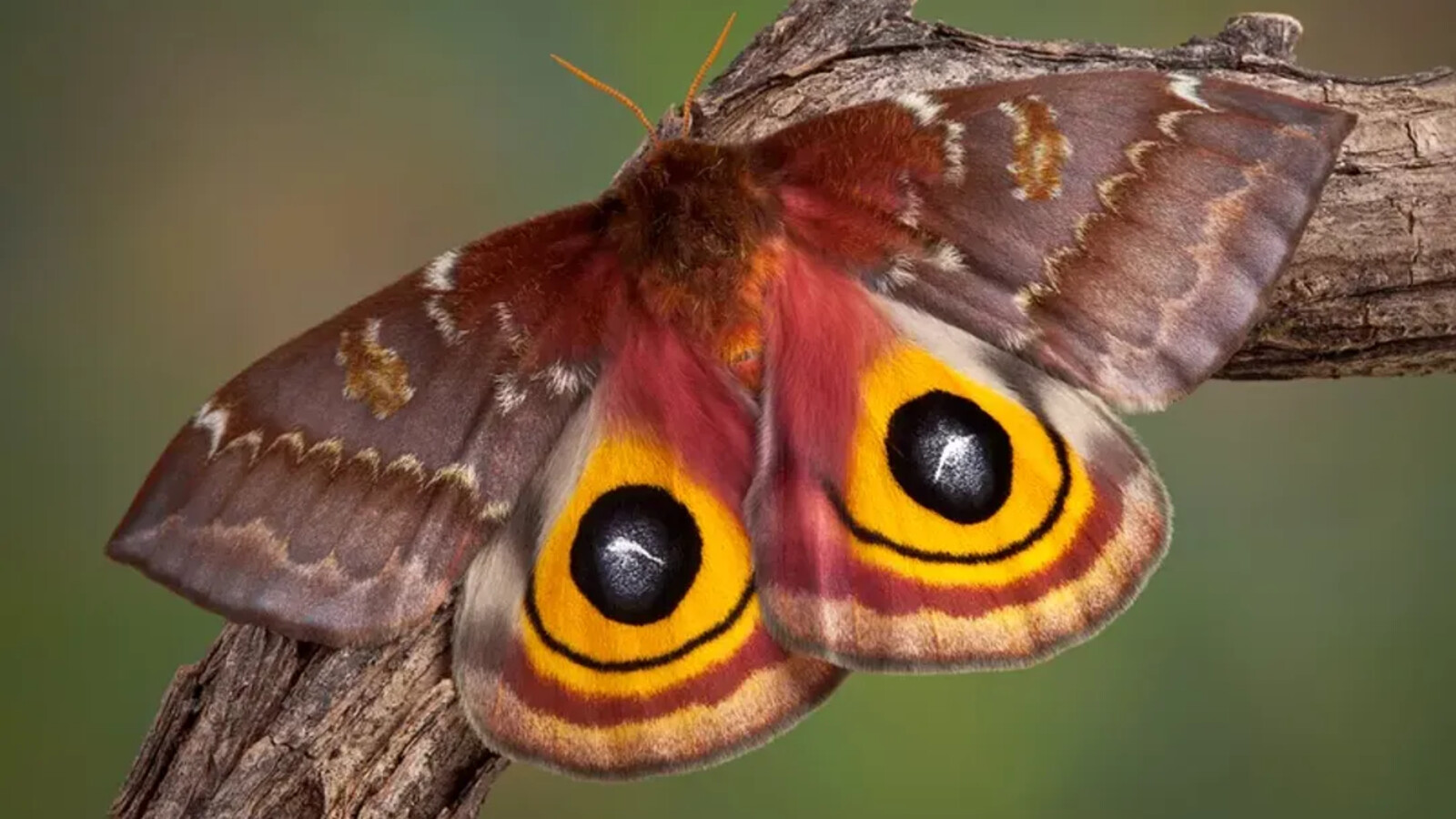
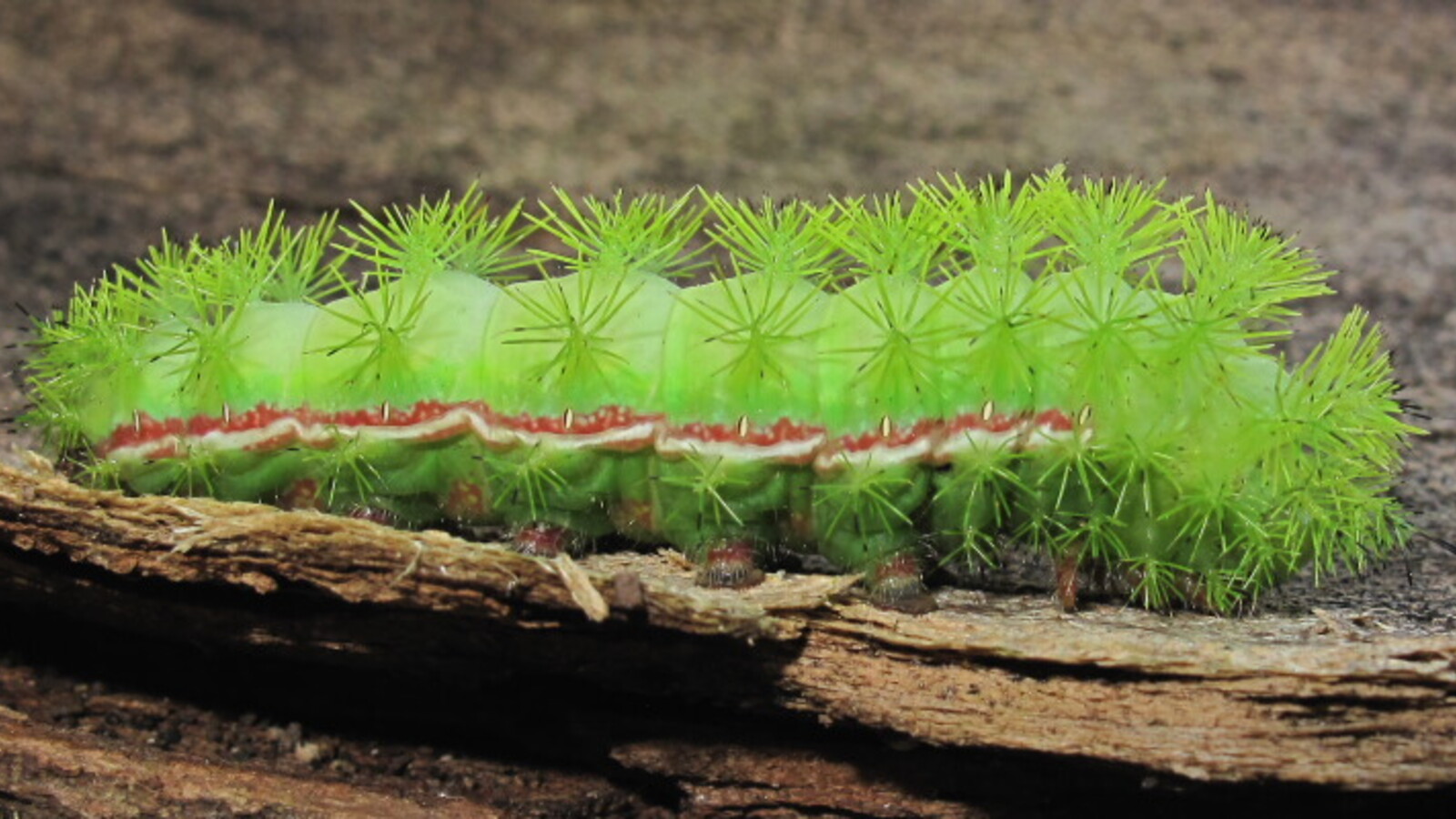
The Io Moth pairs dramatic adult eyespots with a green caterpillar whose branching spines deliver a painful sting.
Io Moths occur across Florida in woods, gardens, and neighborhoods with host plants.
Adults flash large hindwing eyespots when disturbed. Caterpillar spines contain venom and produce immediate burning pain.
Habitat:
Forests and Woodlands, Urban and Residential Areas
Area / Range:
Statewide
Diet:
Caterpillars feed on oak, willow, hackberry, hibiscus, palm, citrus, and other plants. Adults do not feed.
Behavior:
Adults fly at night. Caterpillars feed together when small and spread out as they mature.
Night
Active Times:
Best time to see:
Warm months near lights, host plants, or tree trunks.
Florida Native Status:
Native
Conservation Status:
Widespread and generally secure, though outdoor lighting and broad insecticide use reduce moth diversity.
Safety Level:
Moderate Risk
Safety Information:
Never touch the caterpillar. Wash skin and lift remaining spines with adhesive tape. Seek care for severe reactions.
Benefits to Property:
Adult moths support nocturnal food webs and provide prey for bats and birds.
Property Concerns:
Caterpillars sometimes defoliate ornamental plants, and their sting threatens people and pets.
Fun Fact:
The adult has no functional mouthparts and lives on stored energy.
Wildlife Laws:
Follow pesticide labels and avoid broadcast treatment that harms non-target pollinators and moths.
Identification:
Adult males are yellow and females reddish brown, with blue-black hindwing eyespots. Caterpillars are green with red-and-white side stripes and branching spines.
Credits:
Facts: UF IFAS. Images: adult and caterpillar.