
Key Largo Woodrat
Neotoma floridana smalli
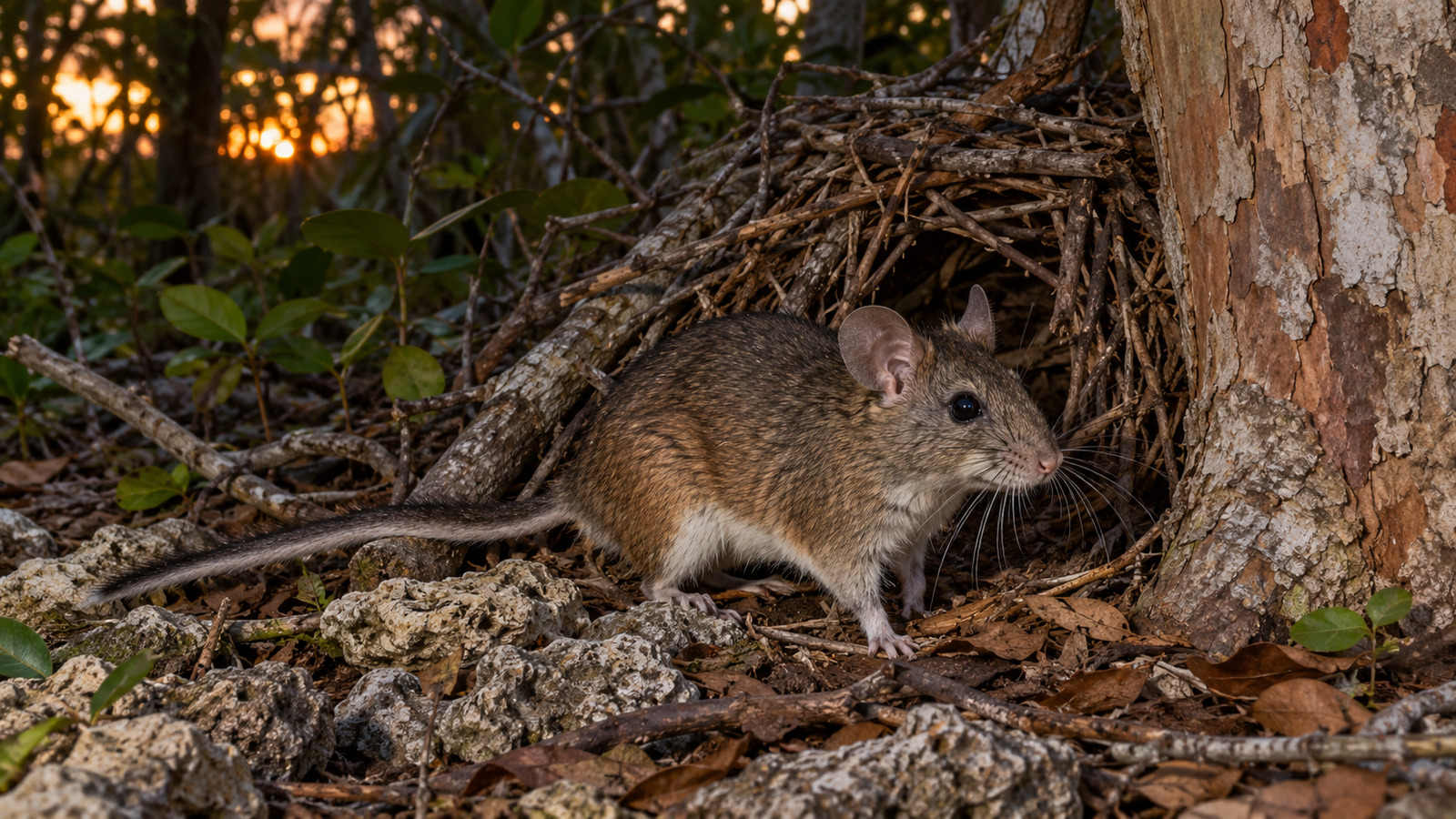
The Key Largo Woodrat is a federally endangered Florida subspecies found only in tropical hardwood hammock on northern Key Largo.
The Key Largo Woodrat is a medium-sized native rodent restricted to the tropical hardwood hammocks of northern Key Largo. It has gray-brown fur above, white underparts, large rounded ears, large dark eyes, and a hairy tail.
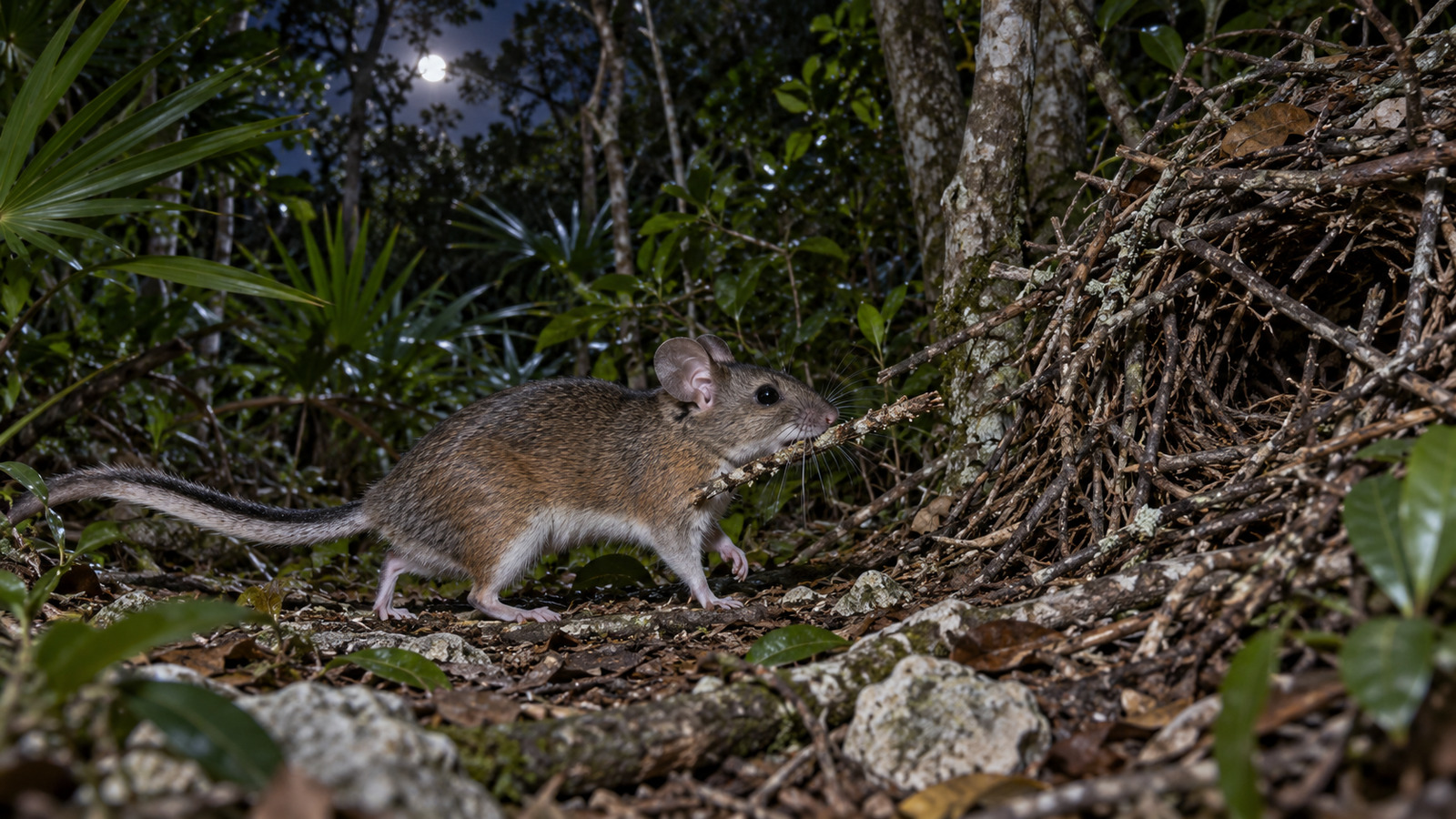
Woodrats build large shelters from sticks, leaves, shells, and other natural material at tree bases, stumps, rock openings, and artificial den sites. Habitat loss, fragmentation, and introduced predators have reduced the population and made every remaining hammock tract important.
Habitat:
Forests and Woodlands
Area / Range:
Florida Keys, South Florida
Diet:
Leaves, fruit, seeds, buds, flowers, fungi, and other plant material from tropical hardwood hammock species, including wild coffee, pigeon plum, figs, snowberry, and blackbead.
Behavior:
Primarily nocturnal. Individuals forage on the ground and in low vegetation, carry material to shelter sites, store food, and maintain large stick nests that can be used across generations.
Night
Active Times:
Best time to see:
Direct viewing is difficult and should not be pursued closely. Watch quietly after dusk from established trails in protected North Key Largo hammock habitat.
Florida Native Status:
Native endemic subspecies
Conservation Status:
Federally Endangered since 1983. The remaining population is restricted to a small area of northern Key Largo.
Safety Level:
Harmless. Avoid Handling
Safety Information:
This shy woodrat does not seek contact with people. Do not handle, trap, feed, chase, or disturb an animal or its stick nest.
Benefits to Property:
Moves seeds and plant material through the hammock and creates stick shelters used by insects, reptiles, amphibians, and other small animals.
Property Concerns:
It is extremely rare and is not a routine household pest. In North Key Largo, never place rodent poison or traps outdoors without professional identification and wildlife guidance.
Fun Fact:
A woodrat can build a stick shelter several feet across. Some nest sites are reused and rebuilt by many generations of animals.
Wildlife Laws:
The Key Largo Woodrat is protected under the federal Endangered Species Act and Florida law. Capturing, harming, killing, possessing, or disturbing the animal or its occupied habitat without authorization is prohibited.
Identification:
Look for a sturdy gray-brown rodent with a clean white belly, chest, and throat. Large rounded ears, prominent dark eyes, long whiskers, and a noticeably hairy tail help separate it from nonnative black rats.
Large stick nests at the base of hardwood trees are an important sign. The animal itself is nocturnal and usually remains hidden during daylight.