
Knight Anole
Anolis equestris
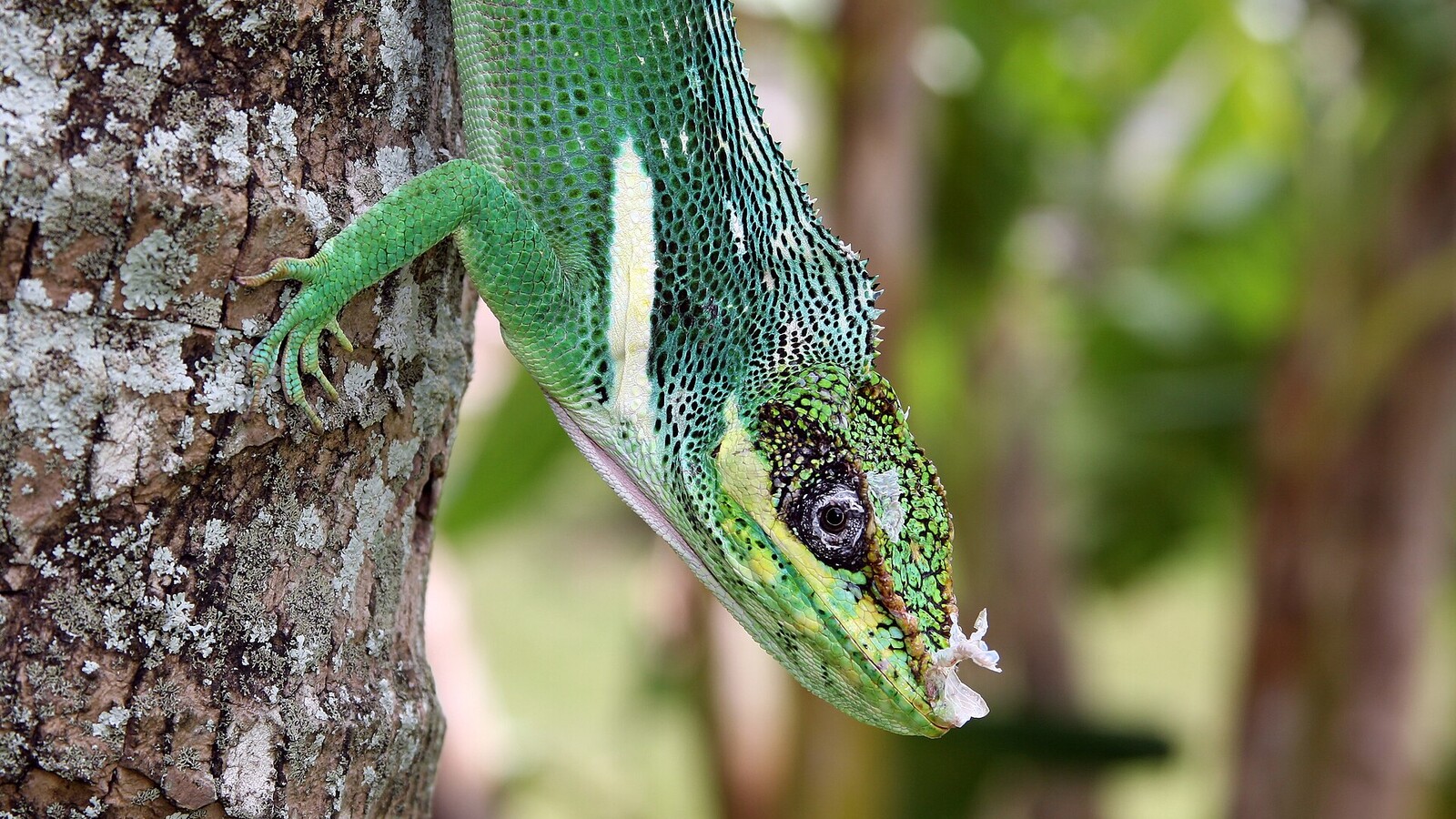
Knight anoles are Florida’s largest established anoles, with vivid green bodies, powerful jaws, and a yellow stripe beneath the eye.
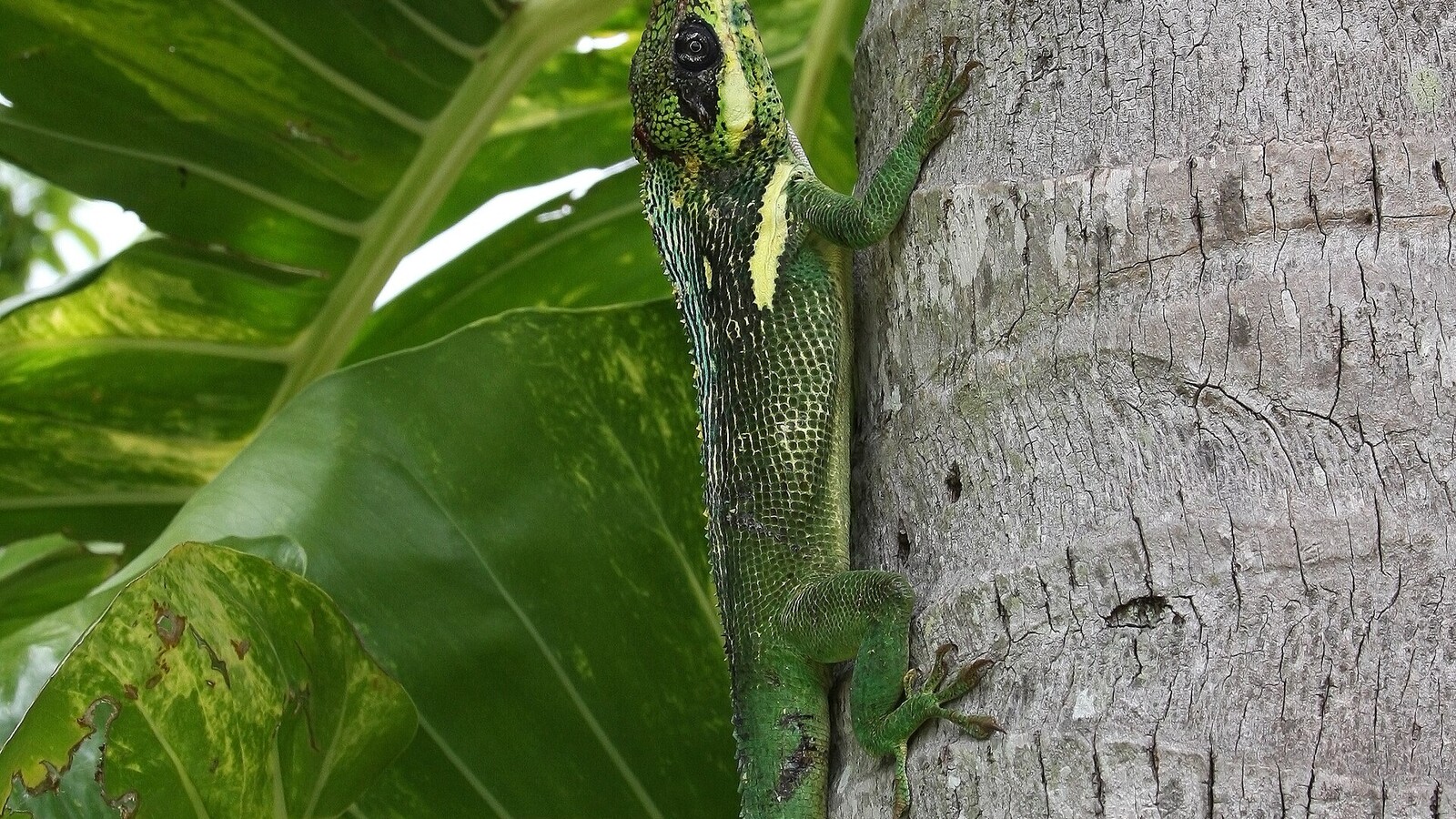
Knight anoles are arboreal Cuban lizards established mainly in South Florida. Mature trees, palms, and irrigated landscapes provide the height, warmth, and prey they need.
They spend much of their time above eye level. Cold weather may force them lower on trunks or temporarily stun them.
Habitat:
Urban and Residential Areas, Forests and Woodlands
Area / Range:
South Florida
Diet:
They eat insects, spiders, snails, small frogs, lizards, nestling birds, and occasional fruit.
Behavior:
Knight anoles bask on trunks and branches, defend territories with head-bobs and dewlap displays, and retreat upward when approached.
Day
Active Times:
Best time to see:
Warm sunny mornings on tree trunks, palms, fences, and high branches in South Florida neighborhoods.
Florida Native Status:
Introduced
Conservation Status:
Established nonnative species in southern Florida. Native populations occur in Cuba.
Safety Level:
Use Caution
Safety Information:
Do not grab one by hand. A frightened adult can deliver a painful bite. Use a container or contact a wildlife professional if removal is needed.
Benefits to Property:
They consume large insects and add visible reptile activity to mature landscapes.
Property Concerns:
They may prey on native lizards and small wildlife. Large adults can enter lanais or homes through open doors and damaged screens.
Fun Fact:
Knight anoles can move each eye independently and change from bright green to nearly chocolate brown within minutes.
Wildlife Laws:
This is a nonnative species. Never release a captured Knight Anole at another location. Removal must occur with property permission and humane methods.
Identification:
Look for a very large green anole with a bony-looking head, yellow or white stripe below the eye, and pink dewlap. Stressed animals turn dark brown.
Credits:
Facts: species reference. Images: primary and secondary, Wikimedia Commons.