
Least Bittern
Ixobrychus exilis

A tiny, secretive marsh bird that climbs cattails and reeds above shallow Florida wetlands.
Least Bitterns live in freshwater and slightly brackish marshes with cattails, sawgrass, bulrushes, or other tall vegetation broken by shallow open water. Florida supports resident and seasonal birds, but they can be difficult to detect even in suitable habitat.
Healthy marsh edges are essential because these birds feed, nest, and escape predators within dense vegetation. Maintaining native shoreline plants and avoiding disturbance during nesting improves habitat for Least Bitterns and many other wetland species.
Habitat:
Freshwater Wetlands, Lakes and Ponds, Canals and Ditches
Area / Range:
Statewide
Diet:
Feeds mainly on small fish, tadpoles, frogs, crayfish, aquatic insects, and other tiny wetland animals captured from reeds or the water’s edge.
Behavior:
Usually stays hidden in dense emergent vegetation, where it grasps separate stems with each foot and stretches low over the water to strike prey. Its soft cooing calls may reveal it before it is seen.
Daytime, Dawn and Dusk
Active Times:
Best time to see:
Early morning or late afternoon in spring and summer, along quiet marsh edges.
Florida Native Status:
Native
Conservation Status:
Least Concern globally; wetland loss and degradation remain important local threats.
Safety Level:
Low
Safety Information:
Observe from a distance and avoid pushing through nesting marsh vegetation. Never handle an injured bird; contact a permitted wildlife rehabilitator.
Benefits to Property:
Consumes small aquatic animals and insects and serves as an indicator of structurally diverse, healthy marsh habitat.
Property Concerns:
Generally causes no property damage. Repeated disturbance, mowing, herbicide use, or clearing dense shoreline vegetation can destroy feeding cover or active nests.
Fun Fact:
- It can straddle several reeds at once.
- Its laterally compressed body helps it slip through dense vegetation.
- It is one of the smallest herons in the world.
Wildlife Laws:
Protected under the federal Migratory Bird Treaty Act and Florida wildlife laws. It is unlawful to capture, possess, harm, or disturb birds, eggs, or active nests without authorization.
Identification:
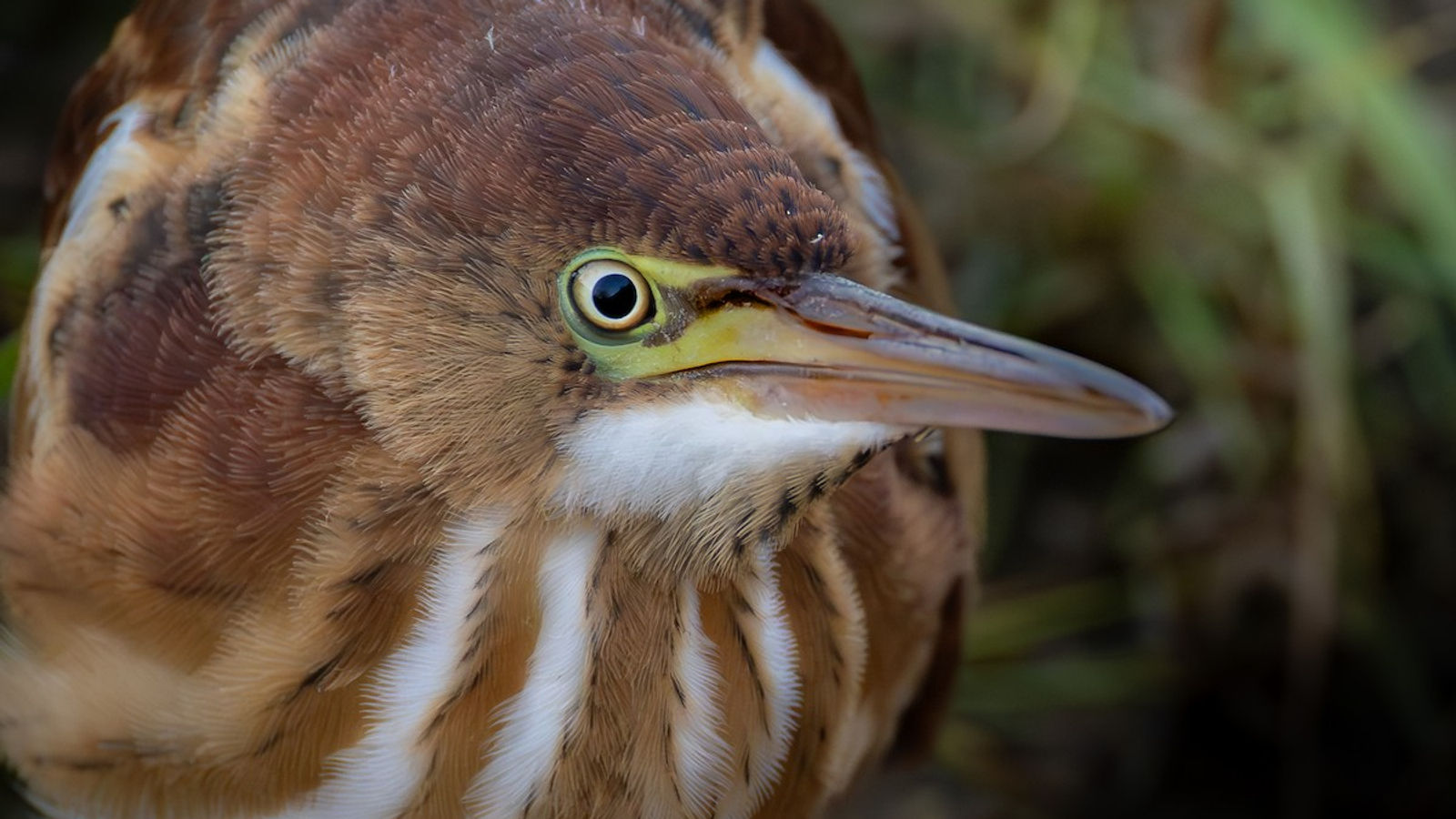
The Least Bittern is a very small heron with a long pointed bill, buff neck, dark cap and back, and bold pale wing patches. Its narrow body and long toes let it move between upright marsh stems. Males are darker-backed than females, and juveniles are more heavily streaked.