
Least Shrew
Cryptotis parva
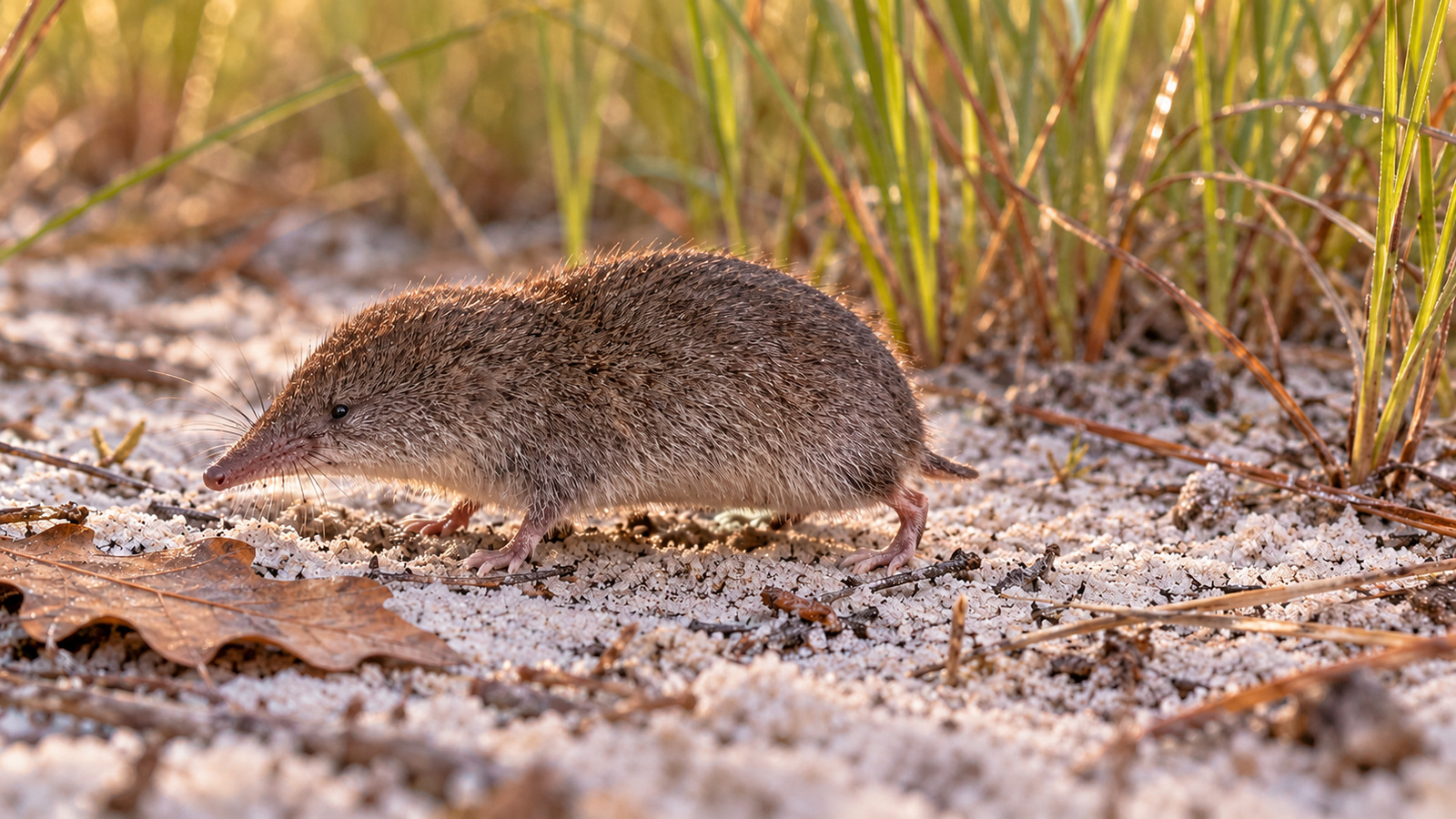
The Least Shrew is a tiny native insect-eating mammal with a pointed snout, hidden ears, and a very short tail, living beneath grasses, brush, logs, and leaf litter.
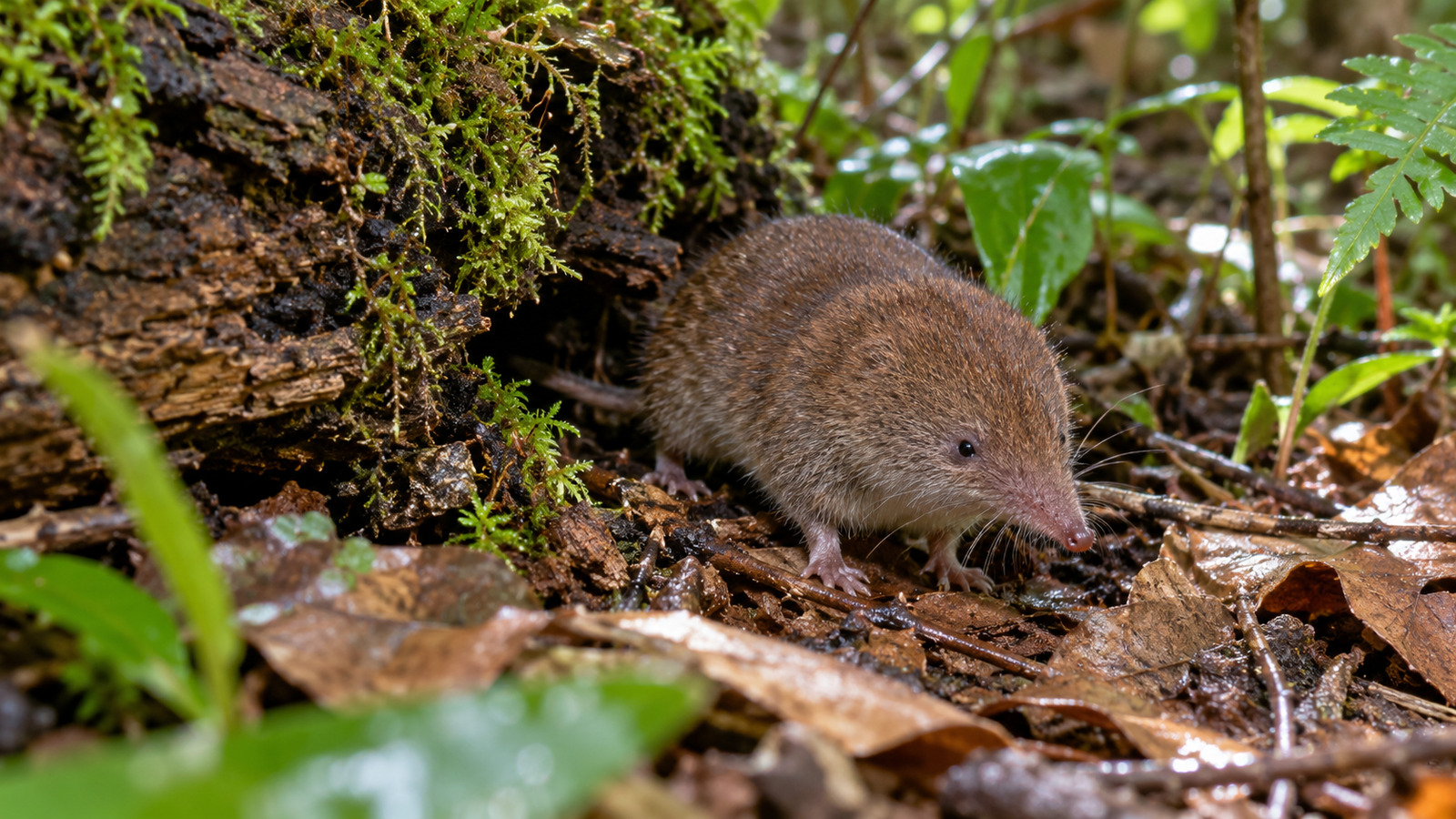
Least Shrews inhabit tall grass, old fields, brush piles, forest undergrowth, and soft soil near marshes. In Florida they remain close to dense ground cover, where they tunnel beneath vegetation and shelter under logs, rocks, and plant debris.
Unlike many shrews, this species can be notably social. Several individuals may share a nest and cooperate while digging tunnels, yet most activity remains concealed at ground level.
Habitat:
Grasslands and Agricultural Areas, Forests and Woodlands, Scrub and Dry Prairie, Mangroves and Salt Marshes
Area / Range:
North Florida, Central Florida, South Florida
Diet:
Mostly insect larvae, centipedes, crickets, spiders, snails, worms, and other small invertebrates, with occasional fungi and small amounts of plant material.
Behavior:
Least Shrews dig short tunnel systems, build rounded grass-and-leaf nests, cache food, and hunt through litter and soil cover. They are active during both day and night, with the strongest activity usually after dark.
Day, Dawn, Dusk, Night
Active Times:
Best time to see:
Rarely observed directly; signs or brief sightings are most likely after dark beneath dense grass, logs, brush, and deep leaf litter.
Florida Native Status:
Native
Conservation Status:
Least Concern and broadly secure, with no special federal status; local populations still depend on retaining dense ground cover and healthy soil communities.
Safety Level:
Low Risk
Safety Information:
Avoid handling any wild shrew because it may bite when frightened. Wear gloves if one is found in a structure and use gentle exclusion rather than direct contact.
Benefits to Property:
Least Shrews consume large numbers of insects and other invertebrates. Their burrowing aerates soil, moves nutrients, and supports native food webs as prey for owls, snakes, and other predators.
Property Concerns:
They have no known meaningful negative impact on people or landscaping. Rare indoor visitors can usually be resolved by sealing small openings and removing clutter near foundations.
Fun Fact:
A Least Shrew may eat 60 to 100 percent of its body weight each day. It also uses high-frequency clicks while exploring tunnels and may share food with other shrews.
Wildlife Laws:
Least Shrews have no special federal protected status, but collecting or possessing wildlife and taking animals on public land may require authorization. Use lawful, humane exclusion around buildings and follow current Florida rules.
Identification:
Look for an extremely small, compact mammal with dense gray-brown to reddish-brown fur, a long sharply pointed snout, minute eyes, ears hidden by fur, tiny feet, and a bicolored tail much shorter than the head and body. The short tail separates it from most mice.