
Mangrove Skipper
Phocides batabano
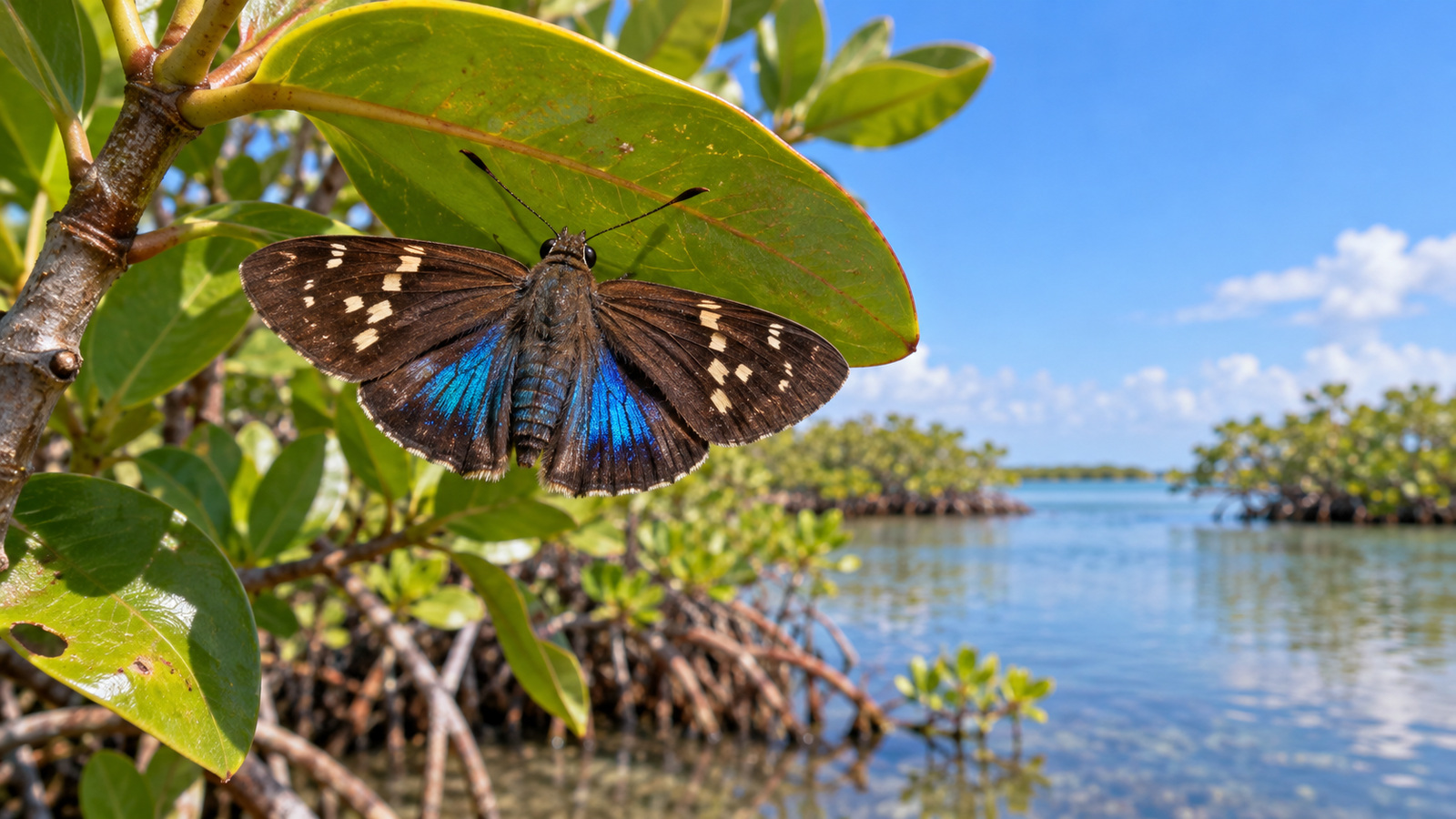
A large, fast skipper of Florida's mangrove coast, recognized by electric-blue hindwing streaks against dark brown-black wings.
The Mangrove Skipper is a bold tropical butterfly closely tied to red mangrove forests along central and southern Florida's coasts and throughout the Keys. Modern genomic taxonomy recognizes the Florida lineage within Phocides batabano; many field guides and older sources list it under Phocides pigmalion.
Adults are powerful fliers that move through sunny mangrove openings and nearby tropical hammocks. Their dependence on red mangrove as the caterpillar host makes healthy, connected coastal wetlands essential to the species in Florida.
Habitat:
Mangroves and Salt Marshes
Area / Range:
South Florida, Florida Keys, Atlantic Coast, Gulf Coast
Diet:
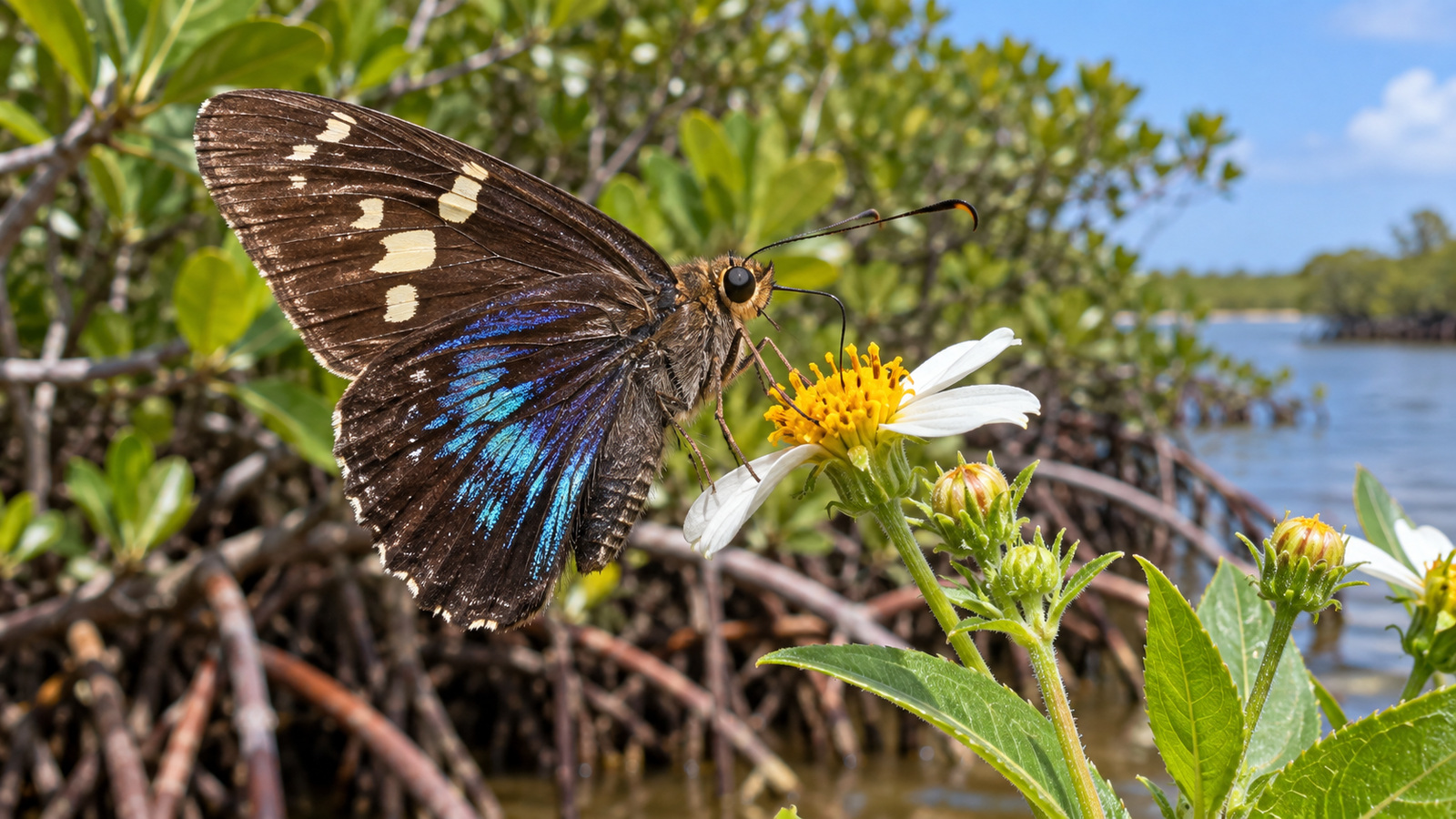
Adults drink nectar from flowers such as shepherd's needle, mangrove, citrus, bougainvillea, and other coastal blooms. Caterpillars feed on red mangrove leaves.
Behavior:
Adults fly rapidly and often perch beneath leaves or in shaded mangrove openings. Males patrol and perch while seeking females; females lay eggs singly on red mangrove, and the larvae silk leaves together to form protective shelters.
Day
Active Times:
Best time to see:
November through August in South Florida, especially on warm, bright mornings near flowering mangrove edges
Florida Native Status:
Native Florida subspecies
Conservation Status:
NatureServe G4 globally and S3S4 in Florida; coastal development, mangrove loss, storms, and climate-driven shoreline change are important pressures.
Safety Level:
Low
Safety Information:
Mangrove Skippers do not sting or bite people and are safe to observe. Avoid handling adults because wing scales and delicate legs are easily damaged.
Benefits to Property:
Adults contribute to pollination while visiting flowers. Red mangrove and native nectar plantings that support this butterfly also stabilize shorelines and provide habitat for many other coastal species.
Property Concerns:
This butterfly causes no meaningful property damage. Caterpillar feeding is confined mainly to red mangrove foliage and is normally minor.
Fun Fact:
The Florida population is the subspecies Phocides batabano okeechobee. Its older placement as Phocides pigmalion remains common in field guides, which is why both scientific names may appear in references.
Despite belonging to a group often thought of as small and brown, this skipper can approach three inches across and flashes metallic blue in sunlight.
Wildlife Laws:
The Mangrove Skipper is not federally listed under the Endangered Species Act. Collection may still be restricted on parks, preserves, refuges, and other protected lands, and red mangroves are regulated coastal plants; observe without disturbing butterflies or mangrove habitat.
Identification:
This is a large, robust skipper with brown-black forewings marked by creamy white spots and hindwings crossed by vivid iridescent blue or blue-purple streaks. The body is stout, and the antennae end in the hooked clubs typical of skippers.
Its size and electric-blue hindwing streaks separate it from most other Florida skippers. The wingspan is about 1.9 to 2.8 inches.