
Marbled Salamander
Ambystoma opacum
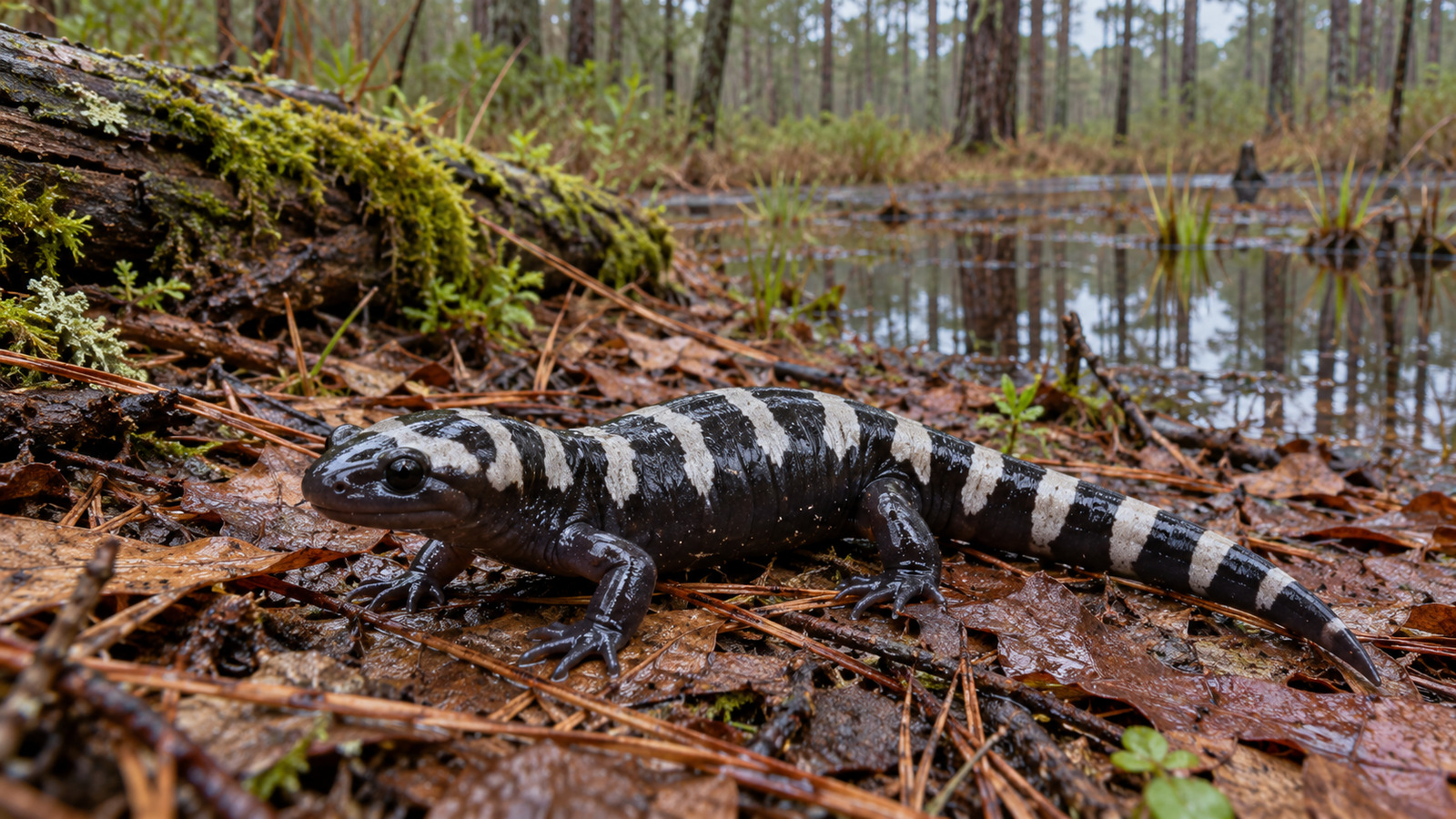
Marbled Salamanders are stout black mole salamanders marked with pale crossbands, occurring in the Florida Panhandle near fishless seasonal wetlands and moist woodland.
Marbled Salamanders spend most of their lives hidden underground or beneath logs and leaf litter in wooded uplands near temporary wetlands. Florida lies at the southern edge of their range, and the species is absent from peninsular Florida.
Unlike most mole salamanders, they court and lay eggs on land in autumn. Females guard eggs in dry pool basins until rain refills the wetland and triggers hatching, giving the larvae an early start before many other amphibians breed.
Habitat:
Forests and Woodlands, Freshwater Wetlands
Area / Range:
Florida Panhandle
Diet:
Adults eat earthworms, insects, insect larvae, slugs, snails, and other small invertebrates. Aquatic larvae consume zooplankton, aquatic insects, and sometimes the eggs or larvae of other amphibians.
Behavior:
Adults are nocturnal and fossorial, remaining in burrows or under cover during dry periods. Rainy autumn nights prompt movements toward fishless seasonal pools, where courtship and terrestrial egg laying occur before the basin floods.
Night
Active Times:
Best time to see:
Rainy nights in early fall near fishless seasonal wetlands in the Florida Panhandle; otherwise look without disturbing cover objects in moist woodland.
Florida Native Status:
Native
Conservation Status:
Not federally or state listed in Florida. Local populations depend on intact woodland, fishless seasonal wetlands, and natural wet-and-dry cycles.
Safety Level:
Mild Skin Irritant. Do Not Handle
Safety Information:
Marbled Salamanders do not bite aggressively, but skin and tail glands can release defensive secretions that may irritate eyes, mouth, or broken skin. Observe without handling, and never remove one from its wetland or woodland refuge.
Benefits to Property:
They consume insects, slugs, worms, and other small invertebrates and are part of the food web linking seasonal wetlands with surrounding forests. Their presence can indicate intact ground cover and functioning wetland habitat.
Property Concerns:
They do not damage lawns, buildings, or gardens. Drainage, filling of seasonal pools, fish stocking, soil compaction, pesticide use, and removal of logs and leaf litter can eliminate local habitat.
Fun Fact:
Marbled Salamanders are unusual because females lay eggs beside a dry wetland and guard them until autumn rain arrives. The species is also called the banded salamander because its pale crossbands resemble marble veining.
Wildlife Laws:
Florida wildlife may not be taken, transported, sold, or possessed except as authorized by state rules. Observe Marbled Salamanders in place, follow all public-land regulations, and obtain any required scientific collecting or possession permits before handling or collecting them.
Identification:
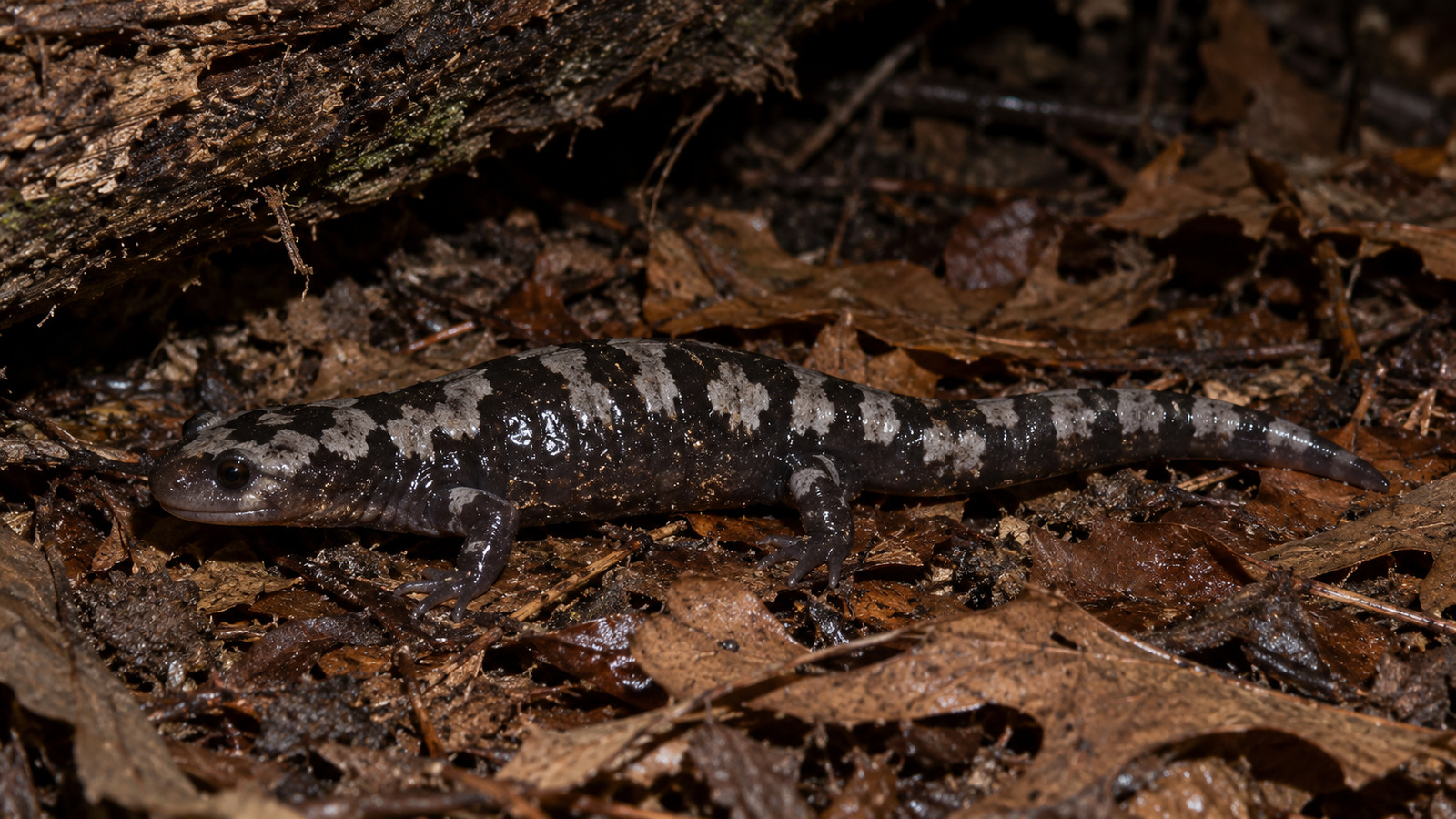
Adults are stout, smooth-skinned salamanders with a glossy black or dark brown body crossed by pale bands. Males usually have bright silvery-white bands, while females tend to have broader silvery-gray bands. The belly remains dark, and adults lack the external gills seen on aquatic larvae.