
Marsh Rabbit
Sylvilagus palustris
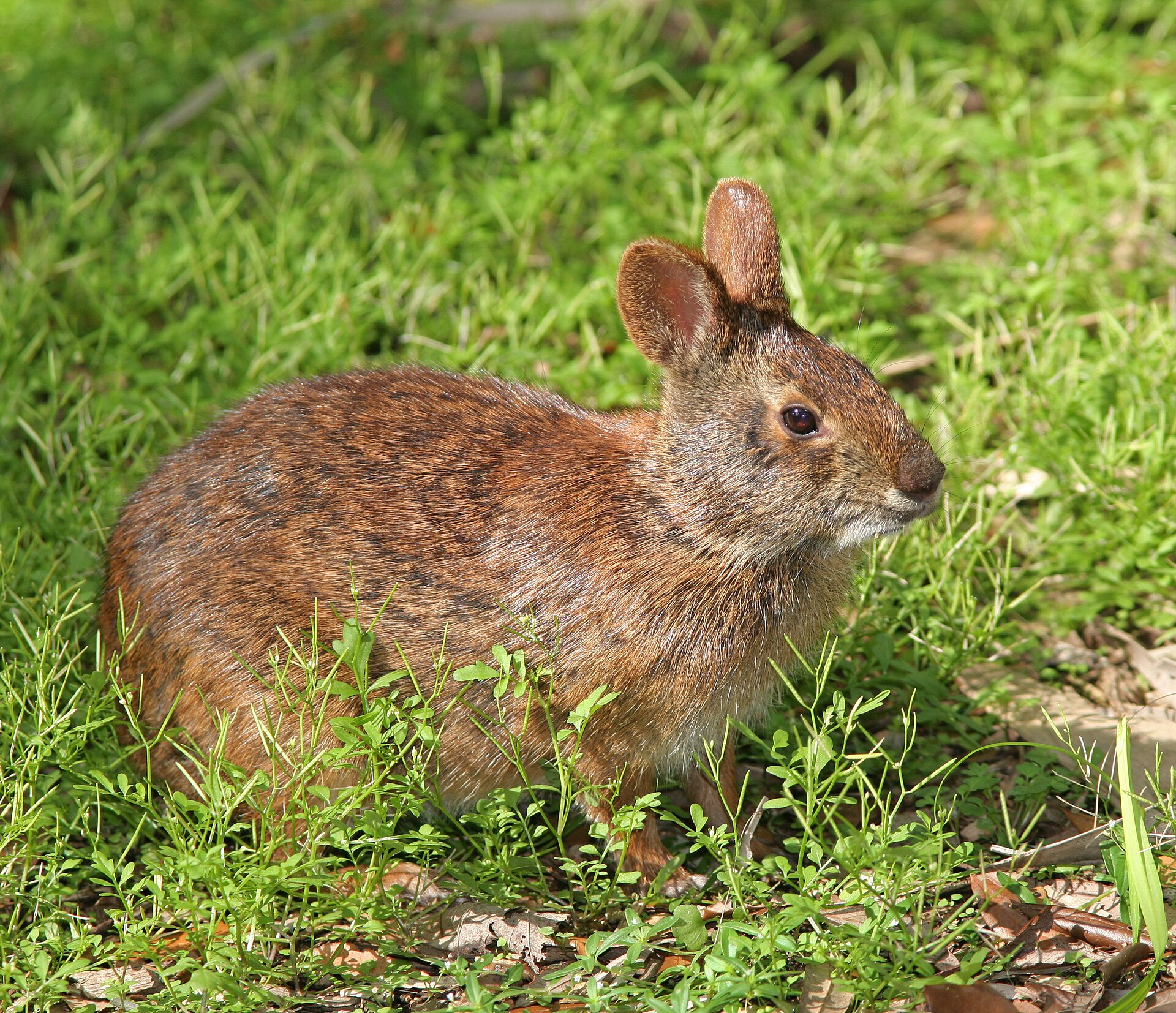
Unlike cottontails, marsh rabbits swim readily and lack a bright white tail.
Unlike cottontails, marsh rabbits swim readily and lack a bright white tail. Protect wetland cover and use fencing around vulnerable plants instead of feeding or relocation.
Habitat:
Freshwater Wetlands, Canals and Ditches, Mangroves and Salt Marshes
Area / Range:
Central Florida, South Florida, Atlantic Coast, Gulf Coast
Diet:
Grasses, sedges, aquatic plants, leaves, and bark.
Behavior:
Most active near dawn, dusk, and night. Strong swimmer closely tied to wetlands.
Dawn, Dusk, and Night
Active Times:
Best time to see:
Look during dawn, dusk, and night in suitable Florida habitat.
Florida Native Status:
Native
Conservation Status:
Common native wildlife
Safety Level:
Harmless
Safety Information:
Protect wetland cover and use fencing around vulnerable plants instead of feeding or relocation.
Benefits to Property:
Provides prey for native raptors, bobcats, alligators, and snakes.
Property Concerns:
May browse tender garden plants near wetland edges.
Fun Fact:
Unlike cottontails, marsh rabbits swim readily and lack a bright white tail.
Wildlife Laws:
Protect wetland cover and use fencing around vulnerable plants instead of feeding or relocation.
Identification:
Small dark rabbit with short rounded ears, a brownish tail, and compact body.
Credits:
Facts: wildlife reference. Images: primary image and secondary image, Wikimedia Commons.