
Mayan Cichlid
Mayaheros urophthalmus
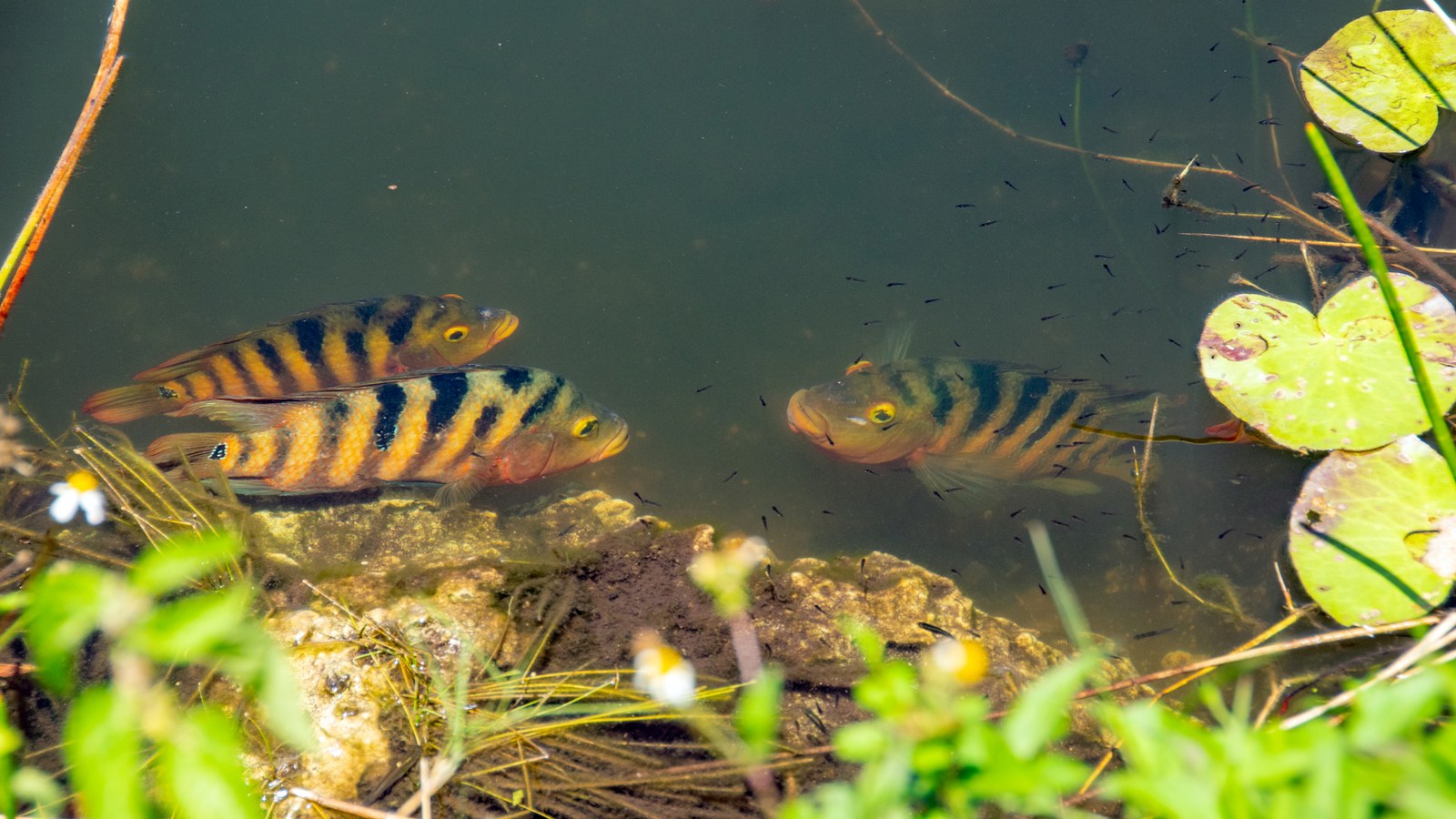
The Mayan cichlid is a colorful non-native fish established in South Florida canals, wetlands, ponds, and brackish waterways.
Mayan cichlids were first documented in Florida in the early 1980s and now occupy much of South Florida. They tolerate fresh and brackish water, which helps them spread through canals, wetlands, and coastal systems.
They are aggressive feeders and popular sport fish, but their broad diet and nesting behavior place pressure on native aquatic communities. They should never be moved alive to establish a new population.
Habitat:
Canals and Ditches, Lakes and Ponds, Freshwater Wetlands, Estuaries and Bays, Mangroves and Salt Marshes
Area / Range:
South Florida
Diet:
They eat small fish, aquatic insects, snails, shrimp, crayfish, worms, and plant material.
Behavior:
Mayan cichlids defend territories, form breeding pairs, and guard eggs and young. They strike lures and bait aggressively, especially in warm water.
Day
Active Times:
Best time to see:
Daylight hours in clear South Florida canals, ponds, wetland edges, and brackish creeks.
Florida Native Status:
Invasive
Conservation Status:
Established invasive species in South Florida. It is common and expanding within connected waterways.
Safety Level:
Low Risk
Safety Information:
Use care around sharp dorsal spines and hooks. Do not move live fish between water bodies, and clean fishing equipment before visiting another site.
Benefits to Property:
They provide recreational fishing opportunities and consume some aquatic insects and snails.
Property Concerns:
They compete with native fish, disturb shallow nesting areas, and spread through connected drainage systems. Private ponds can become dominated by non-native fish.
Fun Fact:
The eye spot near the tail may redirect attacks away from the head. Mayan cichlids also tolerate saltier water than many freshwater fish.
Wildlife Laws:
Releasing non-native fish into Florida waters is prohibited. Follow current FWC fishing rules, and never use live Mayan cichlids to stock another pond, canal, or lake.
Identification:
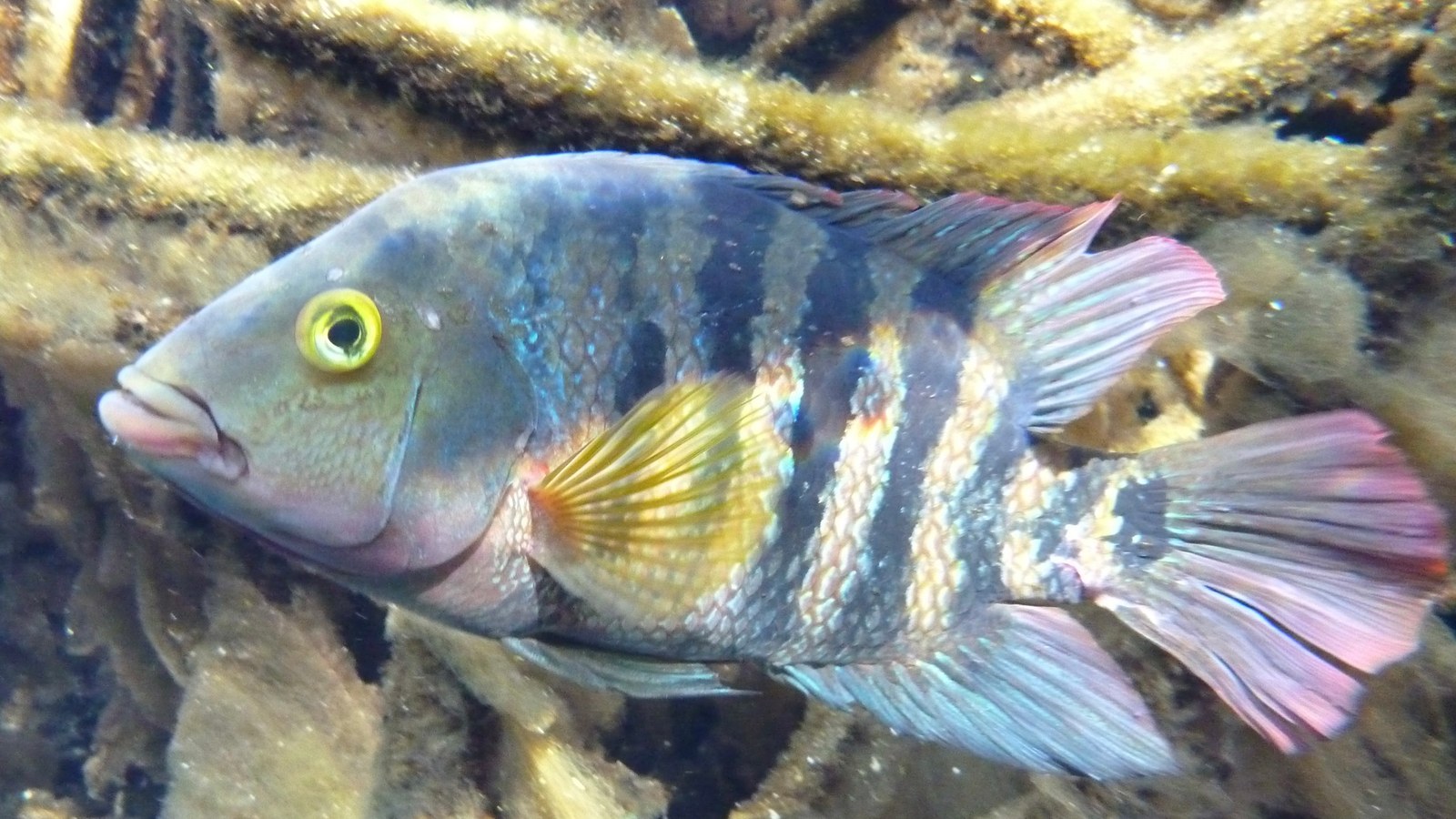
Mayan cichlids have a deep body, six to eight dark vertical bars, reddish or orange color on the belly and fins, and a bold black eye spot with a blue ring near the tail.
Credits:
Facts: U.S. Geological Survey Nonindigenous Aquatic Species. Images: primary and secondary, Wikimedia Commons.