
Mediterranean House Gecko
Hemidactylus turcicus

A small, pale, nonnative gecko commonly seen hunting insects around Florida porch lights after dark.
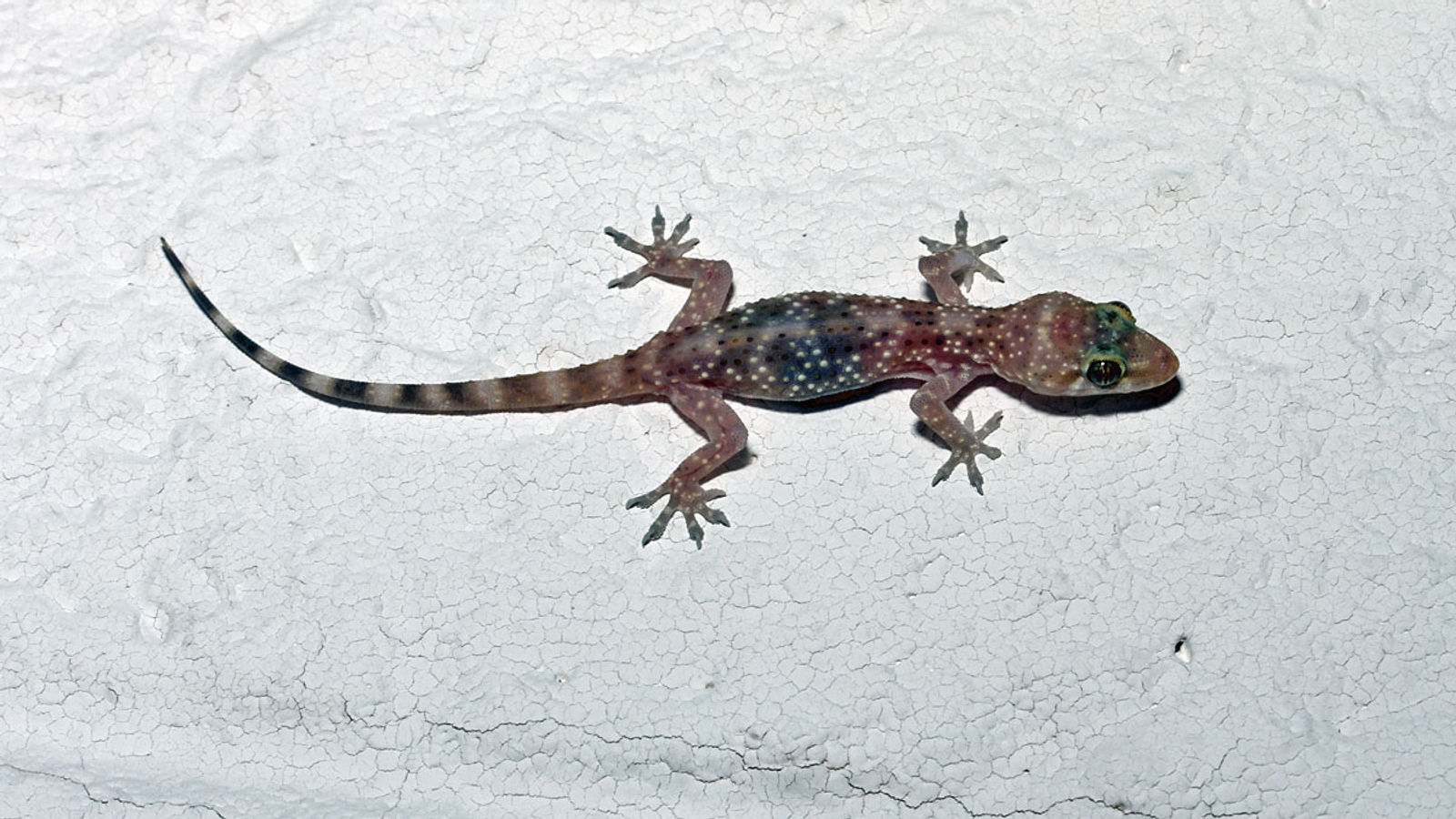
Mediterranean House Geckos are established in developed areas throughout Florida. Their adhesive toe pads let them climb walls, ceilings, windows, and smooth exterior surfaces.
They gather near lights where insects concentrate and generally cause little trouble. Reduce insect attraction and seal openings when geckos enter living spaces.
Habitat:
Urban and Residential Areas
Area / Range:
Statewide
Diet:
Eats moths, flies, roaches, beetles, spiders, and other small arthropods attracted to structures and lights.
Behavior:
Nocturnal and quick, it waits near lights and makes short rushes at prey. Individuals hide in cracks by day and may produce faint clicking calls.
Nighttime, Dawn and Dusk
Active Times:
Best time to see:
Warm nights on exterior walls, windows, garages, and porch ceilings.
Florida Native Status:
Nonnative established
Conservation Status:
Not listed; widespread and established in developed areas.
Safety Level:
Low
Safety Information:
Harmless to people and pets. Avoid glue traps and handle only when necessary because the tail can break off.
Benefits to Property:
Consumes insects around doors, windows, patios, and exterior lighting.
Property Concerns:
May enter homes through small gaps and leave droppings near favored hiding sites. Exclusion and reduced lighting attractants address most concerns.
Fun Fact:
- Its toe pads grip smooth walls.
- It can drop and regrow its tail.
- Females often place eggs in shared protected sites.
Wildlife Laws:
This gecko is nonnative. Never release captured nonnative animals at a new location, and follow current Florida rules for possession or transport.
Identification:
Small, pale tan to pinkish gecko with dark spots, translucent-looking skin, bumpy tubercles, large lidless eyes, wide toe pads, and a banded tail. Color becomes paler at night.