
Monarch Butterfly
Danaus plexippus
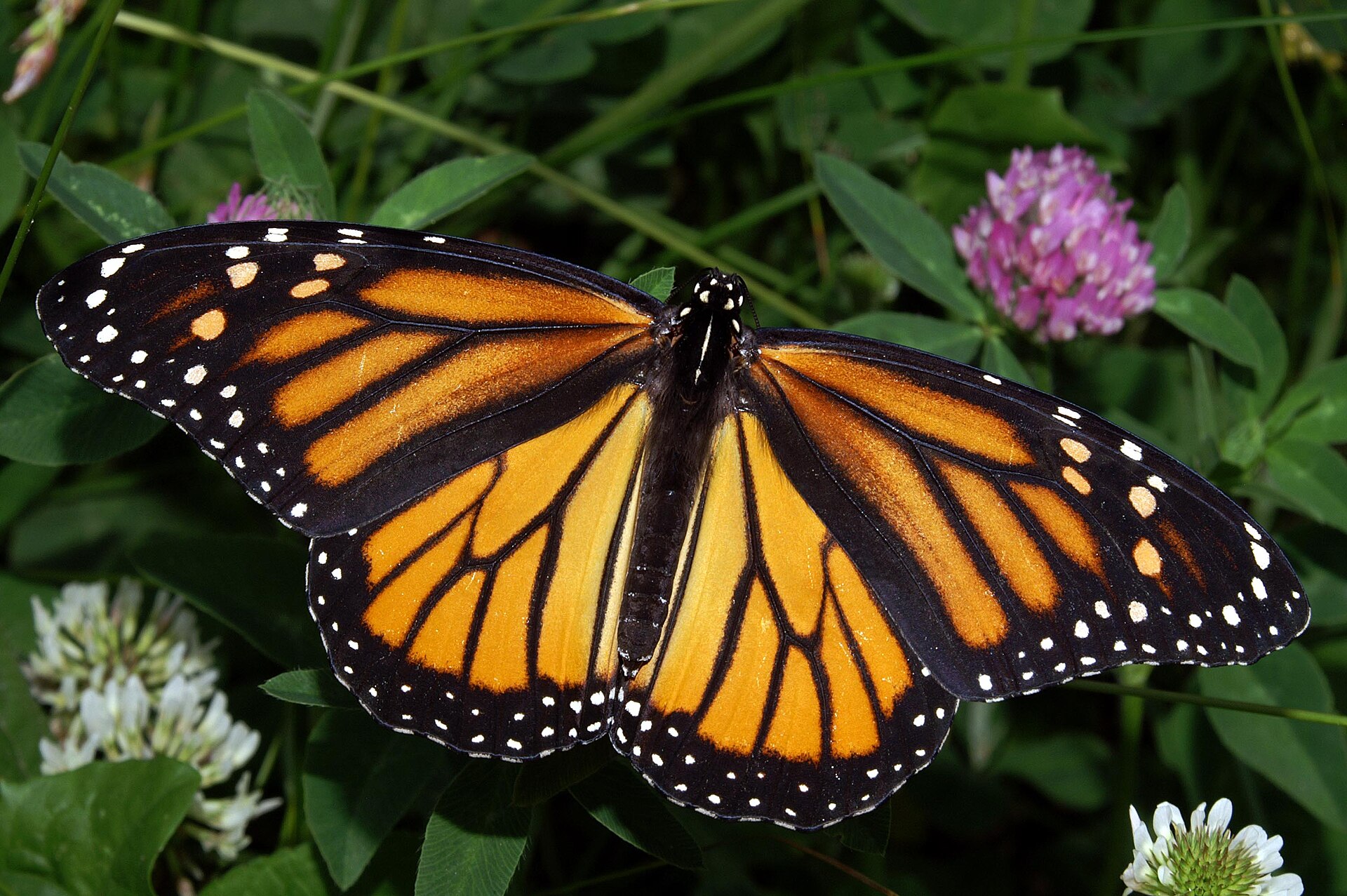
Some monarchs travel thousands of miles between breeding and wintering areas.
Some monarchs travel thousands of miles between breeding and wintering areas. Plant Florida-native milkweeds and varied nectar plants. Avoid pesticides on caterpillars and flowers.
Habitat:
Coastal Waters, Grasslands and Agricultural Areas, Urban and Residential Areas
Area / Range:
Statewide
Diet:
Adults drink nectar. Caterpillars eat milkweed.
Behavior:
Day-flying migrant. Florida includes migratory, wintering, and resident individuals.
Day
Active Times:
Best time to see:
Look during day in suitable Florida habitat.
Florida Native Status:
Native
Conservation Status:
Species of conservation concern
Safety Level:
Harmless
Safety Information:
Plant Florida-native milkweeds and varied nectar plants. Avoid pesticides on caterpillars and flowers.
Benefits to Property:
Pollinates flowers and connects gardens to a continent-scale migration.
Property Concerns:
Tropical milkweed kept growing year-round increases disease concerns for resident monarchs.
Fun Fact:
Some monarchs travel thousands of miles between breeding and wintering areas.
Wildlife Laws:
Plant Florida-native milkweeds and varied nectar plants. Avoid pesticides on caterpillars and flowers.
Identification:
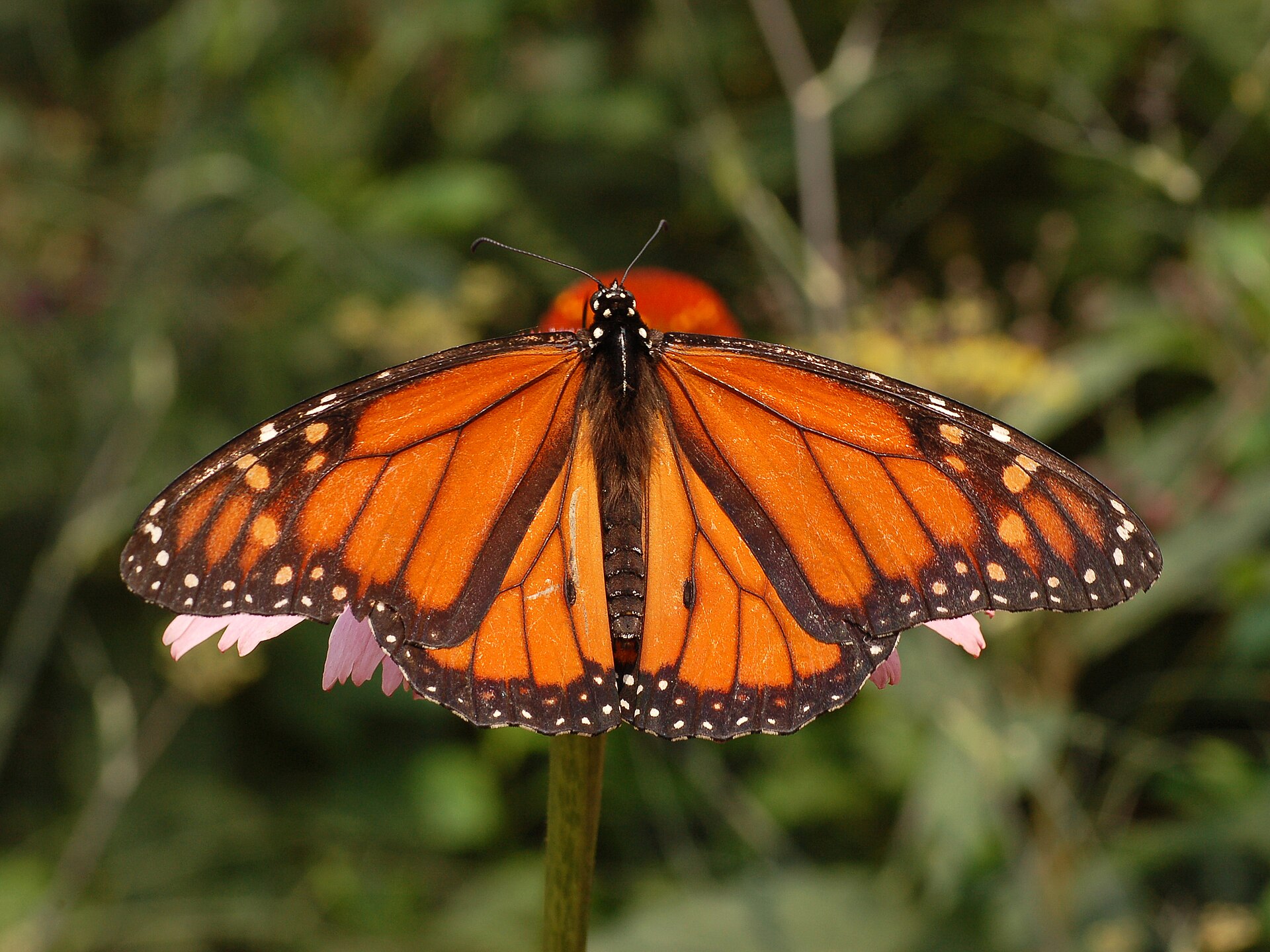
Orange wings with black veins and white-spotted black borders.
Credits:
Facts: wildlife reference. Images: primary image and secondary image, Wikimedia Commons.