
Mud Snake
Farancia abacura
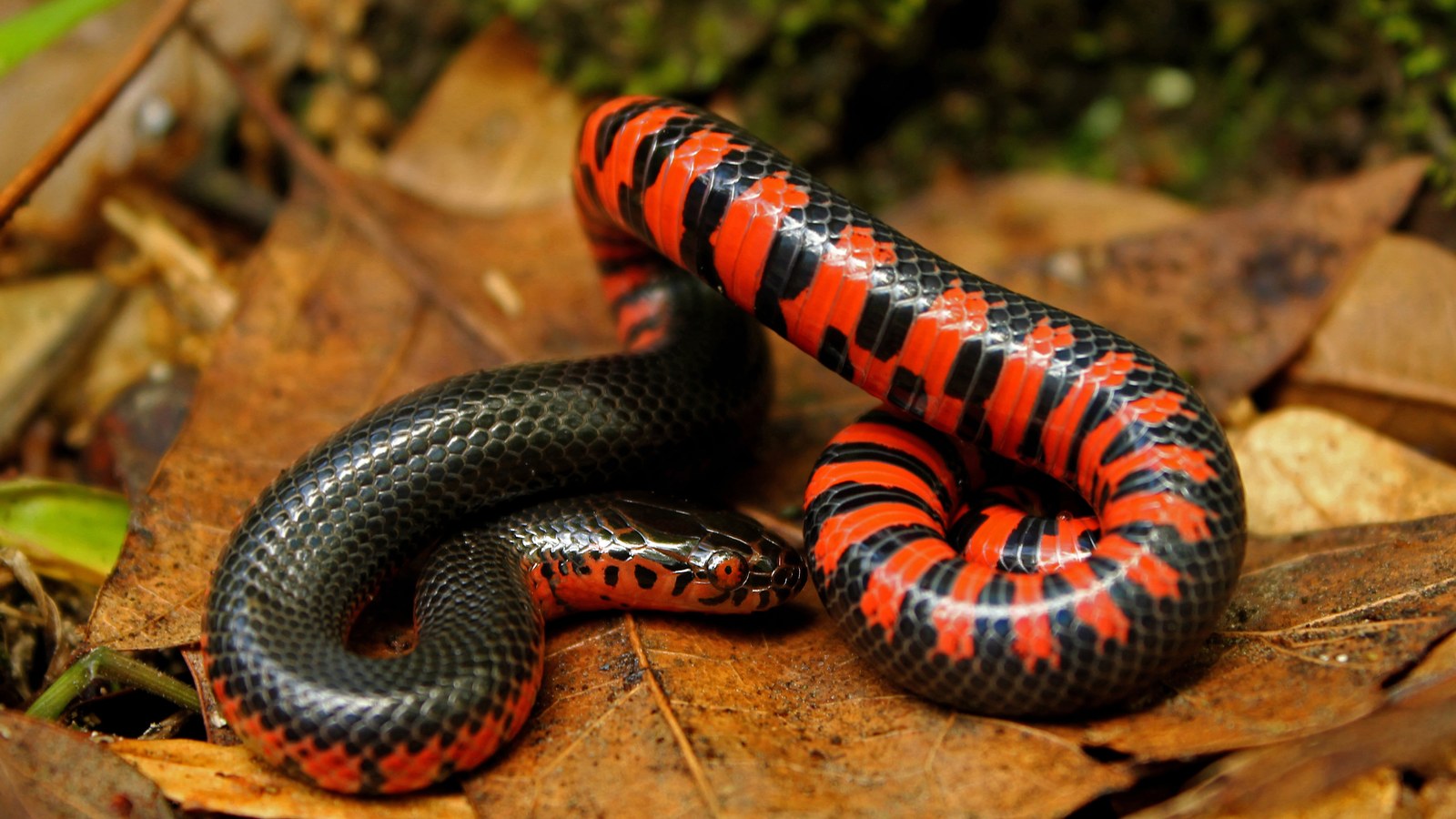
The mud snake is a large, glossy, nonvenomous Florida water snake with a black back and striking red-and-black belly bars.
Mud snakes spend most of their lives in swamps, marshes, wet ditches, slow rivers, and heavily vegetated ponds. Their secretive, aquatic habits make encounters uncommon even where the species is present.
Heavy rain sometimes brings them onto roads or yards near wetlands. Their bold colors may look alarming, but mud snakes are nonvenomous and usually remain calm when left alone.
Habitat:
Freshwater Wetlands, Lakes and Ponds, Rivers and Springs, Canals and Ditches
Area / Range:
Statewide
Diet:
Adults specialize in eating large aquatic salamanders, especially sirens and amphiumas. Young snakes also take smaller amphibians.
Behavior:
Mud snakes hunt underwater at night and hide in dense aquatic vegetation or debris by day. They rarely bite and may press the pointed tail tip against a handler without stinging.
Night
Active Times:
Best time to see:
Warm, rainy nights near swamps, marshes, wet ditches, and quiet roads bordering wetlands.
Florida Native Status:
Native
Conservation Status:
Least Concern globally. Wetland drainage, road mortality, and loss of aquatic salamander prey affect local populations.
Safety Level:
Harmless
Safety Information:
Do not kill or grab the snake. Keep pets back, open a clear route toward cover, and contact a qualified wildlife professional if the snake is trapped or identification is uncertain.
Benefits to Property:
Mud snakes are native predators that help maintain balanced wetland food webs. They do not damage lawns, plants, irrigation, or structures.
Property Concerns:
They create little property concern. Individuals may become trapped in pools, drains, garages, or fenced yards after heavy rain.
Fun Fact:
The pointed tail cannot sting. It helps the snake brace and position large, slippery salamanders while swallowing them.
Wildlife Laws:
Mud snakes are native Florida wildlife. Collection and possession must follow current FWC rules. Killing harmless snakes is unnecessary and may violate rules in protected areas.
Identification:
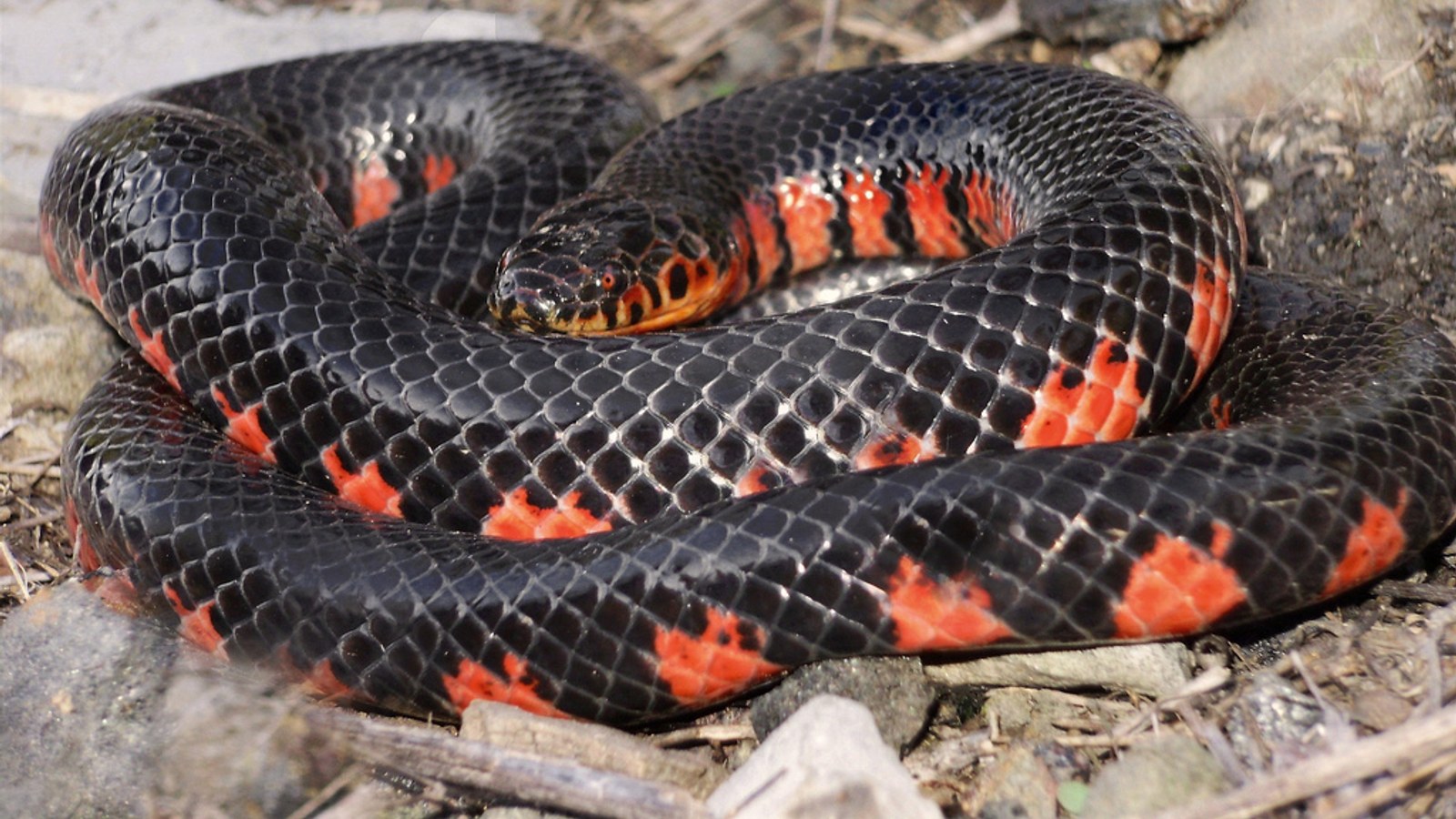
Mud snakes have smooth, shiny black scales above and alternating red or pink and black bars underneath. The body is heavy, the head is small, and the tail ends in a pointed scale used to brace against slippery prey.
Credits:
Facts: Mud snake species account. Images: primary and secondary, Wikimedia Commons.