
Muscovy Duck
Cairina moschata
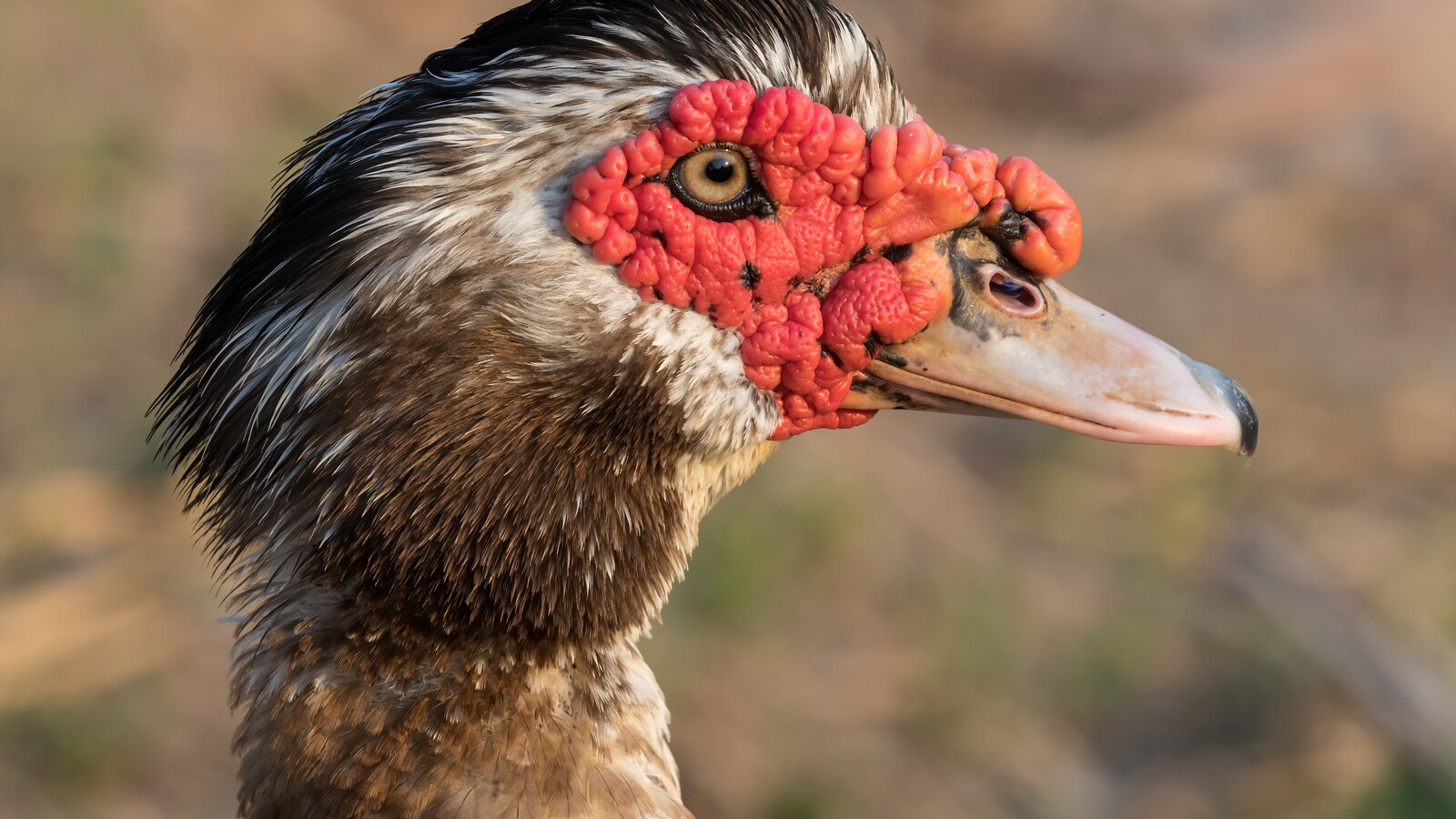
Muscovy ducks are large, heavy-bodied ducks with bare red facial skin. Feral flocks are common around Florida ponds, canals, and neighborhoods.
Florida’s free-ranging Muscovy ducks descend largely from domestic birds. They gather around ponds, canals, parks, and residential lakes where people often feed waterfowl.
Their quiet behavior and unusual face make them easy to recognize. Concentrated flocks create conflicts when food handouts keep too many birds in one location.
Habitat:
Lakes and Ponds, Freshwater Wetlands, Urban and Residential Areas
Area / Range:
Statewide
Diet:
Muscovy ducks eat grasses, seeds, aquatic plants, insects, snails, small fish, and food supplied by people.
Behavior:
They walk and graze more than many ducks, perch in trees or on roofs, and form loose flocks around dependable food. Males can become territorial during breeding.
Day
Active Times:
Best time to see:
Morning and late afternoon around neighborhood ponds, canals, parks, and waterfront lawns.
Florida Native Status:
Introduced
Conservation Status:
Feral Florida populations are established and widespread. The wild species is globally listed as Least Concern.
Safety Level:
Use Caution
Safety Information:
Do not hand-feed or corner them. Give protective adults room, keep children and pets away from nests, and clean droppings with gloves and wet methods that limit dust.
Benefits to Property:
They consume insects and plant material and add visible wildlife interest around water features.
Property Concerns:
Large flocks leave droppings on docks, patios, lawns, and walkways. Feeding increases crowding, aggression, poor water quality, and disease risk.
Fun Fact:
Muscovy ducks have strong claws and regularly perch above ground. Unlike noisy mallards, adult males usually make a low hissing sound.
Wildlife Laws:
Florida considers feral Muscovy ducks nonnative. Captured birds must not be released elsewhere. Control actions must follow federal rules, local ordinances, property permission, and humane methods.
Identification:
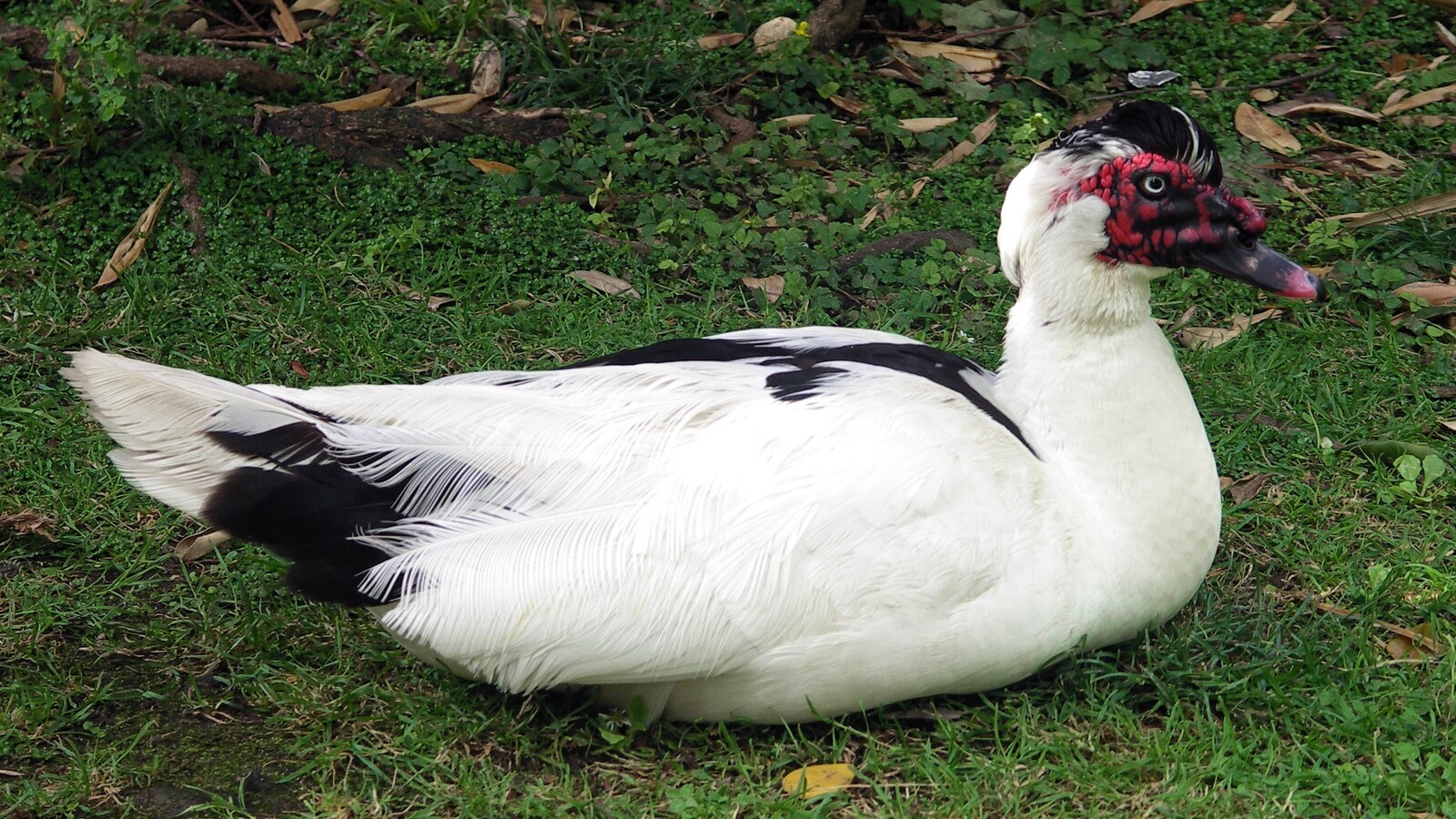
Look for a broad duck with a long tail, strong claws, black-and-white or variable domestic plumage, and bumpy red skin around the eyes and bill. Males are much larger and carry heavier facial caruncles.
Credits:
Facts: species reference. Images: primary and secondary, Wikimedia Commons.