
Nine-Banded Armadillo
Dasypus novemcinctus
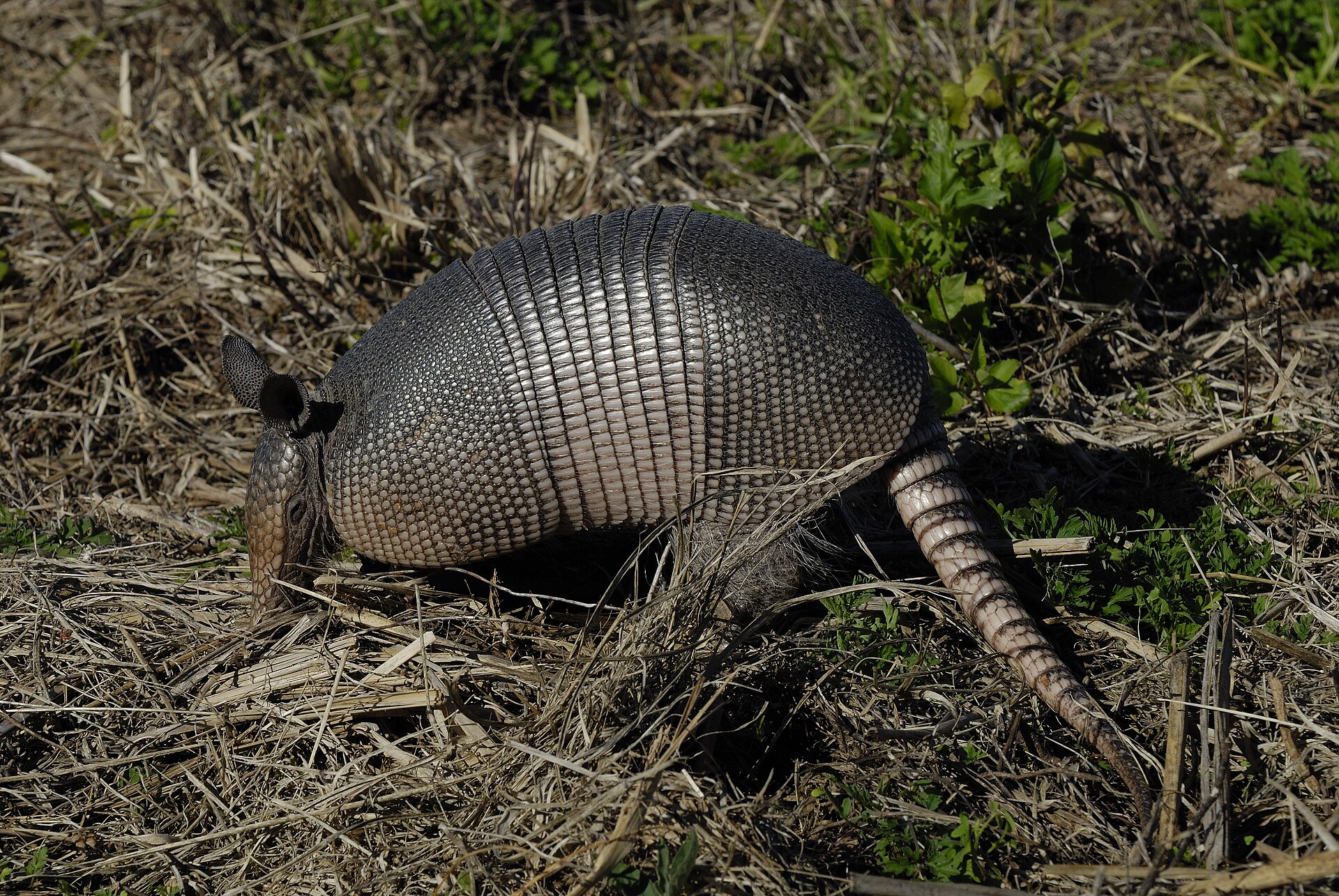
The introduced nine-banded armadillo is a strong digger frequently responsible for small holes in Florida lawns and planting beds.
Nine-banded armadillos entered Florida during the early twentieth century and now occur across most of the state. Their flexible armor covers the back, sides, head, and tail.
They locate underground insects by smell and dig rapidly with strong front claws. Feeding produces numerous shallow holes in irrigated lawns and gardens.
Habitat:
Scrub and Dry Prairie, Forests and Woodlands, Grasslands and Agricultural Areas, Urban and Residential Areas
Area / Range:
Statewide
Diet:
Armadillos eat grubs, beetles, ants, worms, and other soil invertebrates. They also consume some fruit, fungi, seeds, eggs, and small animals.
Behavior:
They are usually solitary and mostly nocturnal. Cold weather sometimes shifts activity into warmer daylight hours. Each animal uses multiple burrows.
Night, Dusk, Dawn
Active Times:
Best time to see:
Warm evenings and early mornings near lawns, woods, brush, and sandy soil.
Florida Native Status:
Introduced. Considered invasive in Florida.
Conservation Status:
Established nonnative species.
Safety Level:
Use Caution. Avoid Handling
Safety Information:
Do not handle wild armadillos. Keep pets away and avoid direct contact with blood or tissue. Use gloves when repairing disturbed soil.
Benefits to Property:
Feeding removes some grubs, beetles, ants, and other soil invertebrates.
Property Concerns:
Nightly digging damages turf and planting beds. Burrows near slabs, walls, walkways, or foundations create soil-stability concerns.
Fun Fact:
When startled, a nine-banded armadillo often jumps 3 to 4 feet straight upward. Each litter normally consists of four genetically identical young.
Wildlife Laws:
Local rules and approved control methods should be checked before trapping or removing wildlife. Avoid relocation without confirming current FWC requirements.
Identification:
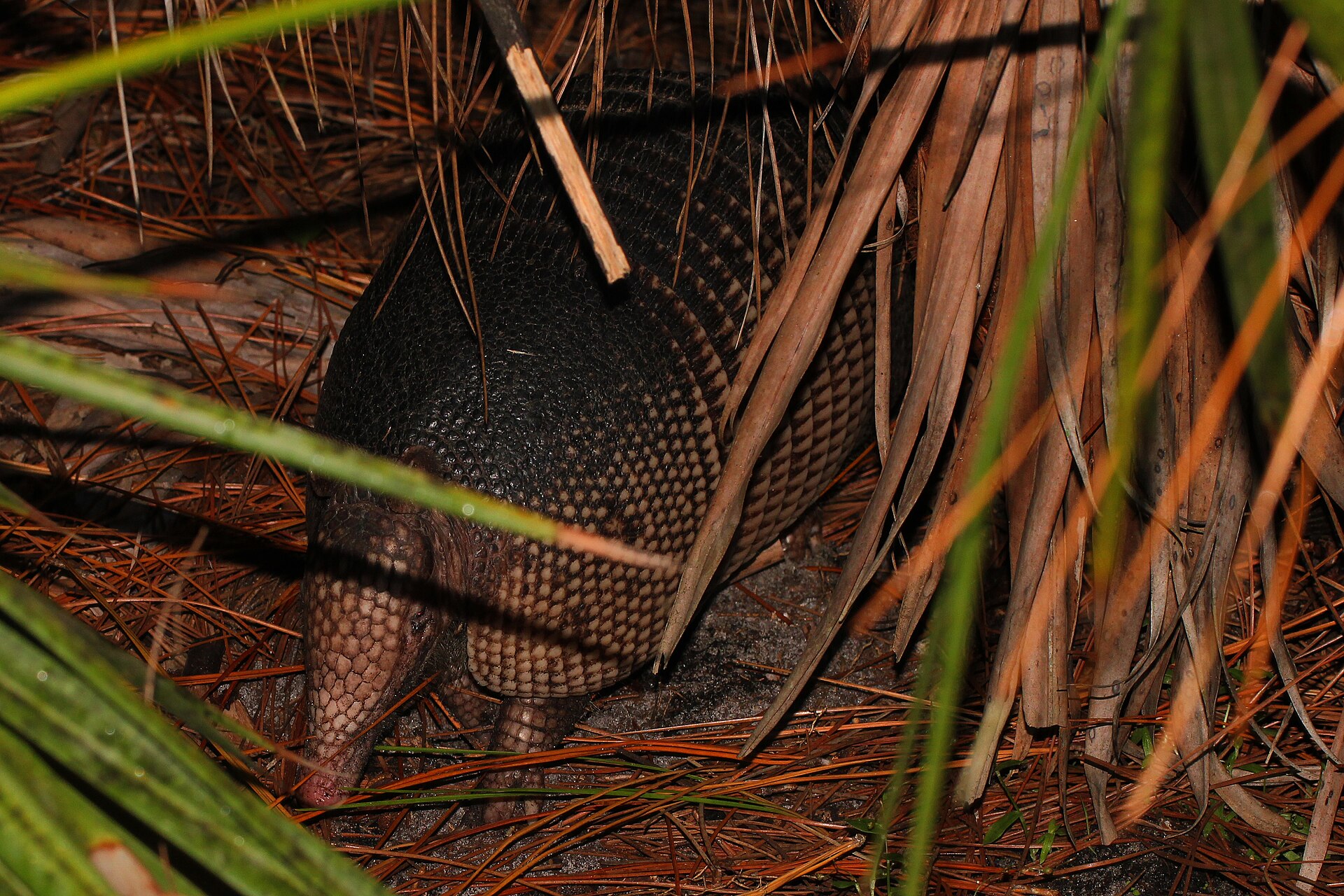
Look for a gray-brown armored body, tapered snout, long banded tail, large front claws, and small ears. Despite the name, the flexible middle armor does not always show exactly nine bands.
Credits:
Facts: UF/IFAS Wildlife of Florida Factsheet. Images: Merritt Island armadillo and WMA armadillo, Wikimedia Commons.