
Northern Waterthrush
Parkesia noveboracensis
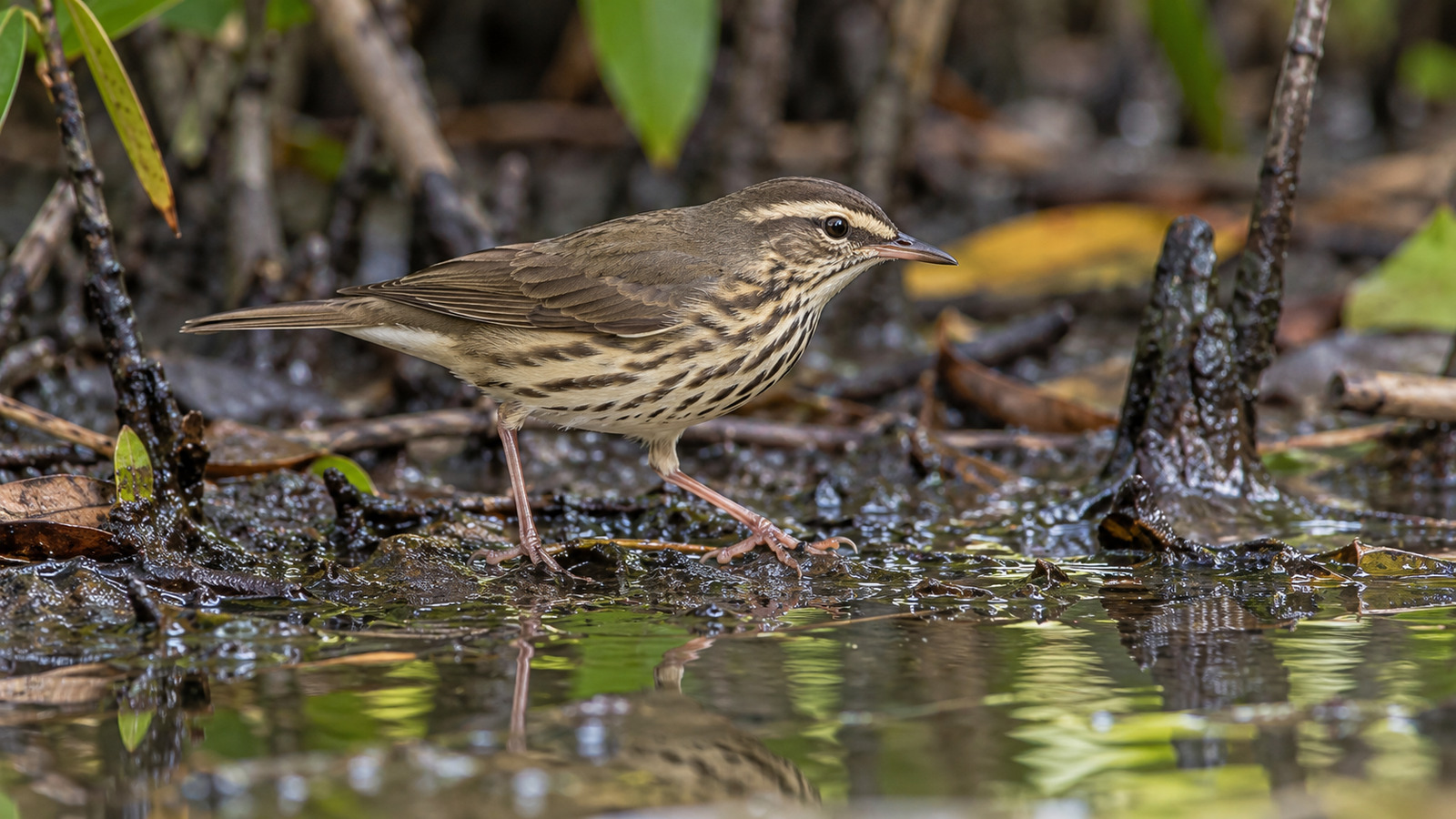
A ground-walking migratory warbler of Florida wetlands, known for dense breast streaks, a buff eyebrow, long legs, and constant tail bobbing.
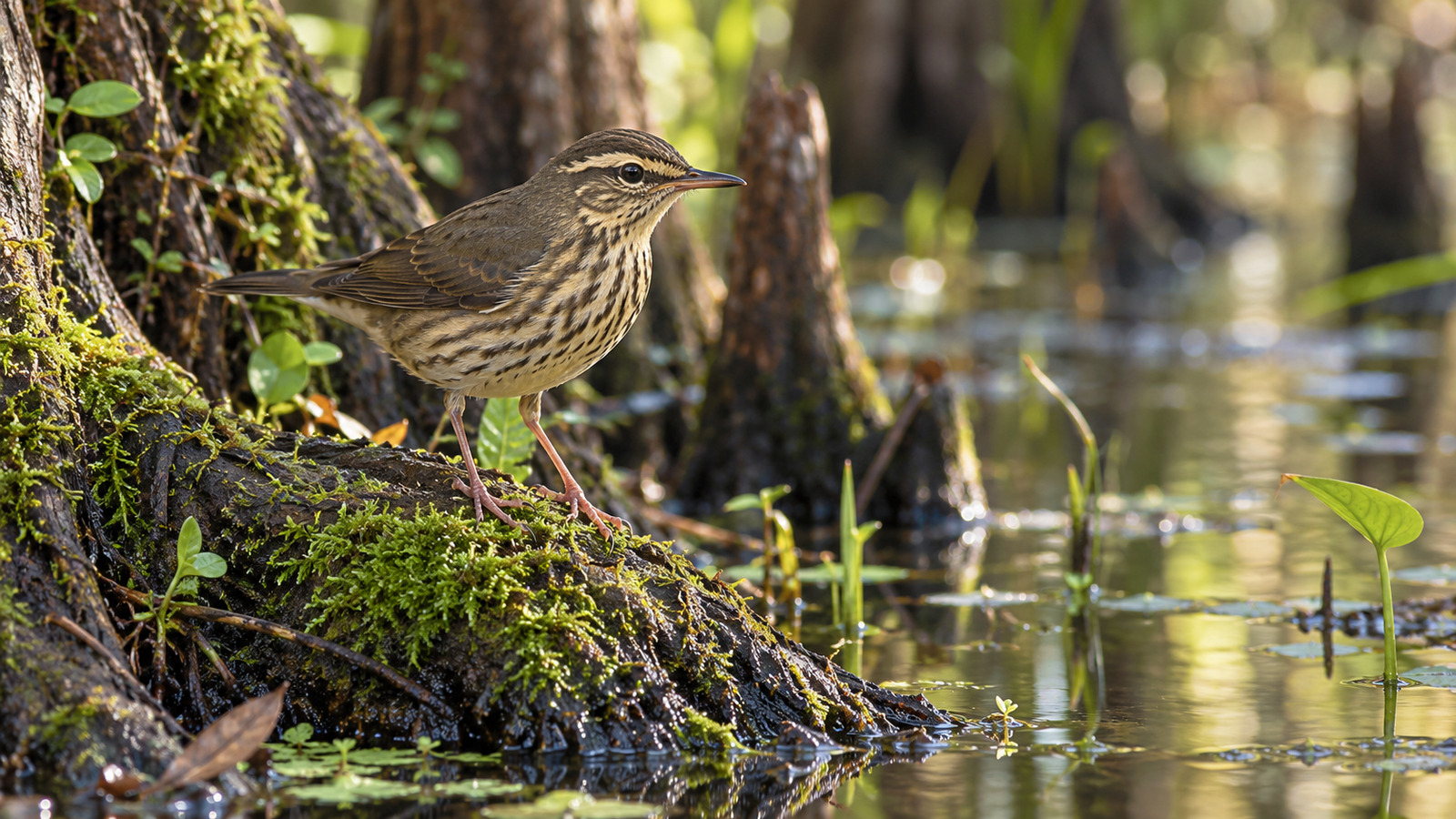
Northern Waterthrushes pass through Florida and winter in wet forests, wooded swamps, mangroves, marsh edges, and small shaded wetlands.
Despite the name, this bird is a warbler rather than a thrush. It depends on wet ground, shallow water, leaf litter, and dense cover.
Habitat:
Freshwater Wetlands, Mangroves and Salt Marshes, Forests and Woodlands, Estuaries and Bays
Area / Range:
Statewide
Diet:
Northern Waterthrushes eat aquatic and terrestrial insects, spiders, snails, small crustaceans, and other invertebrates found in mud and shallow water.
Behavior:
They walk along muddy shorelines and wet forest floors while repeatedly bobbing the rear of the body. The bill picks prey from wet leaves, soil, roots, and water margins.
Birds defend feeding territories during winter and often give a sharp call when disturbed.
Day
Active Times:
Best time to see:
Fall through spring around wooded swamps, mangrove edges, shaded ponds, and wet ditches
Florida Native Status:
Native Migrant
Conservation Status:
Low conservation concern overall, but wetland drainage, pollution, pesticide exposure, and loss of stopover habitat create local pressure.
Safety Level:
Harmless. Respect Nests
Safety Information:
Harmless to people and pets. Observe quietly from firm ground and avoid entering sensitive wetland vegetation.
Benefits to Property:
Northern Waterthrushes consume insects and other small invertebrates while signaling useful wetland cover and healthy shoreline habitat.
Property Concerns:
They do not damage landscapes. Draining small wet areas, clearing shoreline cover, and heavy pesticide use reduce migrant feeding habitat.
Fun Fact:
Northern Waterthrushes often use very small wetlands during migration, including shallow rain pools when protective cover remains nearby.
The species was formerly placed in the genus Seiurus with the Ovenbird.
Wildlife Laws:
Protected migratory bird. Do not capture, harm, possess, or destroy active nests, eggs, or young. Federal authorization may be required before removing an active nest.
Identification:
Northern Waterthrushes are olive-brown above with a buff eyebrow, dense dark streaking across the throat and underparts, long pinkish legs, and a slim bill.
The eyebrow usually narrows behind the eye. Compared with Louisiana Waterthrush, this species favors still or slow water and shows heavier throat streaking.