
Oscar
Astronotus ocellatus
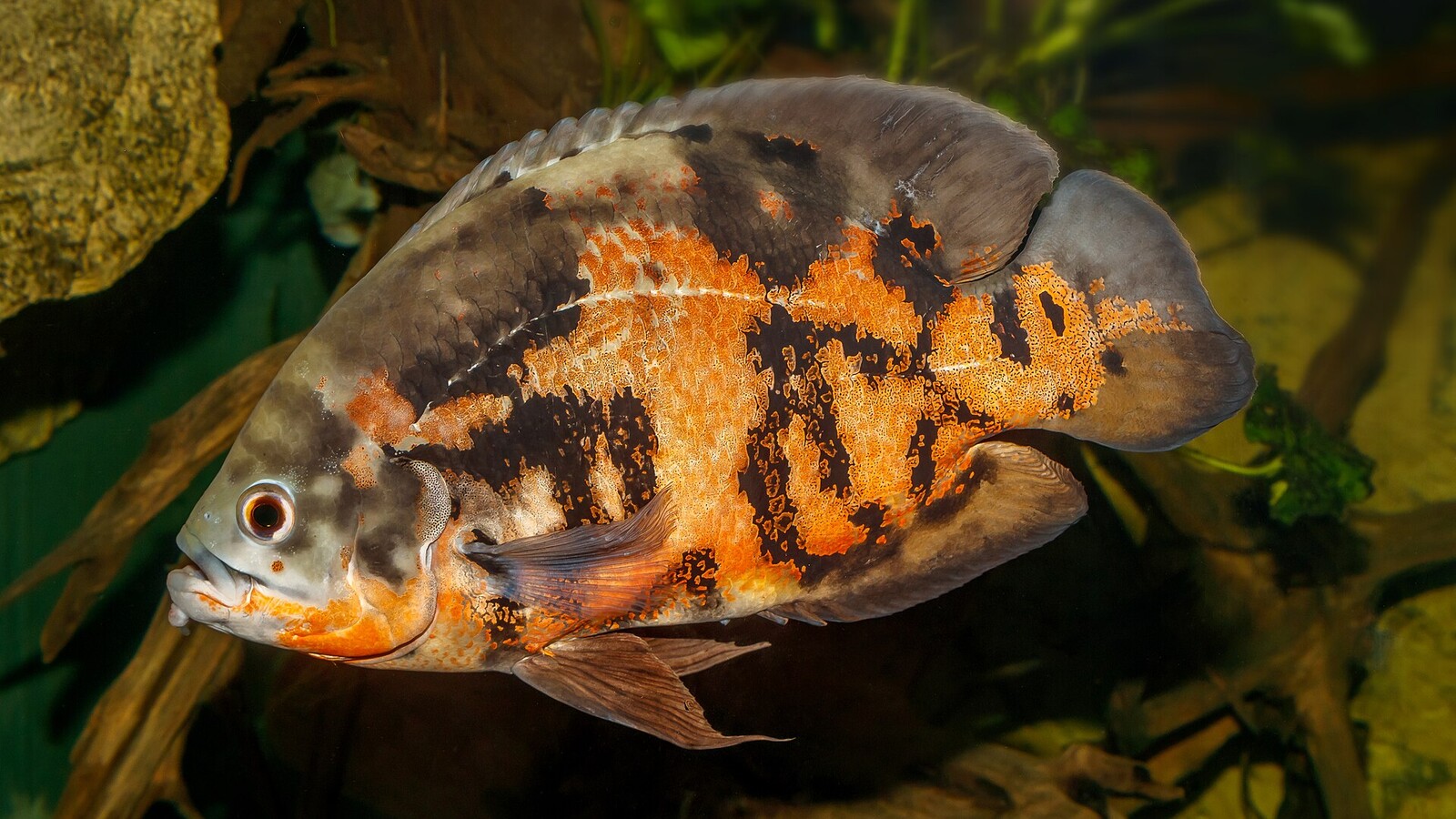
Oscars are large South American cichlids established in South Florida canals, where dark bodies and orange markings make them easy to recognize.
Oscars became established in South Florida after aquarium releases. Warm canals, ponds, and lakes provide year-round habitat, especially where vegetation and structure offer cover.
They are popular sport fish because they strike lures aggressively and fight hard for their size.
Habitat:
Canals and Ditches, Lakes and Ponds
Area / Range:
South Florida
Diet:
Oscars eat small fish, crayfish, shrimp, aquatic insects, snails, and other available animal prey.
Behavior:
They hold around cover, defend spawning sites, and investigate moving prey. Adults guard eggs and young more actively than many Florida native fishes.
Day
Active Times:
Best time to see:
Daytime in clear South Florida canals and lakes, especially near vegetation, culverts, and shoreline structure.
Florida Native Status:
Introduced
Conservation Status:
Established nonnative freshwater fish in South Florida with no conservation concern in the state.
Safety Level:
Low Risk
Safety Information:
Handle fish with wet hands, watch the dorsal spines, and use pliers for hooks. Do not place aquarium fish or transport water into natural systems.
Benefits to Property:
They provide fishing opportunities in urban canals and consume abundant small aquatic prey.
Property Concerns:
As introduced predators, Oscars compete with native fishes and consume native aquatic animals. Aquarium release can spread disease and new populations.
Fun Fact:
Oscars recognize feeding routines in aquariums and show complex parental care. The tail spot may distract predators from the head.
Wildlife Laws:
Current FWC freshwater fishing licenses, gear rules, and location restrictions apply. It is illegal and harmful to release aquarium fish into Florida waters.
Identification:
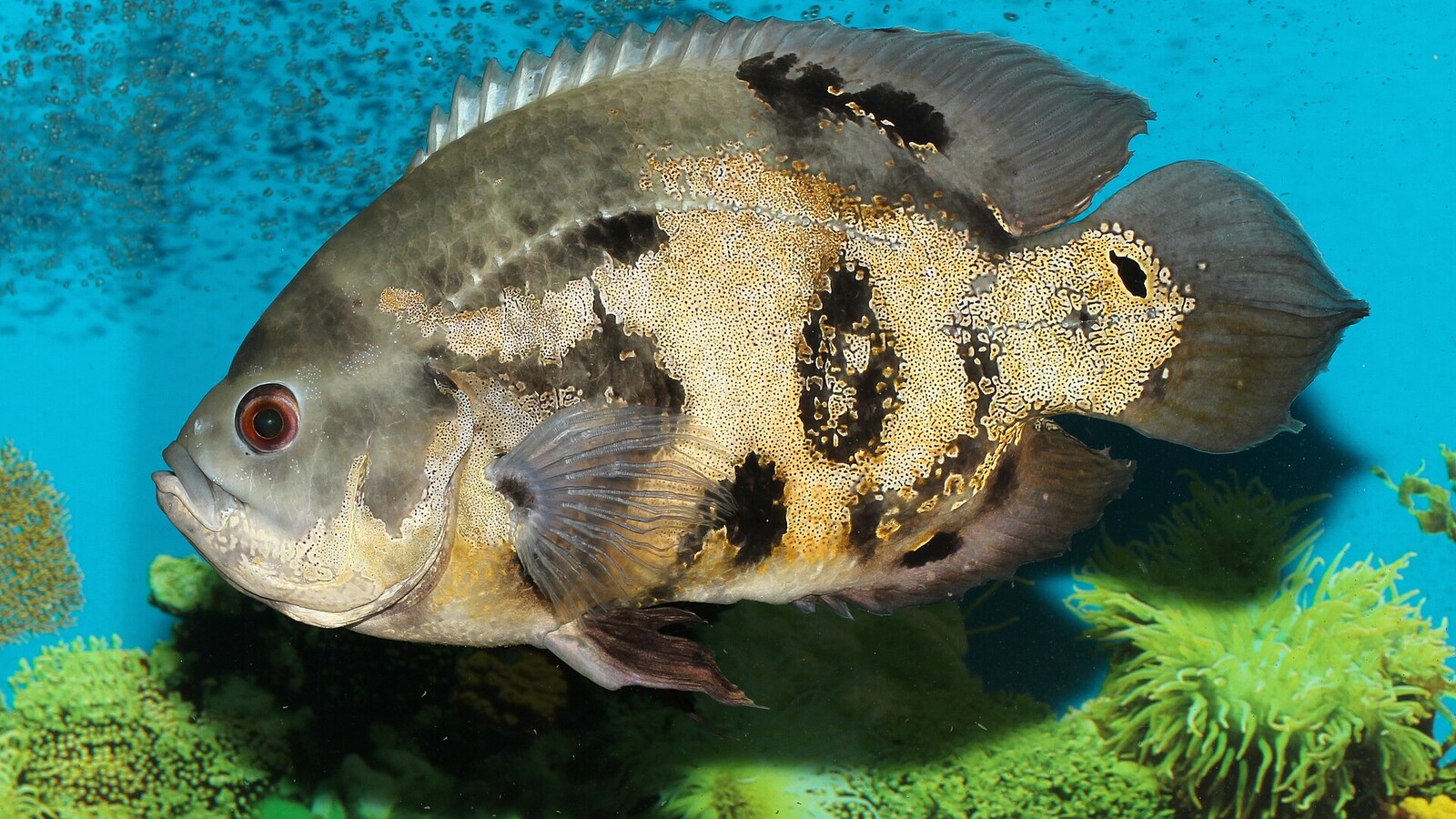
Look for a deep, oval body, large mouth, dark olive or charcoal color, irregular orange markings, and a dark eye-like spot near the tail.
Credits:
Facts: species reference. Images: primary and secondary, Wikimedia Commons.