
Osprey
Pandion haliaetus
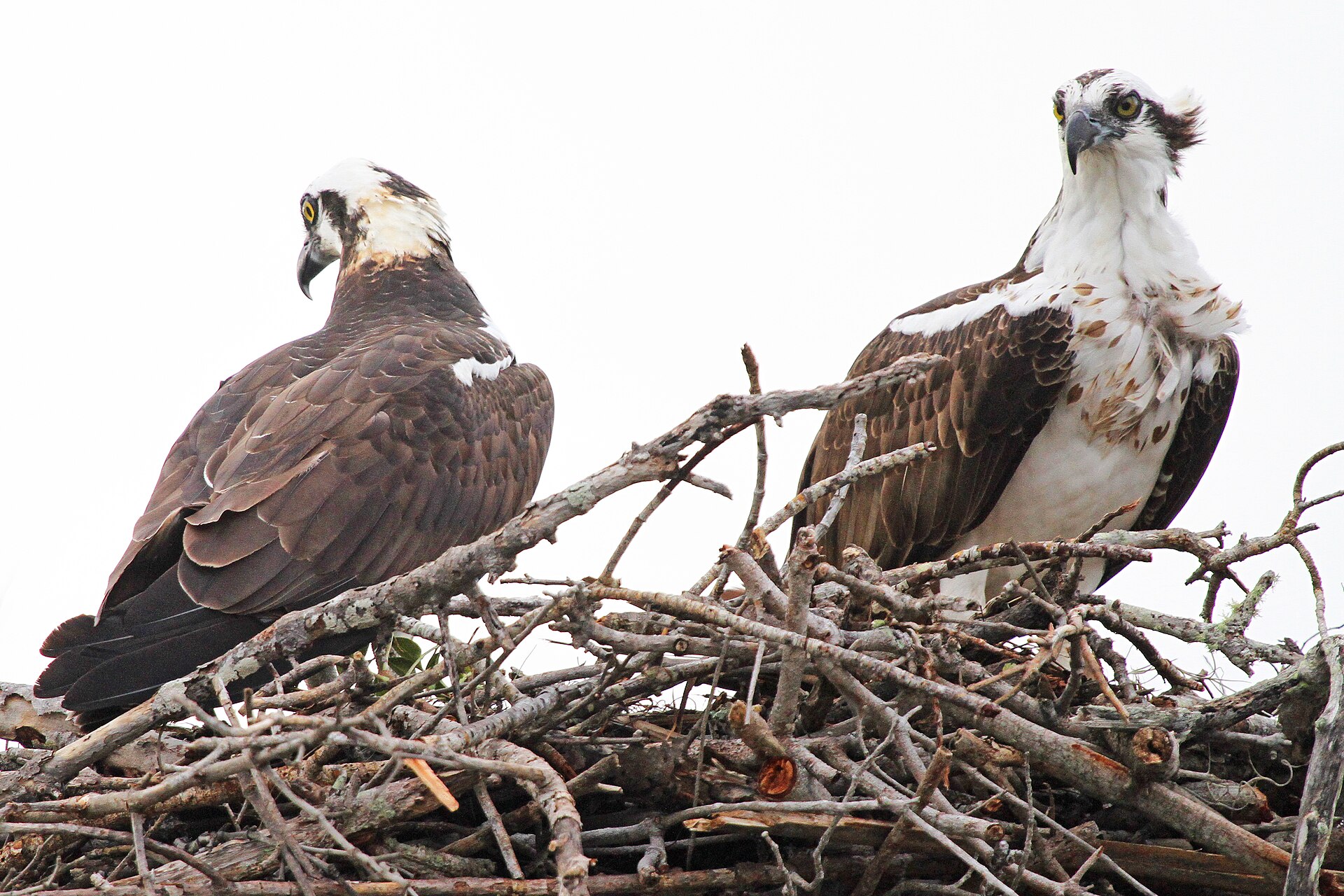
The osprey is a fish-eating bird of prey commonly seen above Tampa Bay, rivers, lakes, and coastal shorelines.
Ospreys live closely with Florida’s waterways. They nest on tall trees, utility structures, channel markers, poles, and nesting platforms.
The species is specially adapted to catch live fish. Long legs, curved talons, and rough foot pads help secure slippery prey.
Habitat:
Lakes and Ponds, Rivers and Springs, Estuaries and Bays, Coastal Waters
Area / Range:
Statewide
Diet:
Ospreys eat almost entirely fish captured alive near the water’s surface.
Behavior:
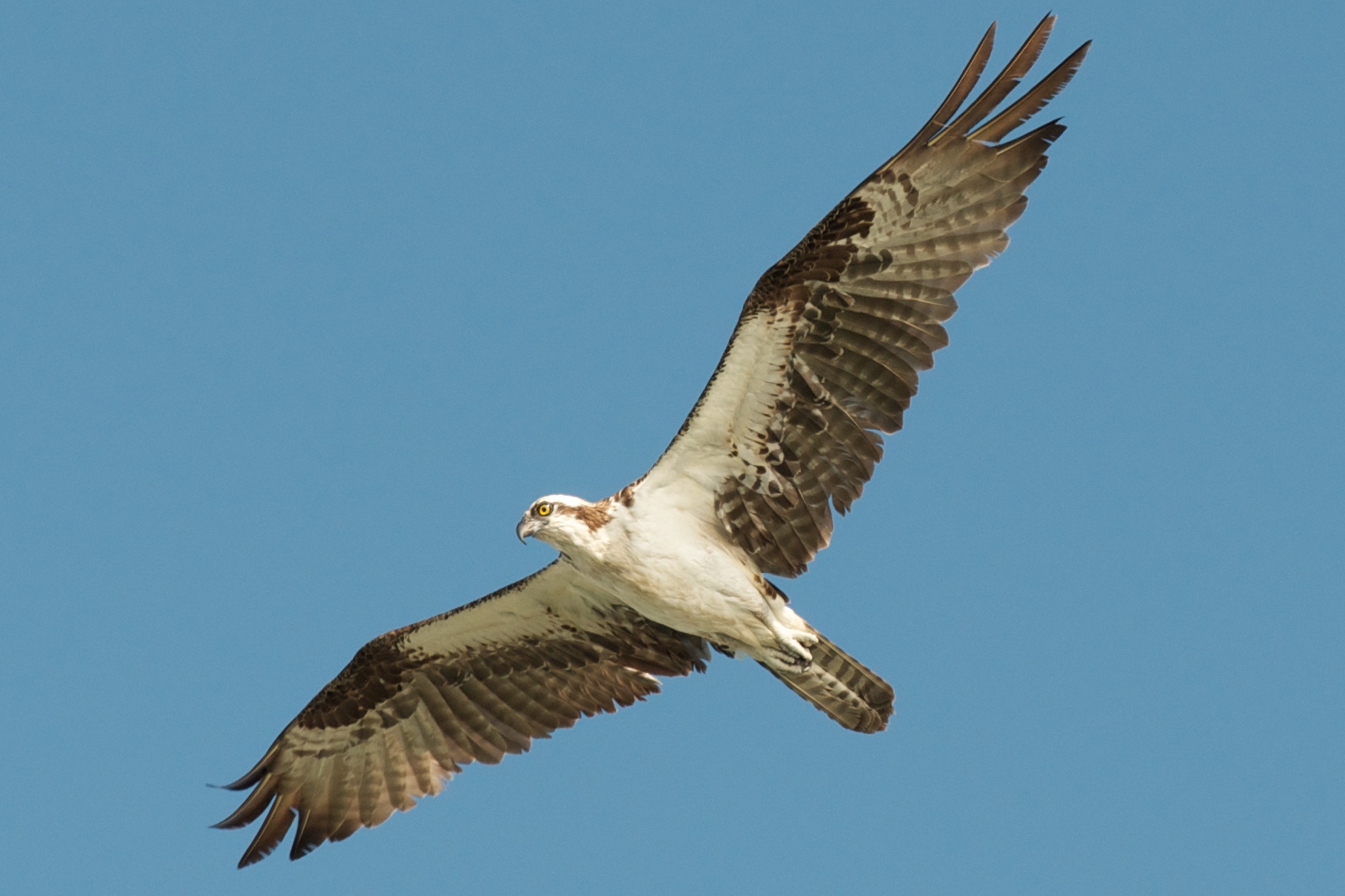
They hover or circle above water before plunging feet-first after fish. A captured fish is often turned head-forward during flight.
Day
Active Times:
Best time to see:
Daylight near open water, nesting platforms, channel markers, and tall waterfront structures.
Florida Native Status:
Native
Conservation Status:
Common in much of Florida. The Monroe County population has had separate historical conservation attention.
Safety Level:
Harmless. Protected Wildlife
Safety Information:
Give active nests space. Never climb a nesting structure or disturb adults, eggs, or young.
Benefits to Property:
Ospreys provide natural wildlife viewing and reflect productive fish populations and connected aquatic habitat.
Property Concerns:
Large stick nests on utility structures sometimes require professional coordination. Never remove an active nest without legal authorization.
Fun Fact:
Ospreys have reversible outer toes and barbed foot pads that help hold fish. They often reuse and enlarge nests for years.
Wildlife Laws:
Ospreys, eggs, young, and active nests receive protection under the federal Migratory Bird Treaty Act.
Identification:
Look for a large raptor with long angled wings, white underparts, brown upperparts, a white head, and a dark stripe through the eye.
Credits:
Facts: Cornell Lab of Ornithology. Images: perched osprey and flying osprey, Wikimedia Commons.