
Ovenbird
Seiurus aurocapilla
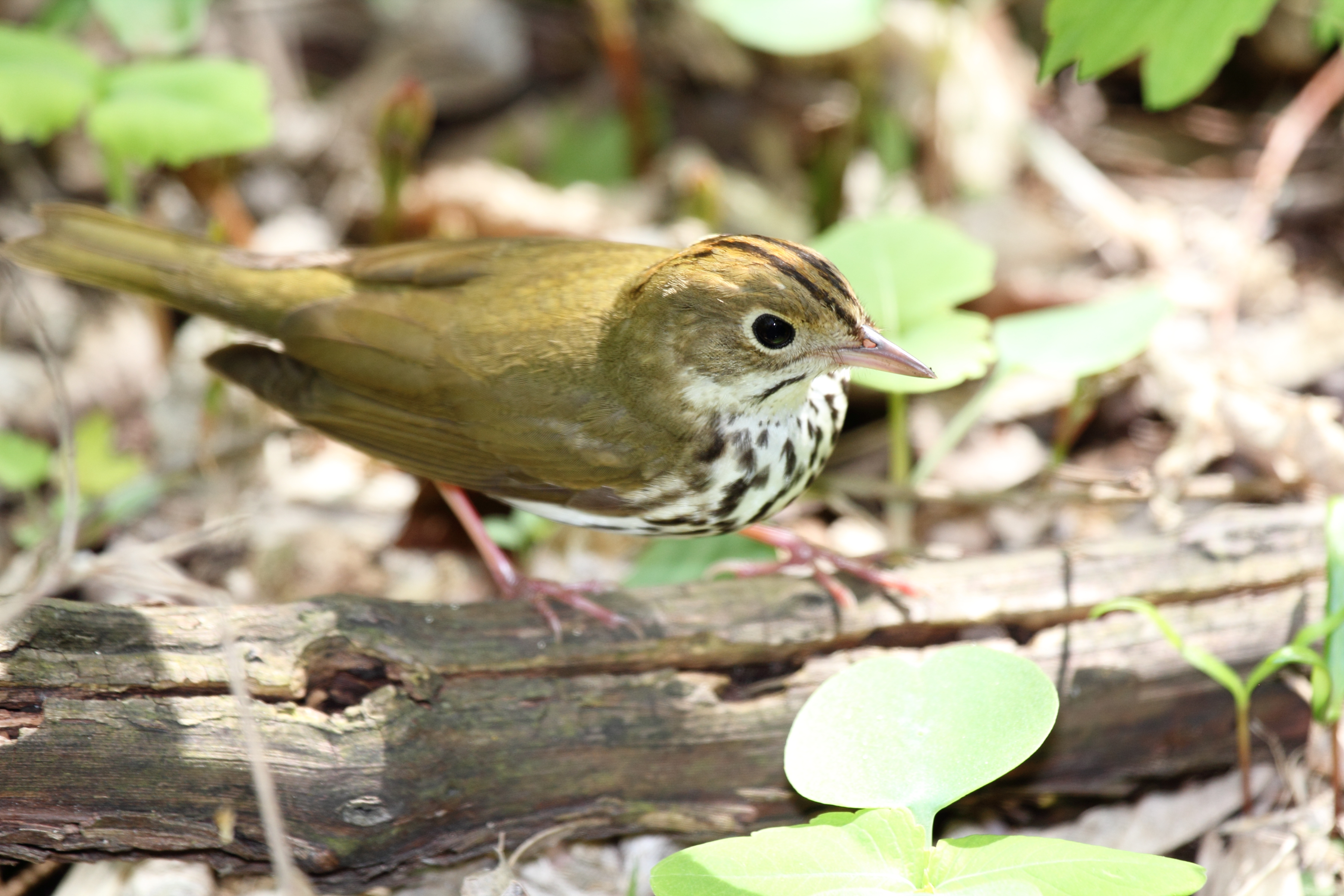
A ground-walking warbler with a striped olive back, bold breast spots, and an orange crown edged in black.
Ovenbirds breed in northern forests and pass through Florida on migration. Some spend winter in the state, using shaded woodland with leaf litter and dense cover.
They walk across the forest floor while searching among fallen leaves. Their name comes from the domed shape of the nest built on the ground in breeding areas.
Habitat:
Forests and Woodlands
Area / Range:
Statewide
Diet:
Insects, spiders, and other small invertebrates found in leaf litter make up most of the diet.
Behavior:
Rather than hopping high in foliage, Ovenbirds walk deliberately on the ground and flip leaves while foraging. Their loud repeated song is most often heard on breeding grounds.
Day
Active Times:
Best time to see:
Early morning during spring and fall migration in shaded woodland leaf litter
Florida Native Status:
Native Migratory Bird
Conservation Status:
Forest fragmentation and loss of habitat along the migration route affect this woodland species.
Safety Level:
Harmless. Respect Nests
Safety Information:
Harmless to people and pets. Leave birds and ground nests undisturbed.
Benefits to Property:
The species consumes forest-floor invertebrates and signals the value of shaded, layered habitat and intact leaf litter.
Property Concerns:
It does not damage lawns or buildings. Clearing all leaf litter, free-roaming cats, and window strikes reduce safe habitat for migrants.
Fun Fact:
Its arched nest with a side entrance resembles an old-fashioned outdoor oven, giving the bird its common name.
Wildlife Laws:
Protected under the federal Migratory Bird Treaty Act. Do not capture, harm, or possess birds or disturb active nests, eggs, or young without authorization.
Identification:
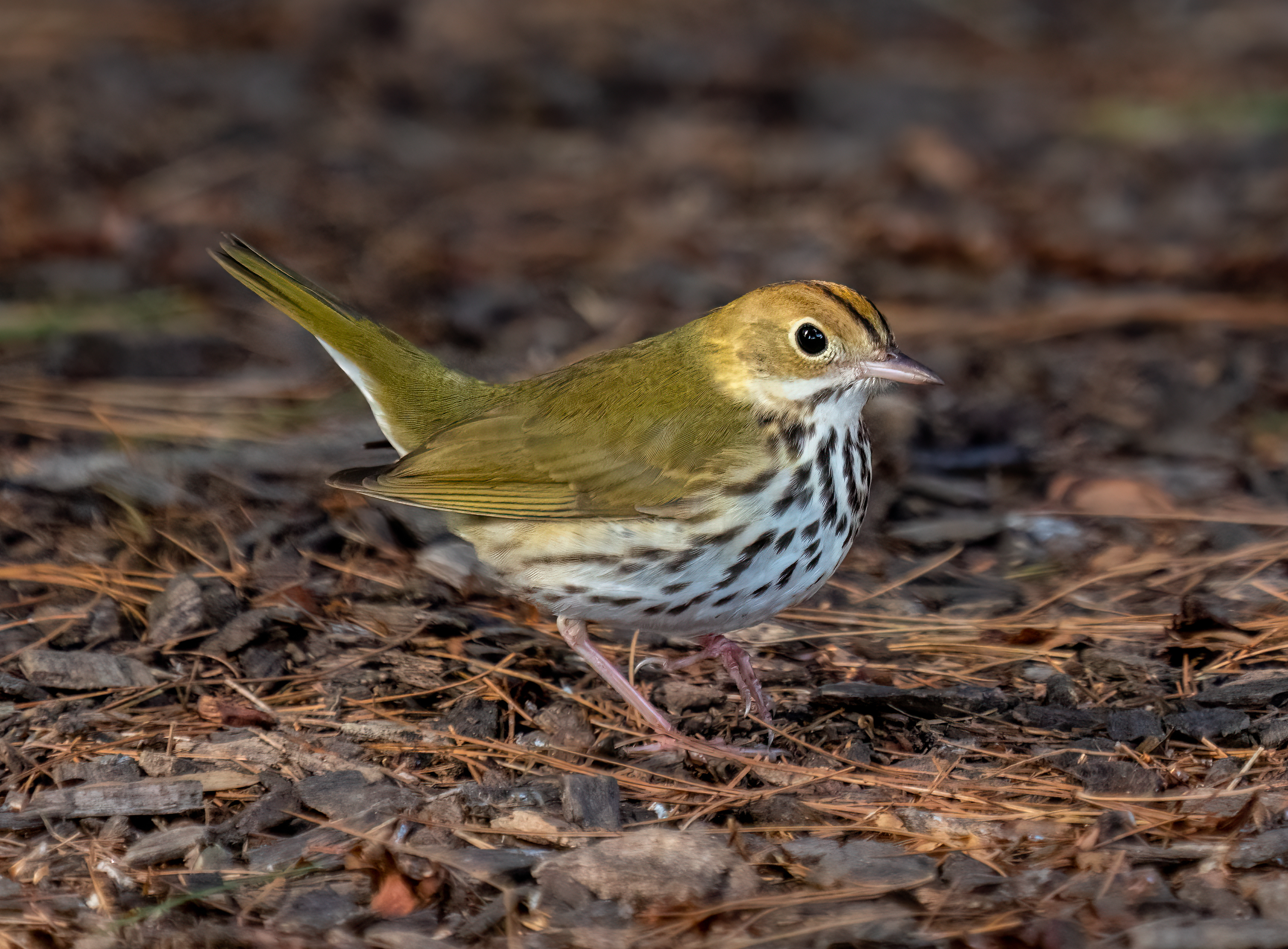
The olive-brown back and white breast with heavy dark spots resemble a small thrush, but the bird has a warbler's pointed bill.
An orange crown stripe bordered by black and a white eye ring are useful identification marks.