
Peters's Rock Agama
Agama picticauda
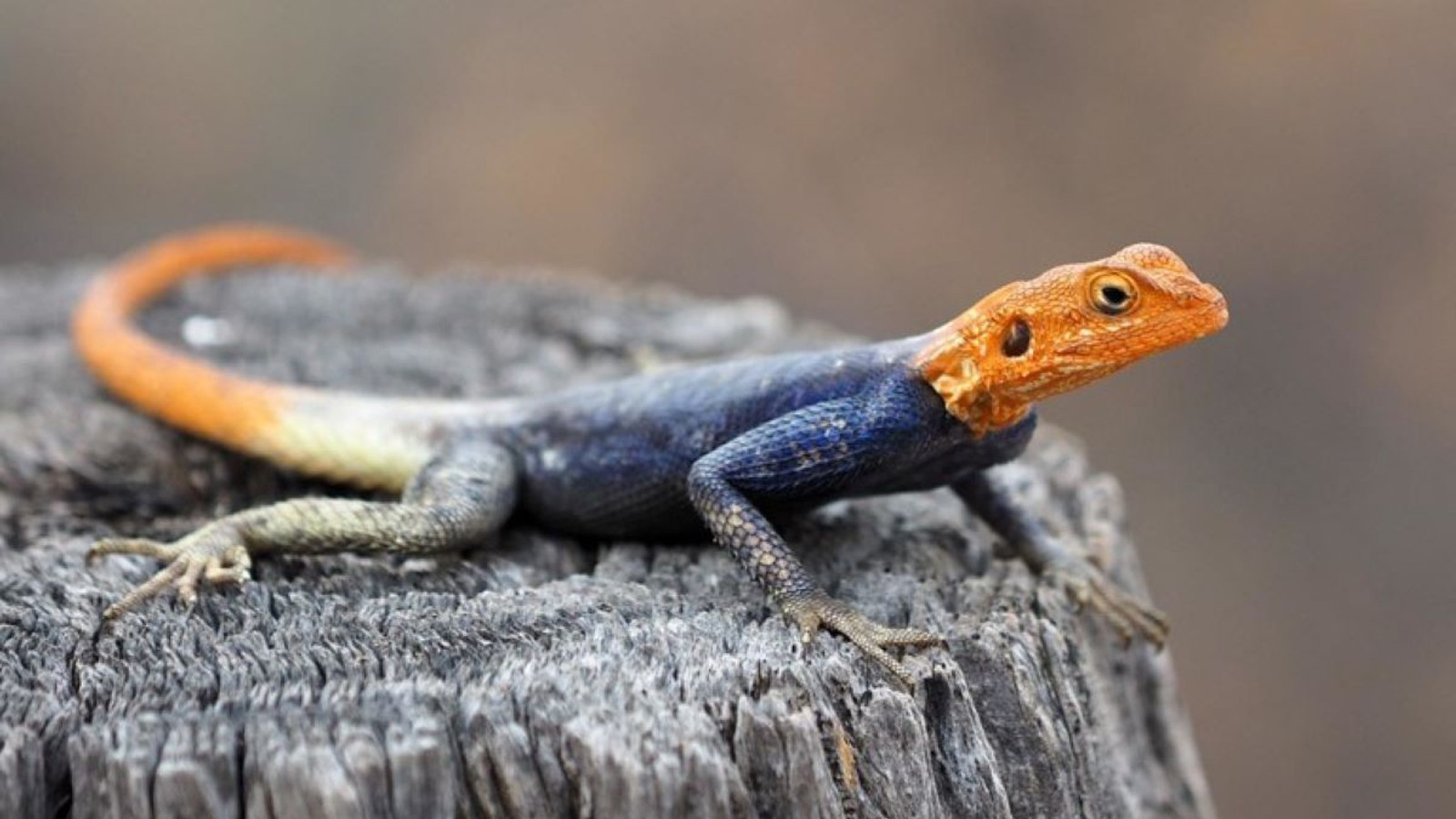
A vivid orange-and-blue nonnative lizard now established in urban areas of central and southern Florida.
Peters's rock agama is a nonnative African lizard introduced through the pet trade and established in parts of Florida. Its population has expanded through urban and suburban corridors in central and southern portions of the peninsula.
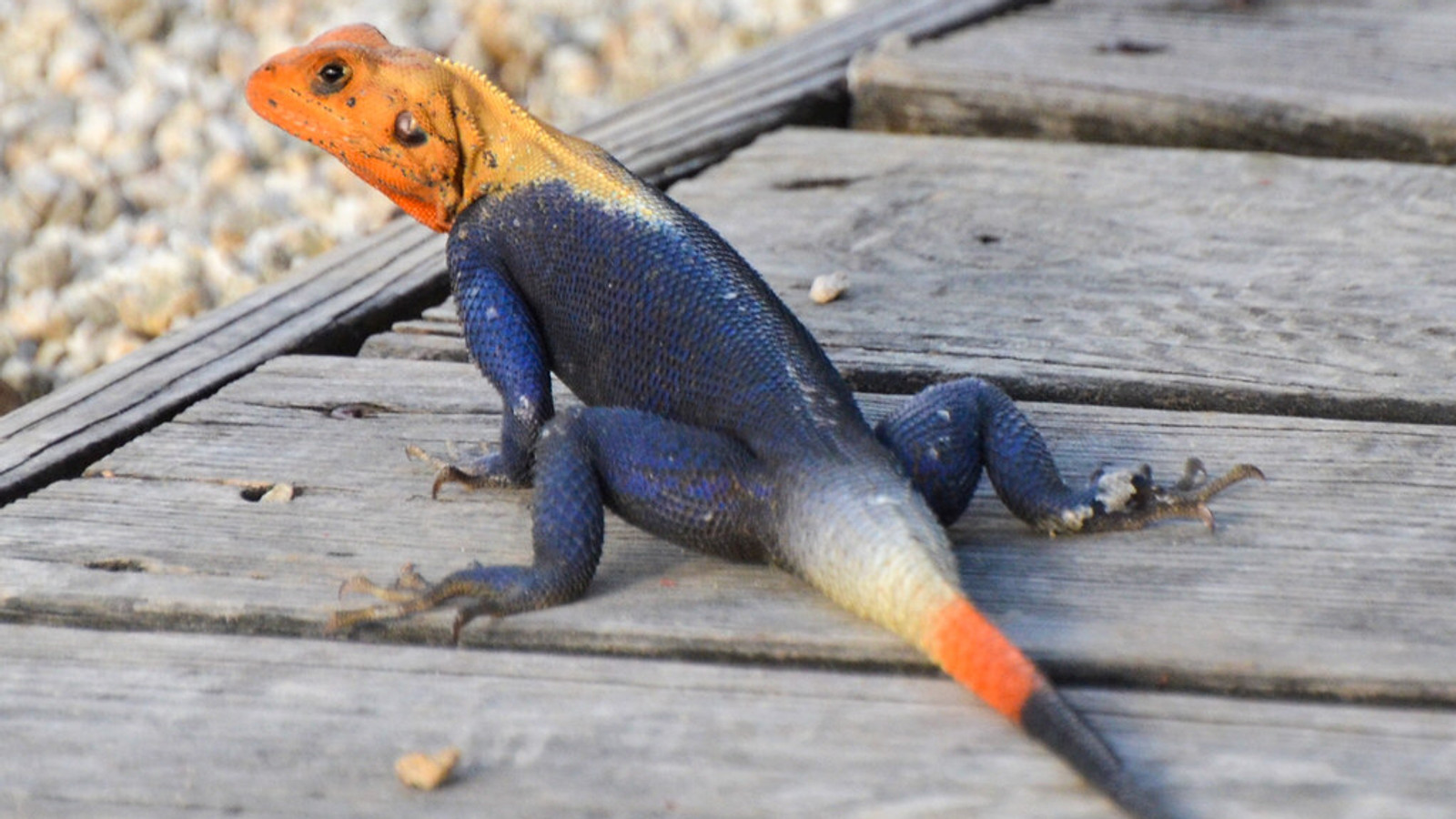
Breeding males are conspicuous on walls, curbs, tree trunks, and pavement, while females and juveniles are brownish and more difficult to notice.
Habitat:
Urban and Residential Areas, Scrub and Dry Prairie, Grasslands and Agricultural Areas
Area / Range:
Central Florida, South Florida, Atlantic Coast
Diet:
Peters's rock agamas eat insects, spiders, and other invertebrates. Larger individuals may also take small lizards or other small vertebrates and occasionally plant material.
Behavior:
They are diurnal sit-and-wait predators that bask on elevated surfaces, dash after prey, and retreat into walls, rock crevices, drains, and other shelter. Males defend visible display sites.
Day
Active Times:
Best time to see:
Warm sunny days on walls, curbs, tree trunks, fences, and pavement
Florida Native Status:
Introduced and established nonnative species
Conservation Status:
Nonnative in Florida; not protected except by anti-cruelty law
Safety Level:
Caution
Safety Information:
Peters's rock agamas are not venomous and usually flee, but they may bite if captured. Avoid handling, wash after contact with reptiles or contaminated surfaces, and keep pets from chasing them.
Benefits to Property:
They consume insects around developed areas, but as a nonnative predator they are not considered a preferred form of pest control.
Property Concerns:
Large populations may compete with native lizards and consume native insects or small vertebrates. They can shelter in walls and structural crevices but usually cause little direct property damage.
Fun Fact:
The formal common name uses Peters's with two consecutive s sounds. Males become dramatically brighter during breeding condition, while females remain cryptically patterned.
Wildlife Laws:
This nonnative lizard may be humanely removed from private property with landowner permission. Follow current Florida rules, never relocate or release captured animals, and comply with anti-cruelty requirements.
Identification:
Breeding males have a bright orange or red head, dark blue to black body, and orange markings on the tail. Females and young are mottled brown with lighter markings. Adults are sturdy, fast-moving lizards commonly 8 to 12 inches long.