
Pied-Billed Grebe
Podilymbus podiceps
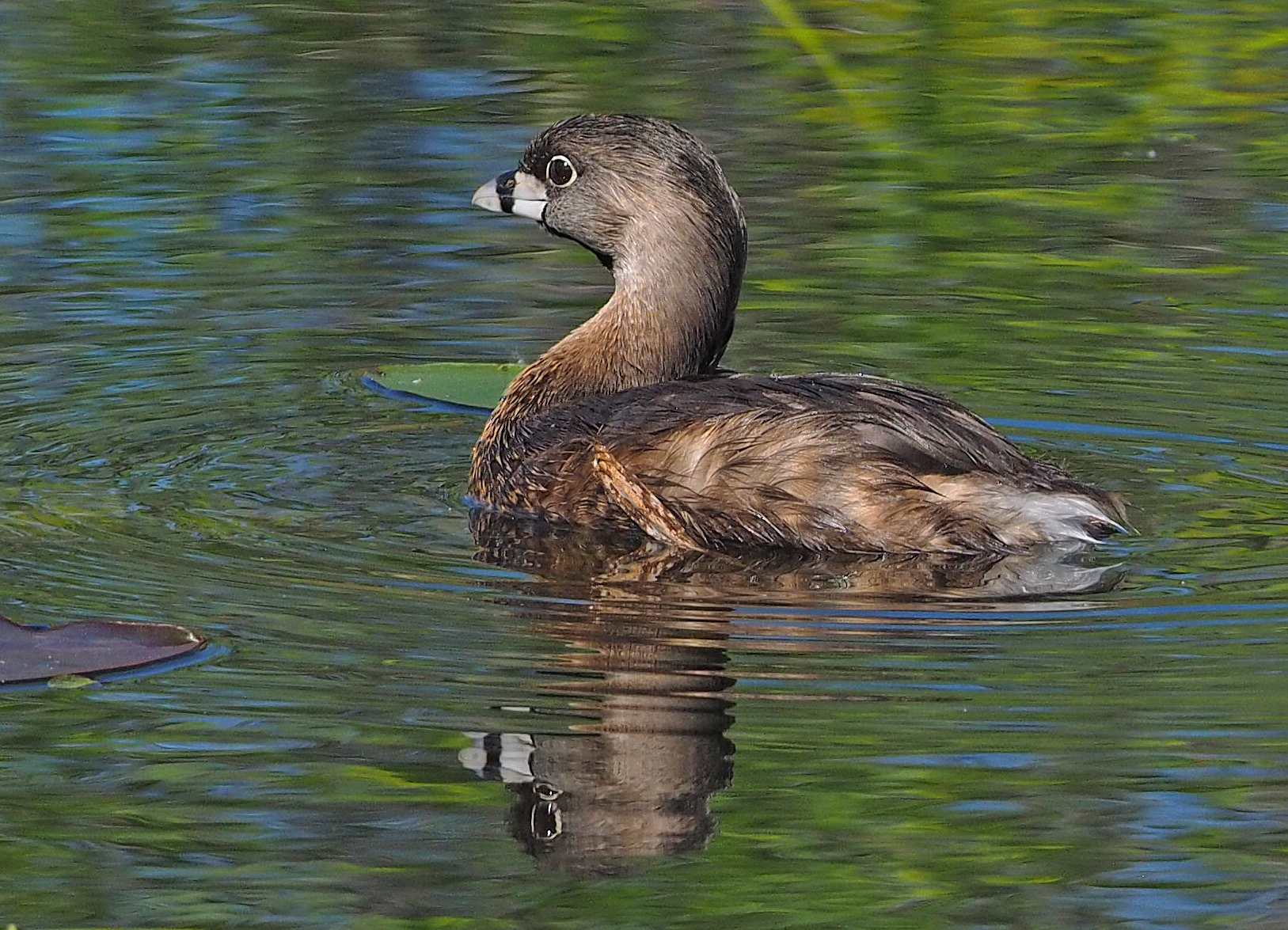
A small, compact diving waterbird with a thick bill that vanishes underwater in vegetated ponds.
Pied-Billed Grebes use freshwater ponds, lakes, and marshes with emergent vegetation. They are present in Florida during much of the year, and breeding occurs in suitable wetlands.
Unlike ducks, grebes have lobed toes and sit low in the water. They dive quietly and often surface far from where they disappeared.
Habitat:
Lakes and Ponds, Freshwater Wetlands
Area / Range:
Statewide
Diet:
Aquatic insects, crustaceans, small fish, and other small water animals are captured while diving.
Behavior:
This grebe dives to hunt and can sink gradually below the surface. Adults build floating nests anchored to wetland plants.
Day
Active Times:
Best time to see:
Fall through spring on ponds and marshes; also year-round where breeding
Florida Native Status:
Native Bird
Conservation Status:
Widespread, but dependent on wetlands with good water quality and adequate cover.
Safety Level:
Harmless. Respect Nests
Safety Information:
Harmless to people and pets. Watch from shore and give adults with chicks room.
Benefits to Property:
Grebes are part of healthy pond food webs and provide a visible sign of wetland habitat with aquatic prey and vegetation.
Property Concerns:
They do not damage landscaped ponds. Keep a buffer around vegetated shorelines and avoid disturbing nesting cover.
Fun Fact:
Newly hatched chicks often ride on an adult's back. The ring on the breeding adult's bill gives the species its name.
Wildlife Laws:
Protected under the federal Migratory Bird Treaty Act. Do not capture, harm, or disturb birds or active nests without authorization.
Identification:
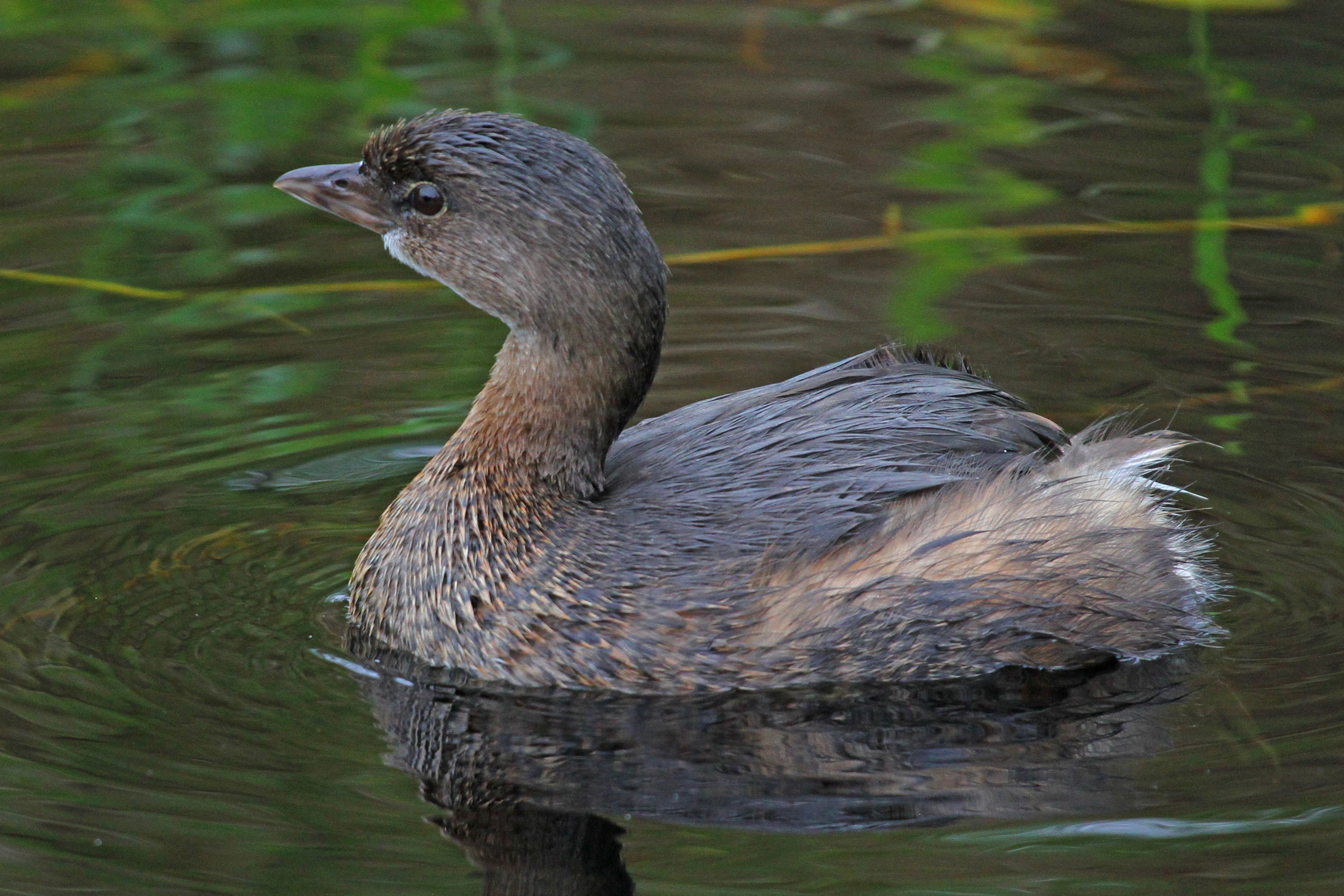
A blocky head, short thick bill, rounded body, and almost absent tail create a compact profile.
Breeding adults show a conspicuous black ring around the pale bill and a dark throat patch. Nonbreeding birds are plainer brown.