
Queen Angelfish
Holacanthus ciliaris
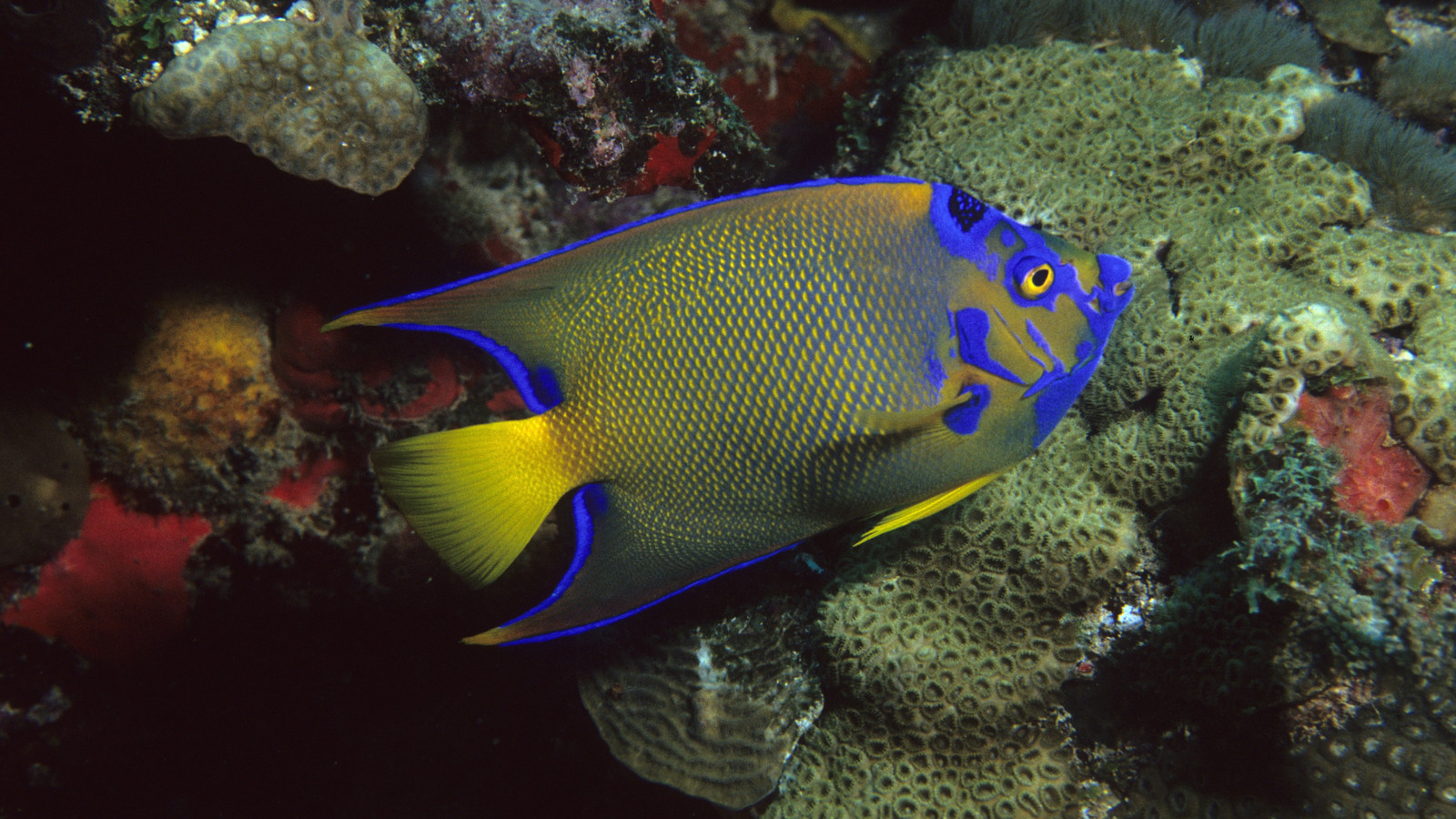
A blue-and-yellow reef angelfish recognized by the dark, blue-ringed crown on its forehead and its entirely yellow tail.
The queen angelfish is a native resident of warm Florida reefs, especially around the Florida Keys. Its tall, thin body slips through coral and sponge growth.
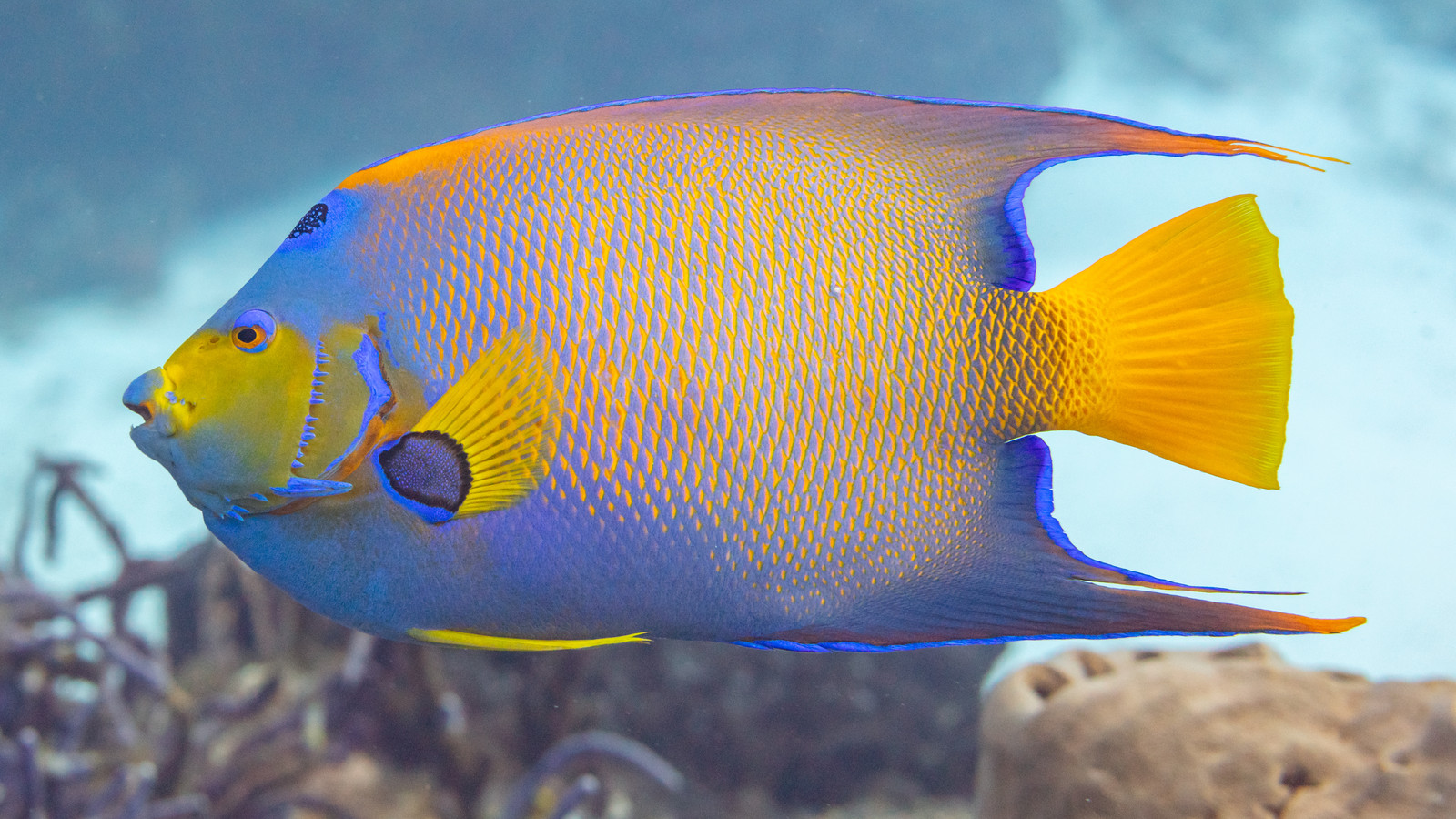
Distinguish it carefully from the blue angelfish: a queen has a dark forehead crown bordered by bright blue. Color alone is less reliable because the two species can hybridize.
Habitat:
Coastal Waters
Area / Range:
South Florida, Florida Keys
Diet:
Sponges form most of the adult diet, supplemented by tunicates, other attached invertebrates, and algae.
Behavior:
Adults travel alone or in pairs close to reef structure. Juveniles may maintain cleaning stations where they remove parasites from larger fish.
Day
Active Times:
Best time to see:
Daylight on clear reefs and sponge-covered ledges in South Florida and the Florida Keys.
Florida Native Status:
Native
Conservation Status:
Least Concern (IUCN global assessment); habitat protection and responsible collection remain important.
Safety Level:
Low Risk
Safety Information:
Observe without touching, feeding, or cornering this reef fish. Maintain safe swimming or diving practices, keep fins clear of coral, and leave shelter and feeding areas undisturbed.
Benefits to Property:
Sponge feeding and juvenile cleaning behavior link this fish to several parts of the reef community. For coastal property owners, protecting water quality supports the habitat visitors enjoy.
Property Concerns:
It does not damage lawns, buildings, or landscape plants. Specialized feeding needs make casual capture for a home aquarium a poor choice.
Fun Fact:
The crown-like forehead marking gives this angelfish its royal name. Juveniles look very different from adults.
Wildlife Laws:
Florida marine-life licensing, size, bag, gear, and closed-area rules apply to collection. Check current FWC requirements and additional park or sanctuary restrictions before taking this species.
Identification:
Adults have blue-and-yellow scales, trailing dorsal and anal fins, a yellow tail, and a dark crown edged in electric blue. Juveniles are dark with curved blue bars and a yellow tail.
Credits:
- Florida Museum queen angelfish species profile
- Taxonomy or conservation reference
- FWC recreational marine-life collection rules
- Primary photo by Dr. Dwayne Meadows, NOAA; CC BY 2.0; center-cropped
- Primary photo license: CC BY 2.0
- Secondary photo by Diego Delso, delso.photo; CC BY-SA 4.0; center-cropped
- Secondary photo license: CC BY-SA 4.0