
Queen Triggerfish
Balistes vetula
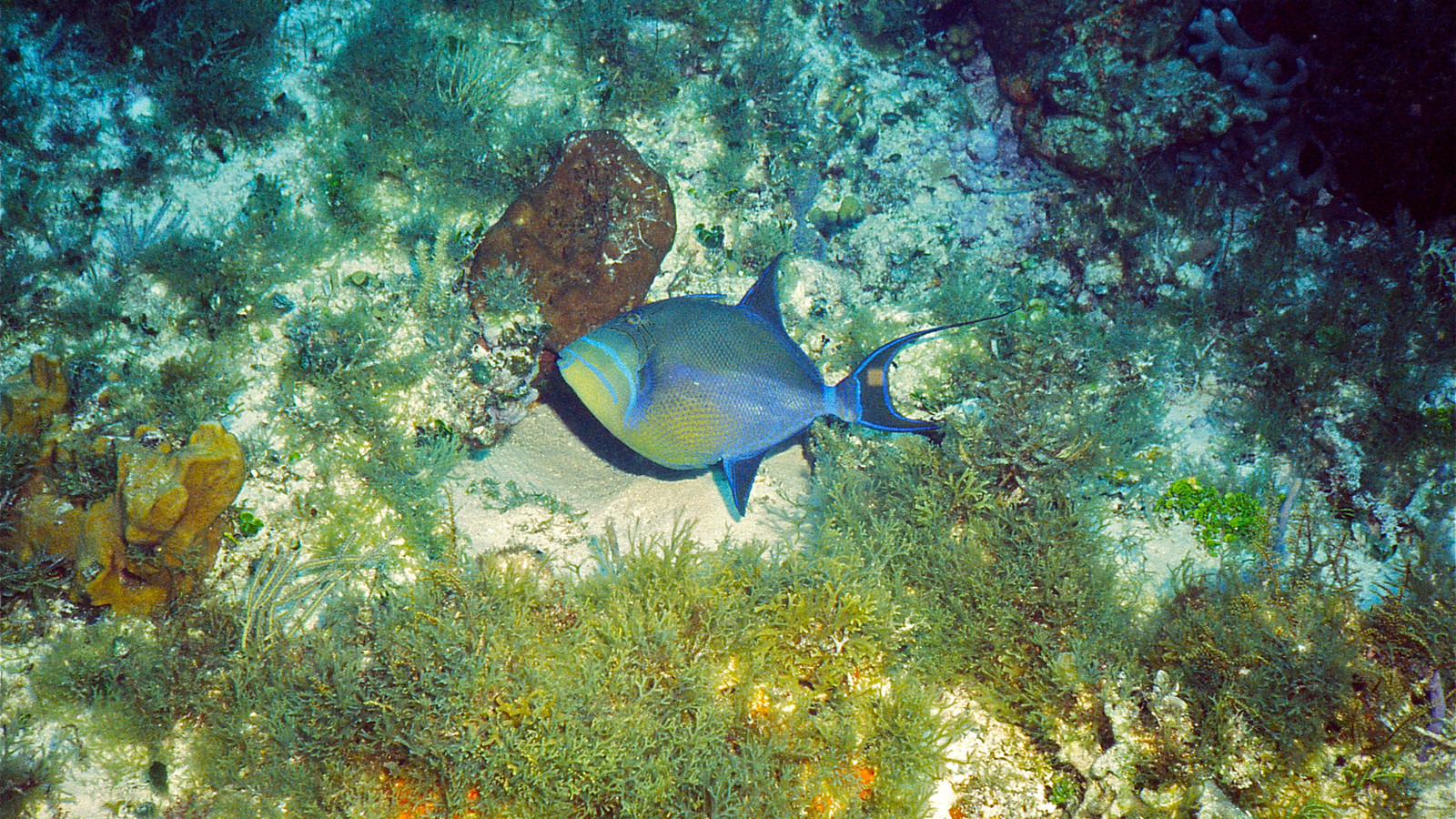
A brilliantly patterned tropical reef fish with blue facial bands, trailing tail tips, and a powerful beak for crushing hard-shelled prey.
The queen triggerfish is a native tropical reef fish found around South Florida and the Florida Keys. Its deep, laterally compressed body, electric-blue facial lines, and long tail filaments make it one of the western Atlantic's most distinctive reef fishes.
It lives around coral and rocky reefs as well as nearby sand and seagrass, where its strong jaws let it tackle prey that many reef fish cannot eat.
Habitat:
Coastal Waters
Area / Range:
South Florida, Florida Keys, Atlantic Coast, Gulf Coast
Diet:
Queen triggerfish eat sea urchins, crabs, shrimp, bivalves, sea stars, sea cucumbers, polychaete worms, and other bottom-dwelling invertebrates, along with some algae.
Behavior:
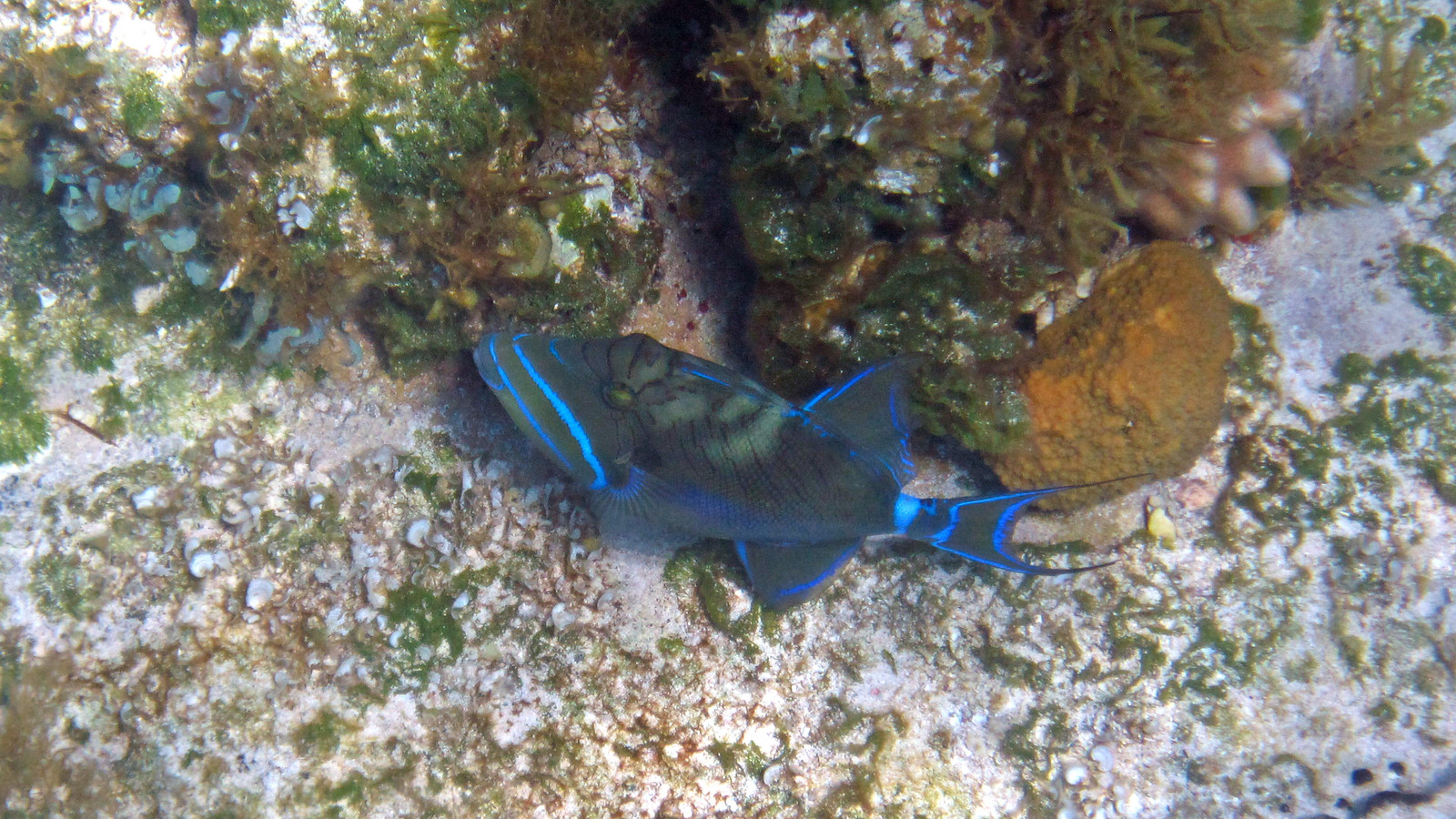
Active by day, they forage over reefs and hard bottom, sometimes blowing water or using their jaws to expose prey. At night they wedge into reef crevices and lock the first dorsal spine upright for security. Adults may vigorously defend nests.
Day
Active Times:
Best time to see:
Daylight on clear coral or rocky reefs in South Florida and the Florida Keys, especially near hard-bottom feeding areas.
Florida Native Status:
Native
Conservation Status:
Native western Atlantic species; globally assessed as Near Threatened by the IUCN.
Safety Level:
Use Caution
Safety Information:
Usually avoids people, but a nesting adult can defend its territory and deliver a painful bite. Give the fish room, never place hands near its mouth, and move away from an agitated fish without blocking its escape route.
Benefits to Property:
As a predator of sea urchins and other hard-shelled invertebrates, the queen triggerfish contributes to reef food-web balance and marine biodiversity.
Property Concerns:
It creates no typical land-property problem. Aquarium collection and fishing can add pressure to local populations, so lawful, low-impact observation is preferable.
Fun Fact:
The common name oldwife refers to the grunting sound the fish can make by grinding its teeth. Its first dorsal spine can lock upright like a trigger, helping the fish brace itself inside a reef crevice.
Wildlife Laws:
Florida saltwater licensing, gear, bag, size, and closed-area rules may apply. Aquarium collection is governed by Florida's marine-life rules, and collection is prohibited in some parks, sanctuaries, and no-take zones. Check current FWC rules before taking any fish.
Identification:
Look for an oval, high-backed body; a small mouth with strong teeth; two prominent dorsal trigger spines; blue diagonal bands across the face; and elongated tips on the dorsal, anal, and tail fins. Adults vary from blue-green and gray to yellow-orange, with contrasting blue markings.