
Red-banded Hairstreak
Calycopis cecrops
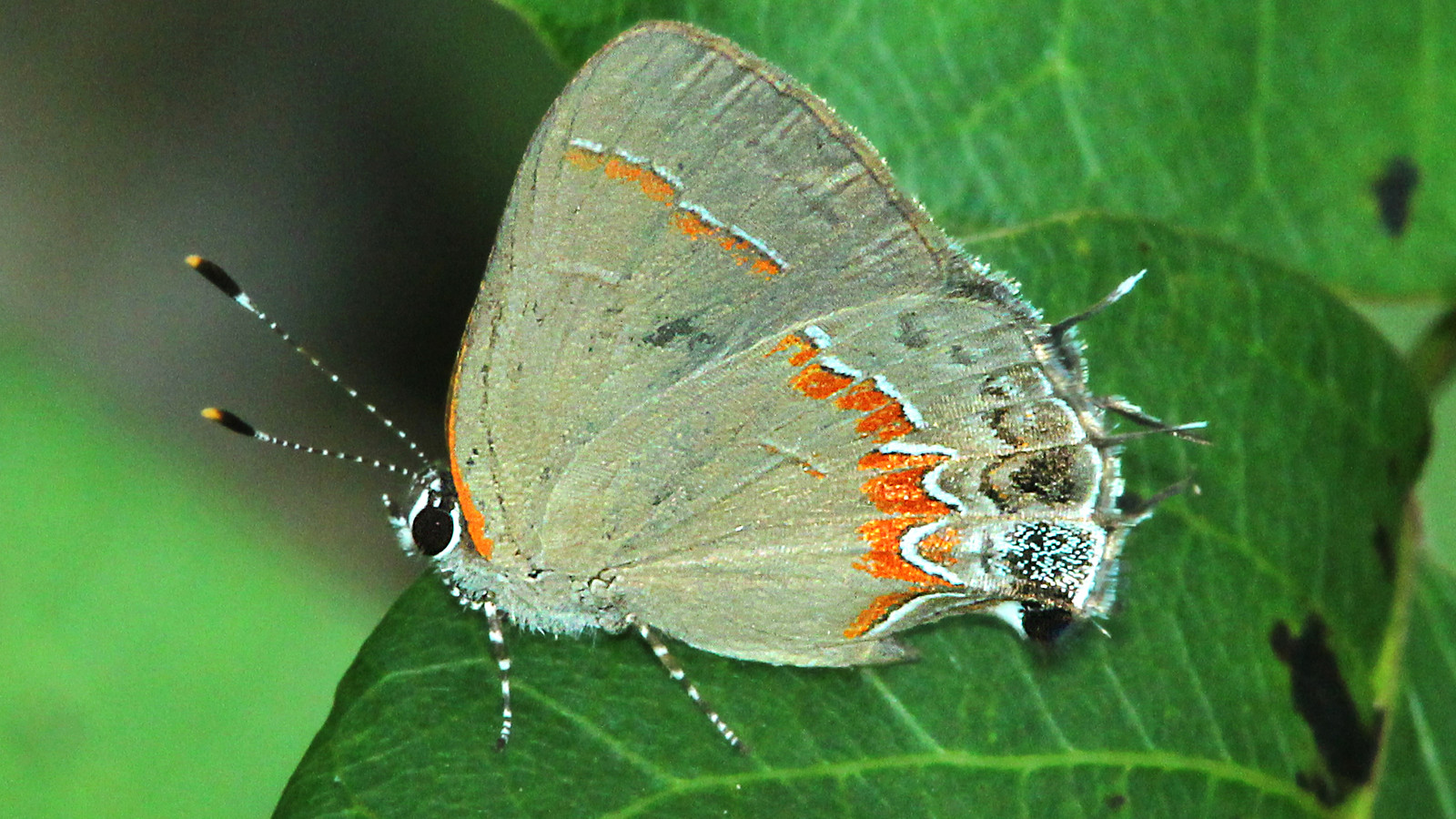
A small, year-round Florida butterfly with a bright red-orange band beneath its wings and a clever false-head defense.
The red-banded hairstreak is a small native butterfly found throughout Florida, including dry open woods and wooded neighborhoods. Adults fly year-round in the state and visit flowers for nectar.
Habitat:
Forests and Woodlands, Urban and Residential Areas
Area / Range:
Statewide
Diet:
Adults drink flower nectar and may sip moisture from mud. Larvae are reported to feed on dead leaves and other material in leaf litter beneath host plants.
Behavior:
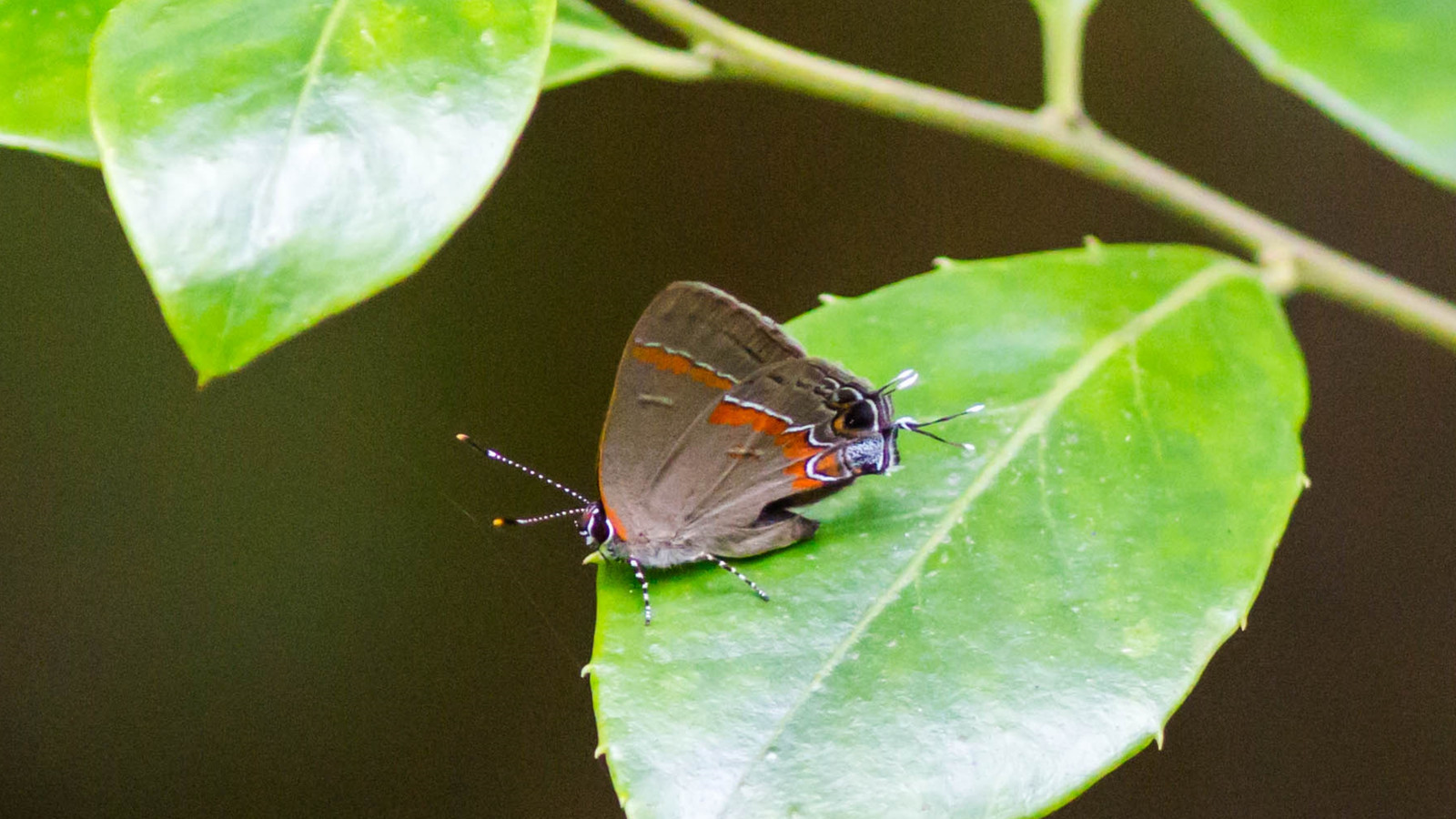
Adults often perch on vegetation, and males wait there for females. Like other hairstreaks, they move their hindwings so the tails and eye spots resemble a false head, helping divert a predator's attack away from the real head.
Day
Active Times:
Best time to see:
Warm daylight around flowering plants and wooded edges; adults can be seen year-round in Florida.
Florida Native Status:
Native
Conservation Status:
Common across Florida; not listed as a threatened Florida species.
Safety Level:
Low Risk
Safety Information:
Harmless to people and pets. Observe without handling delicate wings and avoid applying insecticides near nectar plants.
Benefits to Property:
Adds native butterfly diversity to wooded yards and gardens. Adults visit flowers for nectar, while fallen leaves support the caterpillar stage.
Property Concerns:
No meaningful property damage is expected. Keep some leaf litter beneath suitable shrubs if you want to support larvae.
Fun Fact:
The hindwing tails and nearby eye spots act as a false head. A predator may strike this expendable wing edge rather than the butterfly's true head.
Wildlife Laws:
Enjoy this butterfly by observation and photography. Follow the rules for the specific park or preserve before collecting wildlife, and check current Florida guidance if any collection is planned.
Identification:
Adults have a wingspan of about 24–30 mm. The gray-brown undersides show a thin white line edged with a vivid orange to red-orange band. Each hindwing has two short tails and a conspicuous eye spot near the tail bases.