
Red Imported Fire Ant
Solenopsis invicta
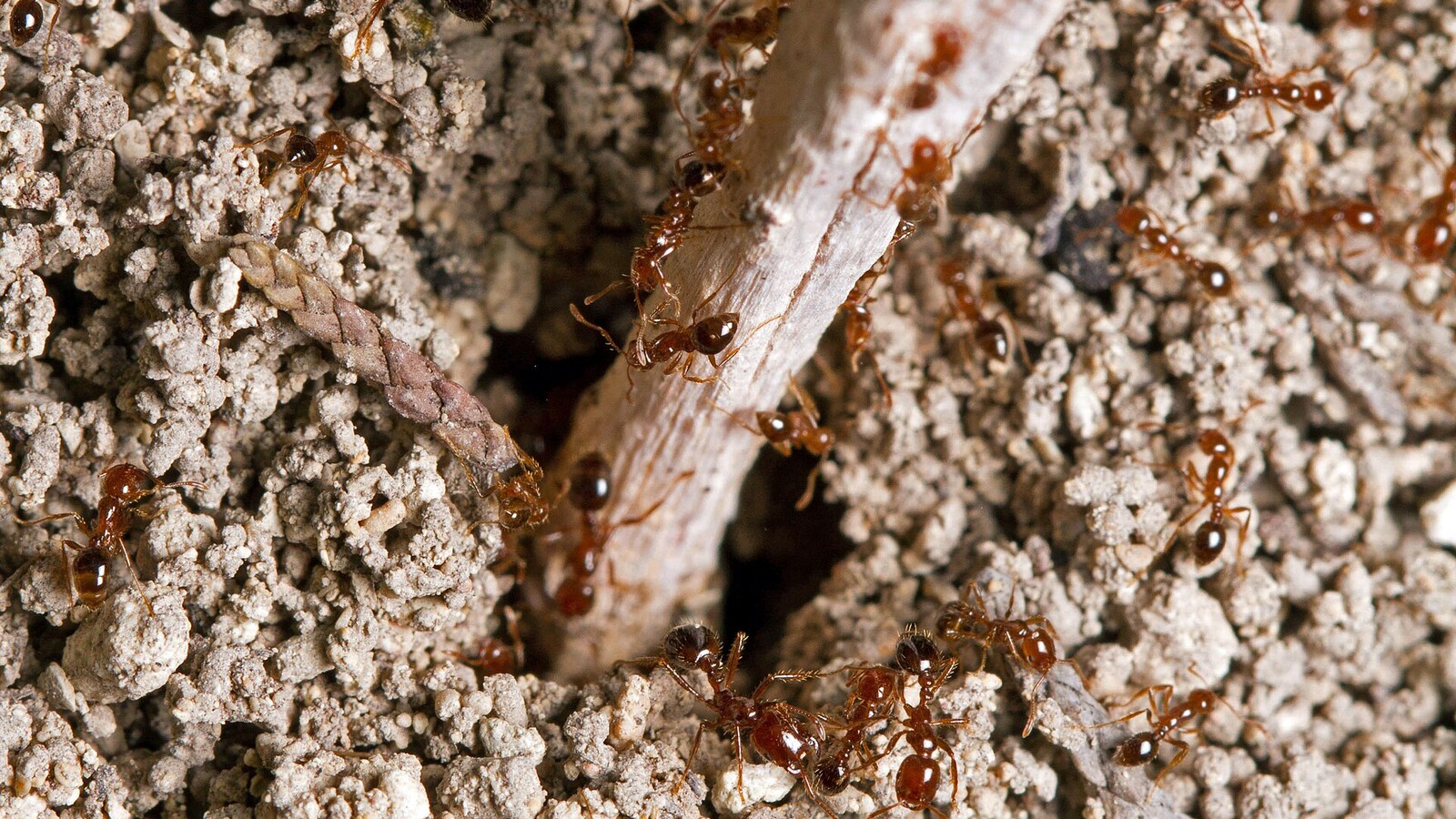
Red Imported Fire Ants are invasive mound-building ants that swarm quickly and deliver painful stings capable of causing severe allergic reactions.
Red Imported Fire Ants occupy sunny disturbed ground across Florida. Colonies build loose soil mounds in lawns, pastures, landscape beds, road edges, and around electrical equipment.
When the nest is disturbed, workers rush upward, grip skin, and sting repeatedly. Effective management often combines broadcast bait with targeted mound treatment.
Habitat:
Urban and Residential Areas, Grasslands and Agricultural Areas
Area / Range:
Statewide
Diet:
They eat insects, seeds, oily foods, honeydew, carrion, pet food, and small animals. Colonies also tend sap-feeding insects for sugar.
Behavior:
Colonies forage through underground tunnels, defend mounds aggressively, relocate after flooding, and produce winged queens and males during warm humid weather.
Day, Night
Active Times:
Best time to see:
After rain or warm weather when fresh soil mounds appear in lawns, beds, pastures, and along pavement.
Florida Native Status:
Introduced
Conservation Status:
Widespread invasive pest with no conservation protection in Florida.
Safety Level:
High Risk
Safety Information:
Do not kick or probe a mound. Wear closed shoes and gloves. Move away immediately after contact, wash stings, and seek emergency care for breathing trouble, facial swelling, dizziness, or widespread hives.
Benefits to Property:
They consume some pest insects and carrion, but these benefits are outweighed by their stings and ecological damage.
Property Concerns:
Mounds damage lawns and athletic fields, stings threaten people and pets, and colonies enter irrigation boxes, transformers, and other electrical equipment.
Fun Fact:
Workers anchor with their jaws and pivot while stinging, which creates the familiar circular cluster of painful pustules.
Wildlife Laws:
Use only ant-control products labeled for the site and follow every direction, rate, reentry interval, and environmental restriction. Some treatments require licensed pesticide professionals.
Identification:
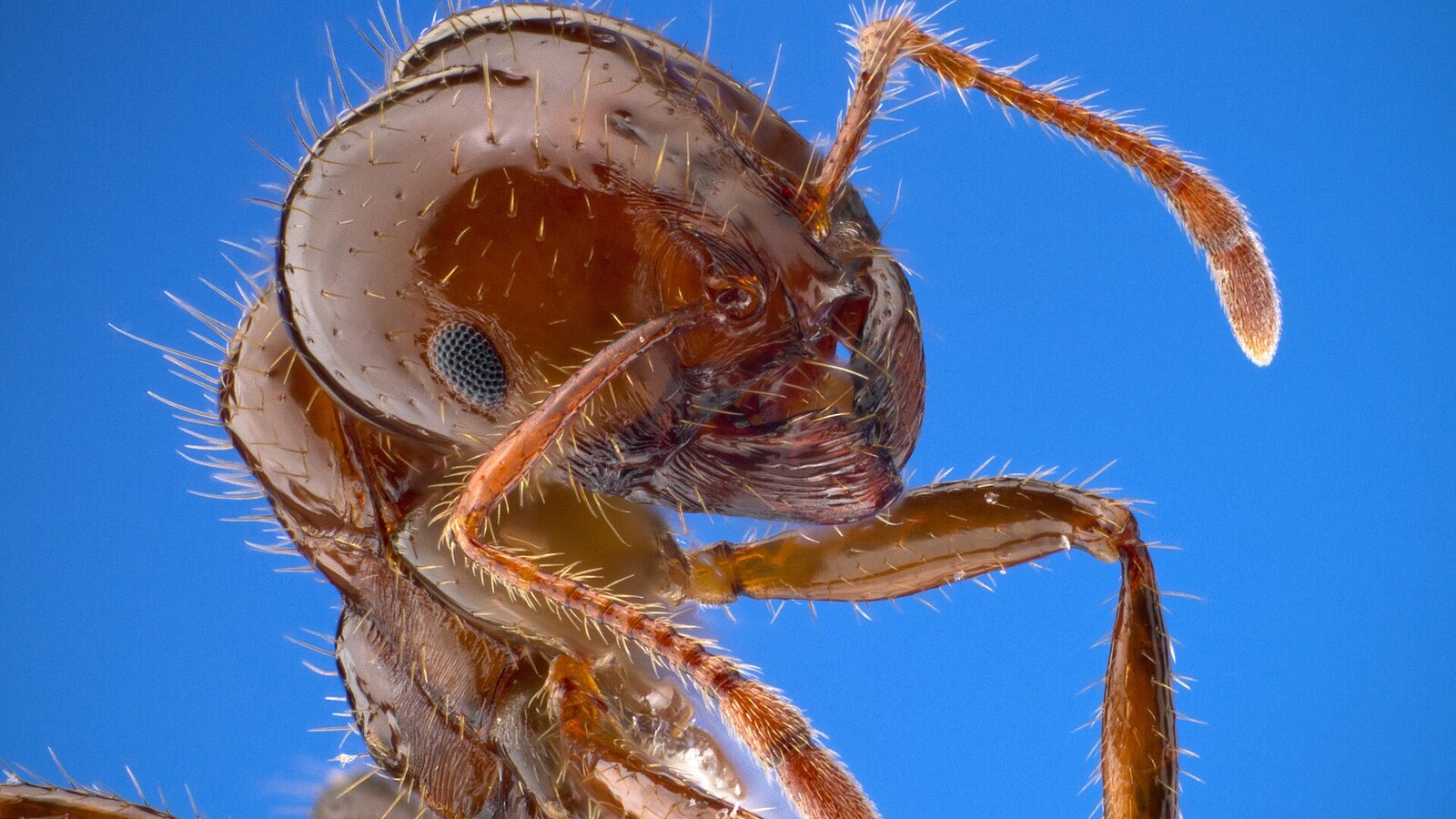
Workers are reddish brown with darker abdomens and occur in several sizes within one colony. Mounds usually lack a visible central entrance and release many ants when disturbed.
Credits:
Facts: species reference. Images: primary and secondary, Wikimedia Commons.