
Red Lionfish
Pterois volitans
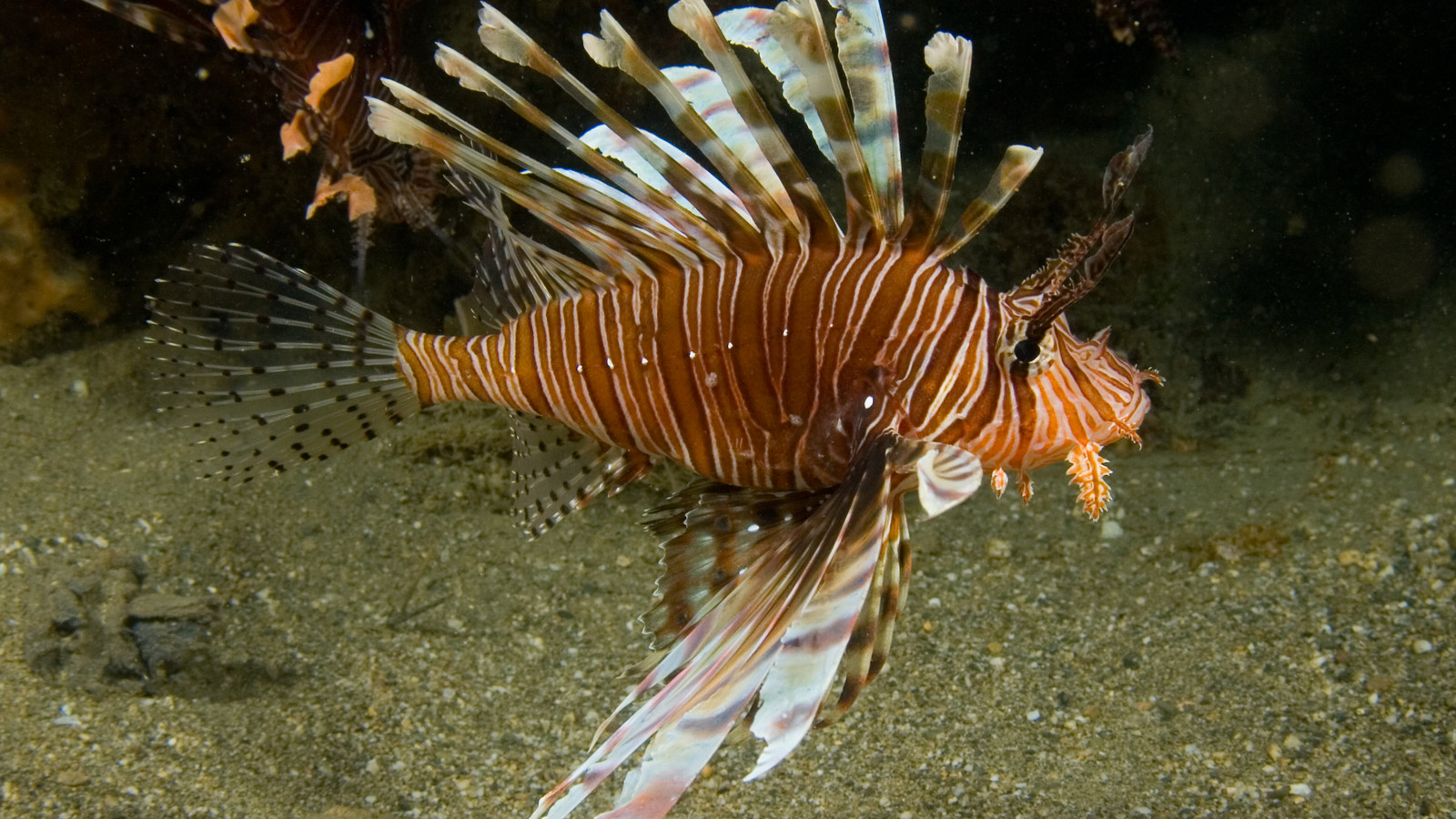
A striking but invasive reef fish in Florida coastal waters, recognized by its red-and-white stripes, fanlike fins, and venomous spines.
The red lionfish is native to the Indo-Pacific and established in Florida's Atlantic and Gulf waters. On reefs, wrecks, and other hard-bottom habitat, this invasive predator consumes small native fish and crustaceans.
Its dramatic fins make it easy to recognize, but the spines can cause painful stings. Divers should admire the animal from a safe distance unless trained and properly equipped for removal.
Habitat:
Coastal Waters, Estuaries and Bays
Area / Range:
Atlantic Coast, Gulf Coast, Florida Keys
Diet:
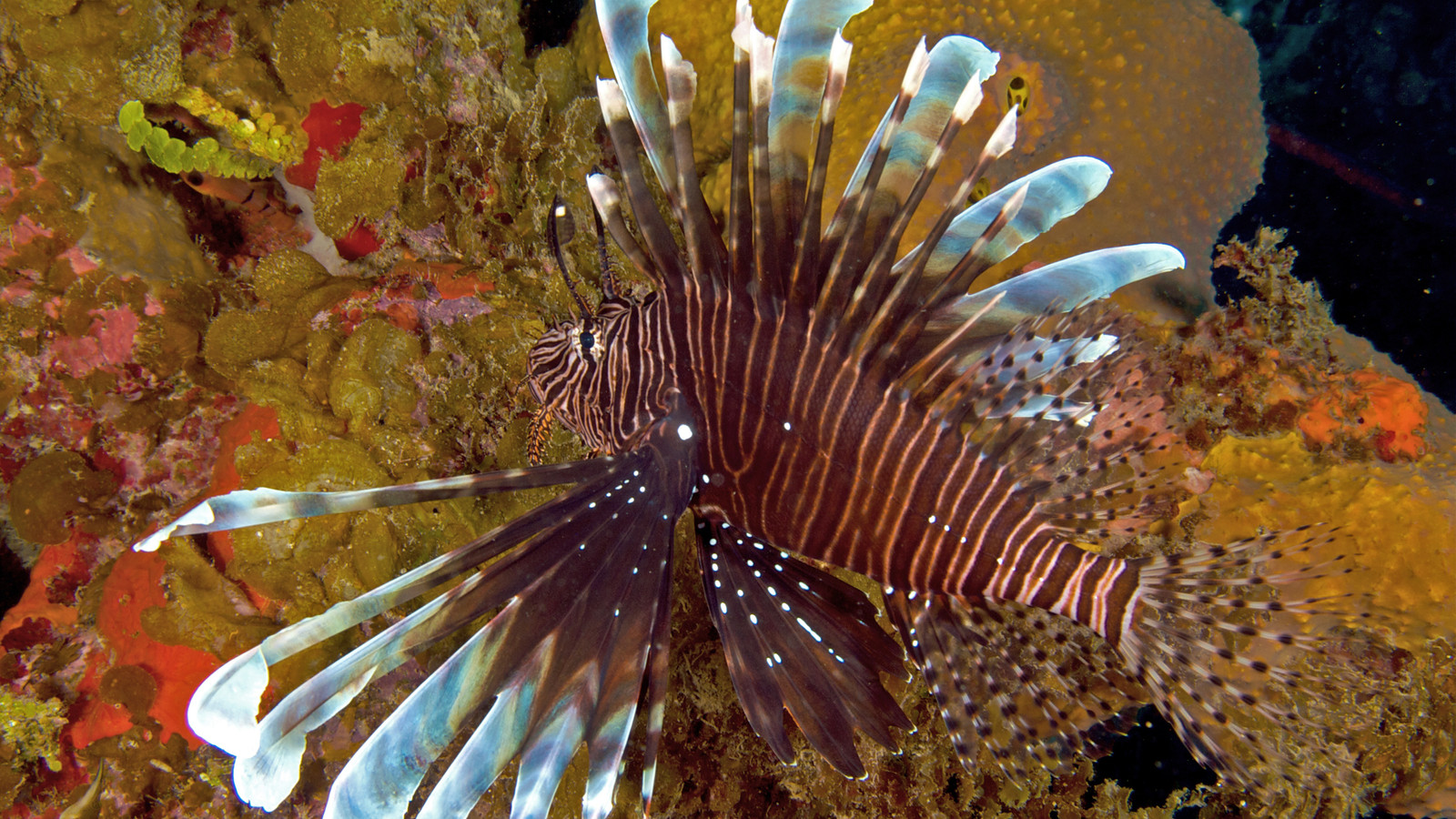
Red lionfish ambush small fishes, shrimp, and crabs. They spread their pectoral fins to corner prey, then swallow it with a rapid strike.
Behavior:
They often shelter beneath ledges or in crevices by day and forage near reef structure. Hunting can also occur in daylight; activity is not restricted to darkness.
Day and Night
Active Times:
Best time to see:
During daylight dives or snorkeling around reefs, wrecks, and ledges; observe without approaching the spines
Florida Native Status:
Invasive
Conservation Status:
Established invasive species in Florida; management aims to reduce impacts on native reef communities.
Safety Level:
High
Safety Information:
Venomous spines on the dorsal, pelvic, and anal fins can deliver a painful sting. Do not touch or attempt to handle a lionfish without training and appropriate equipment. Seek medical care after a sting.
Benefits to Property:
No direct landscape benefit. Responsible, lawful removal from suitable marine areas may reduce local pressure on native reef fish.
Property Concerns:
This is a marine species and does not affect ordinary lawns or buildings. In coastal ecosystems, predation on native fish and invertebrates is the principal concern.
Fun Fact:
The conspicuous pectoral fins help funnel small prey toward the mouth. The colorful display is paired with venomous defensive spines, but the fish does not use those spines to hunt.
Wildlife Laws:
Florida FWC encourages lionfish removal, but harvest method, licensing, and location rules can vary. Check the current FWC lionfish guidance and any marine sanctuary or protected-area rules before taking a fish; never release aquarium lionfish into the wild.
Identification:
Look for a deep-bodied fish with alternating reddish-brown and pale vertical bands, long separated dorsal spines, and broad, fanlike pectoral fins. The fins may carry dark spots.
Similar lionfish occur in the genus Pterois, so species-level identification can require close examination. The images used here are identified by their photographers as Pterois volitans.