
Rock Beauty
Holacanthus tricolor
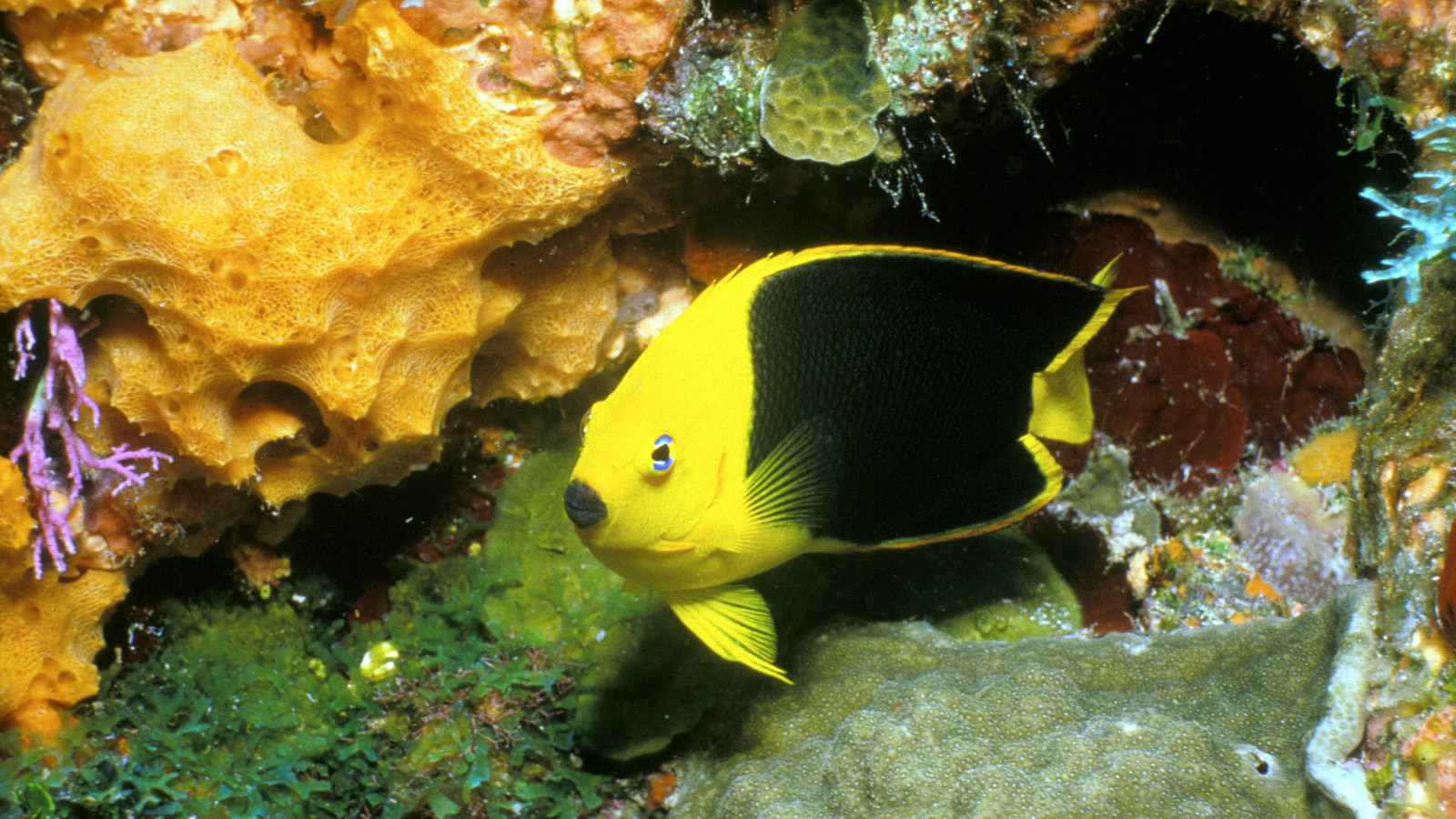
A compact native angelfish with a bright yellow head and tail framing a broad black body patch.
The rock beauty is a native angelfish found on clear tropical reefs, including South Florida and the Keys. Its bold black-and-yellow pattern is distinctive.
This fish depends heavily on sponges for food. Its attractive appearance should not obscure the specialized care needed if kept in captivity.
Habitat:
Coastal Waters
Area / Range:
South Florida, Florida Keys
Diet:
Mostly sponges, with smaller amounts of tunicates, algae, and coral material.
Behavior:
Territorial fish stay within a relatively small reef area. Adults often form lasting pairs; juveniles generally remain close to shelter.
Day
Active Times:
Best time to see:
Daylight around sponge-rich coral and rocky reef habitat in South Florida and the Florida Keys.
Florida Native Status:
Native
Conservation Status:
Least Concern (IUCN global assessment); habitat protection and responsible collection remain important.
Safety Level:
Low Risk
Safety Information:
Observe without touching, feeding, or cornering this reef fish. Maintain safe swimming or diving practices, keep fins clear of coral, and leave shelter and feeding areas undisturbed.
Benefits to Property:
Its feeding connects sponge communities with reef predators. Coastal property owners can support marine wildlife by preventing fertilizer, soil, and litter from reaching waterways.
Property Concerns:
It creates no typical land-property problem. Its specialized diet and territorial behavior make it difficult to maintain in an aquarium.
Fun Fact:
The small dark spot of a juvenile expands as the fish grows, eventually becoming the adult's broad black body patch.
Wildlife Laws:
Florida marine-life licensing, size, bag, gear, and closed-area rules apply to collection. Check current FWC requirements and additional park or sanctuary restrictions before taking this species.
Identification:
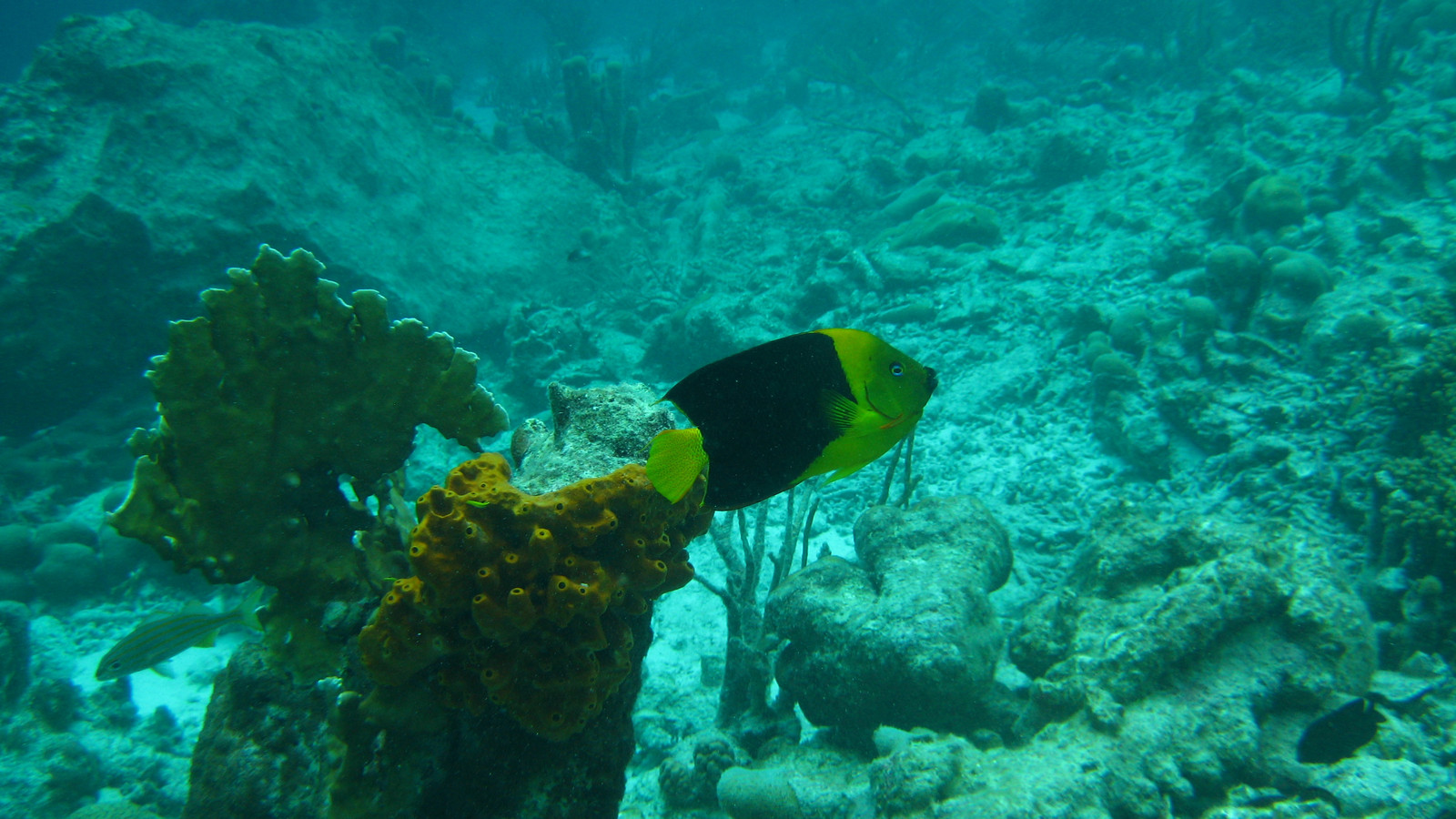
Adults have a yellow head and tail, a large black middle section, dark lips, and fine blue and orange accents. Juveniles are mostly yellow with a blue-ringed black spot.
Credits:
- Florida Museum rock beauty species profile
- Taxonomy or conservation reference
- FWC recreational marine-life collection rules
- Primary photo by National Park Service; Public domain; center-cropped
- Primary photo license: Public domain
- Secondary photo by Roban Kramer; CC BY-SA 2.0; center-cropped
- Secondary photo license: CC BY-SA 2.0