
Roseate Skimmer
Orthemis ferruginea
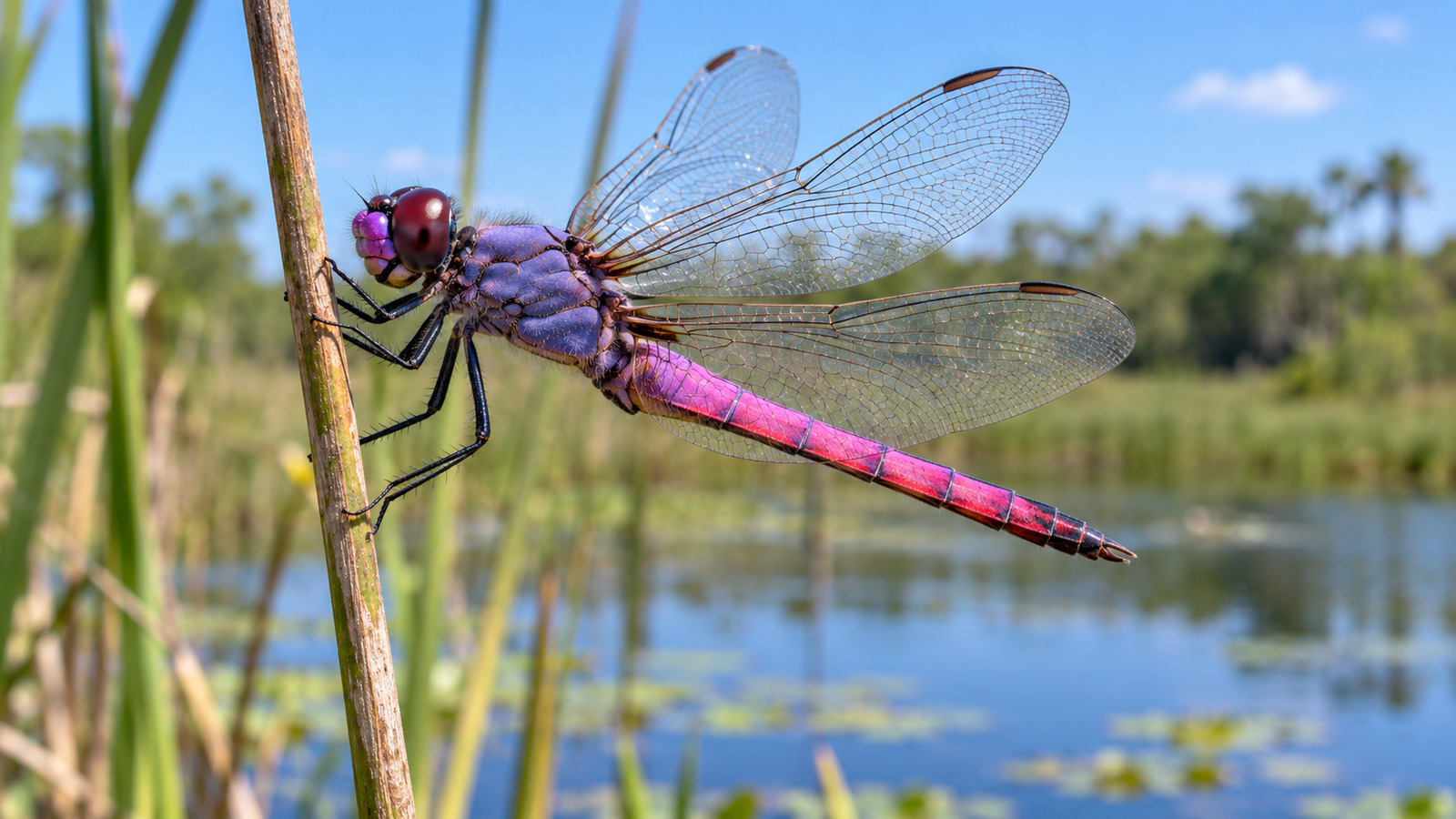
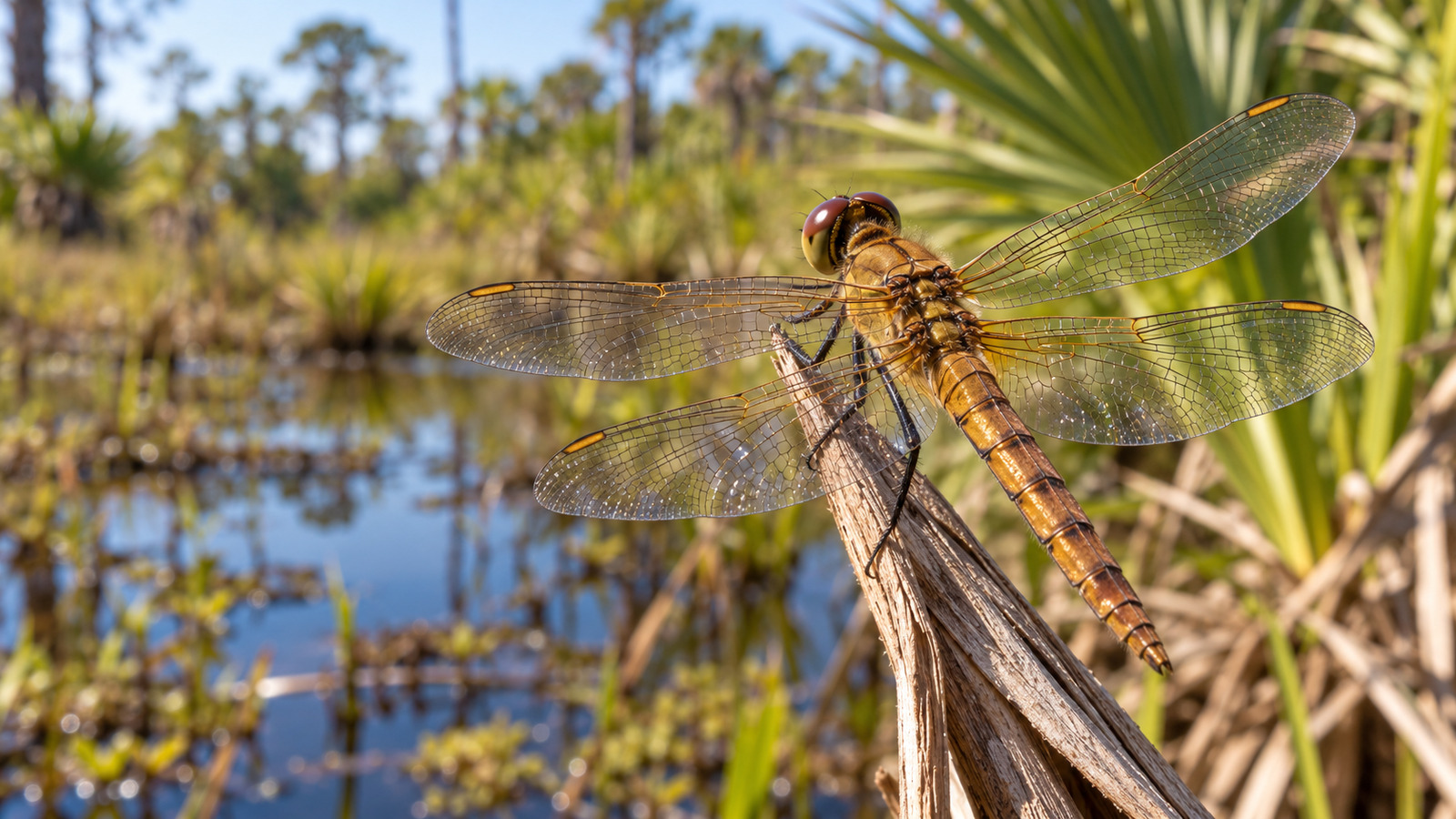
Roseate Skimmers are large Florida dragonflies whose mature males glow lavender and rose-pink while females and young males are golden to rusty brown.
Roseate Skimmers are strong-flying dragonflies found around sunny ponds, lakes, marshes, canals, ditches, and temporary rain pools. They readily use small open-water habitats when emergent or overhanging vegetation provides perches.
Mature males patrol and defend stretches of water from prominent stems. Females approach water to mate and lay eggs, while aquatic nymphs develop below the surface before climbing vegetation and emerging as winged adults.
Habitat:
Lakes and Ponds, Freshwater Wetlands, Canals and Ditches, Urban and Residential Areas
Area / Range:
Statewide
Diet:
Adults capture mosquitoes, midges, flies, and other small flying insects in the air. Aquatic nymphs prey on insect larvae and other small freshwater animals.
Behavior:
Males perch near open water, launch into fast territorial patrols, and often return to the same stem. Females skim low over water and flick eggs toward the surface or nearby vegetation.
Day
Active Times:
Best time to see:
Warm sunny hours, including midday, around open ponds, rain gardens, canals, marshes, and temporary pools with nearby perches.
Florida Native Status:
Native
Conservation Status:
Widespread in Florida and not federally listed; local abundance depends on suitable open water, shoreline vegetation, and water quality.
Safety Level:
Harmless
Safety Information:
Roseate Skimmers do not sting and are not aggressive toward people. They may nip only if roughly handled, so observe without grabbing.
Benefits to Property:
Adults consume many small flying insects, while nymphs contribute to balanced freshwater food webs. Their presence adds visible biodiversity to ponds and rain gardens.
Property Concerns:
They do not damage plants, lawns, or buildings. Broad insecticide use, polluted runoff, routine shoreline clearing, and loss of small wet areas can reduce breeding habitat.
Fun Fact:
The scientific name ferruginea means rust-colored, referring to the orange-brown females and immature males. Mature males can appear pink, magenta, purple, or lavender as the viewing angle and light change.
Wildlife Laws:
Roseate Skimmers have no special statewide protected status, but collecting may be restricted on parks, preserves, and other public lands. Follow all site rules and do not disturb wildlife or habitat without permission.
Identification:
Mature males have a lavender-blue thorax, a rosy-purple abdomen, a metallic purple face, and dark reddish-purple eyes. Females and immature males are yellow, golden, or rusty brown. Both sexes are large, robust skimmers with four clear, heavily veined wings held open at rest.