
Roseate Spoonbill
Platalea ajaja
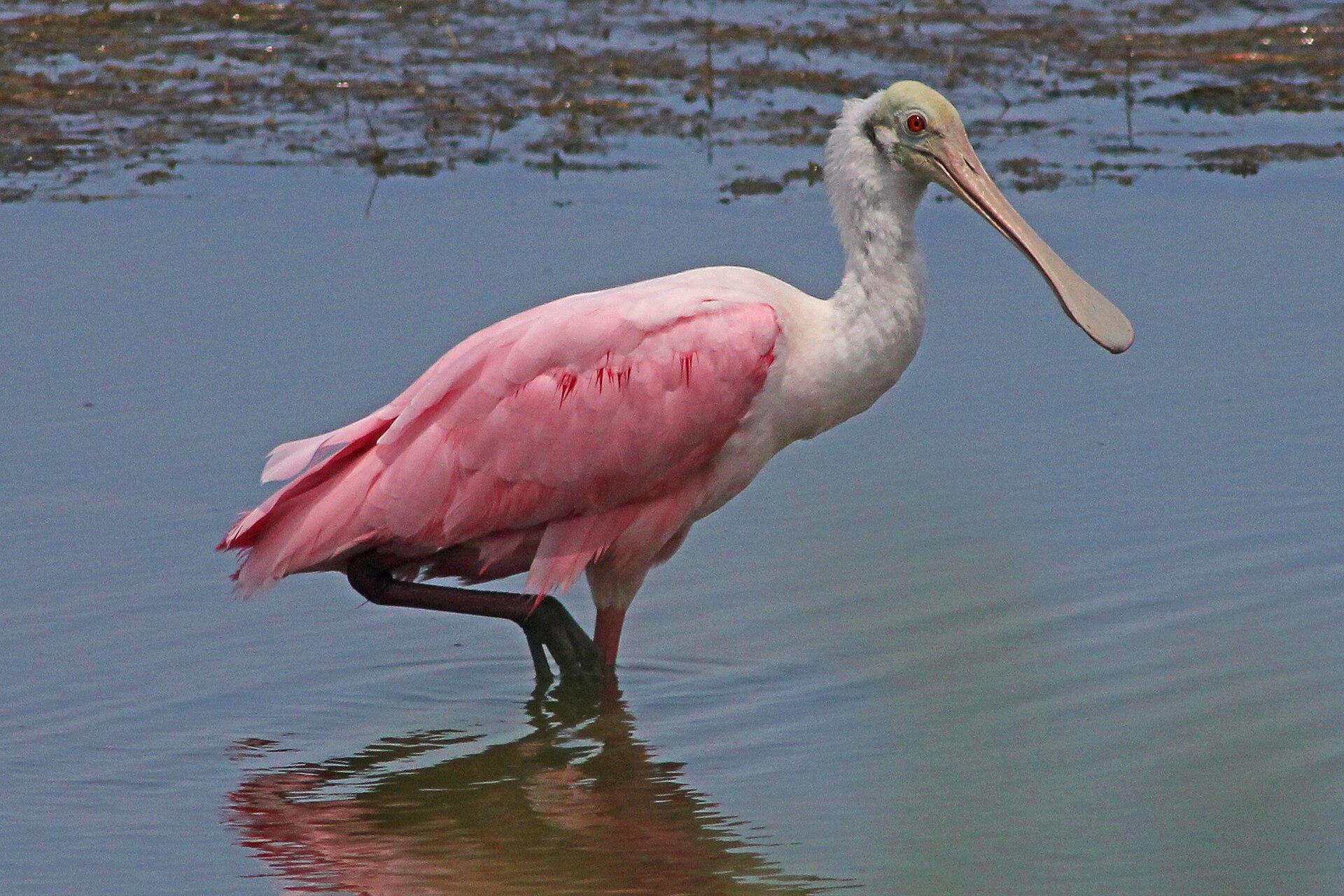
The roseate spoonbill is a large pink wading bird recognized by its flattened spoon-shaped bill.
Roseate spoonbills forage in shallow coastal and inland wetlands. Their pink coloration comes from pigments in the aquatic animals they eat.
They nest and roost in colonies, often on mangrove islands or other vegetation surrounded by water.
Habitat:
Mangroves, Estuaries, Mudflats, Shallow Wetlands, Coastal Lagoons
Area / Range:
South Florida, Central Florida, Gulf Coast, Atlantic Coast
Diet:
Spoonbills sweep their bills through shallow water to capture small fish, shrimp, crayfish, aquatic insects, and other invertebrates.
Behavior:
They feed by moving the open bill side to side through water. They often forage, roost, and nest with other wading birds.
Day, Dawn, Dusk
Active Times:
Best time to see:
Low water periods when prey concentrates in shallow wetlands.
Florida Native Status:
Native
Conservation Status:
State-designated Threatened in Florida.
Safety Level:
Harmless. Protected Wildlife
Safety Information:
Watch from a respectful distance. Avoid approaching nests, rookeries, or feeding groups. Keep dogs leashed near wading-bird habitat.
Benefits to Property:
Spoonbills add wildlife value to healthy wetlands and help indicate productive shallow-water habitat.
Property Concerns:
They rarely create property problems. Disturbance near nesting and feeding areas poses a greater concern for the birds.
Fun Fact:
Roseate spoonbills are the only spoonbill species native to the Western Hemisphere. Their bright color comes from food rather than naturally pink pigment production.
Wildlife Laws:
Roseate spoonbills are protected by state rules and the federal Migratory Bird Treaty Act. Do not disturb active nests or nesting colonies.
Identification:
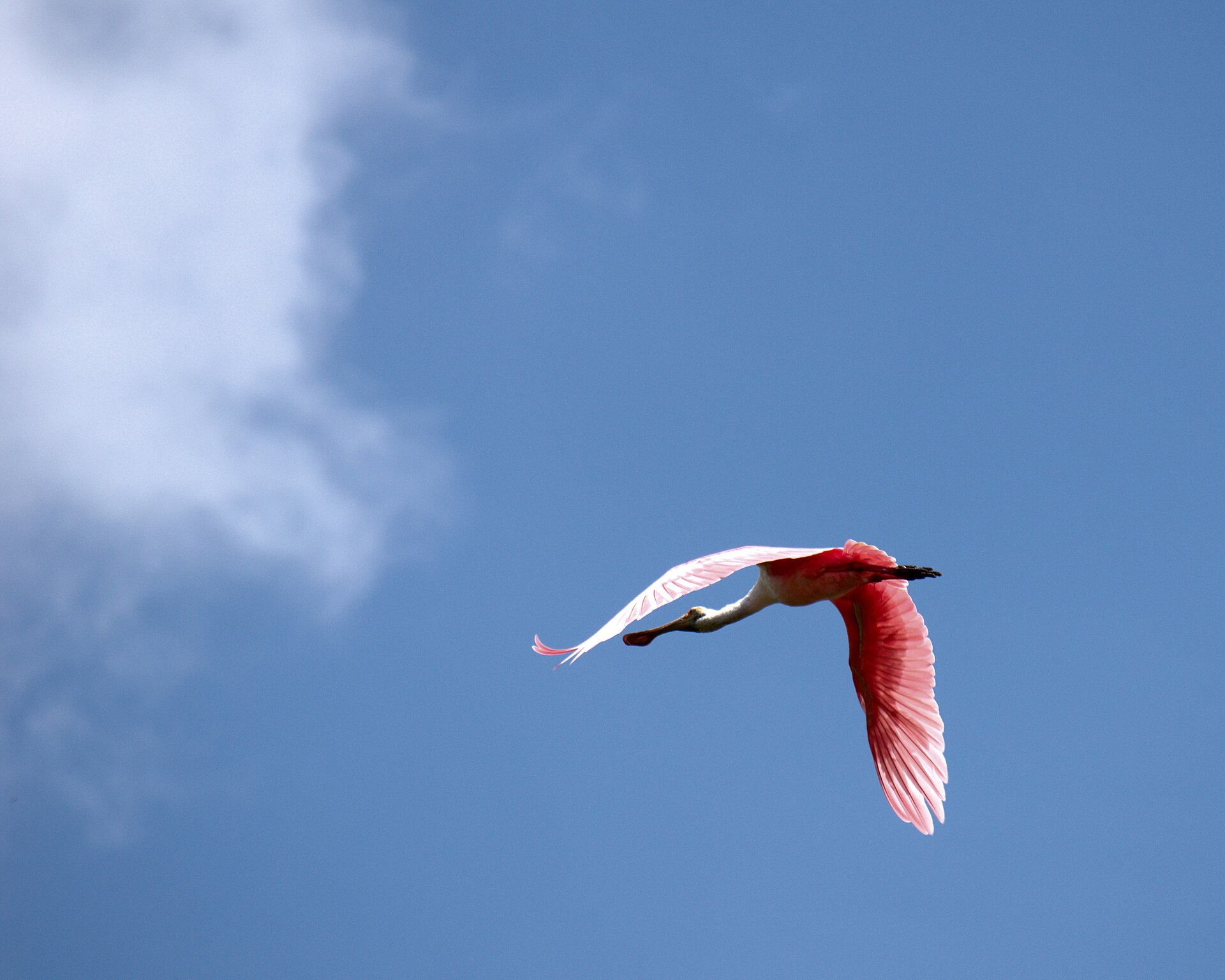
Adults have pink wings and underparts, a white neck and back, pink legs, a bare head, and a wide flattened bill. Their shape separates them from flamingos.
Credits:
Facts: Florida Fish and Wildlife Conservation Commission. Images: standing spoonbill and spoonbill in flight, Wikimedia Commons.