
Ruby-Throated Hummingbird
Archilochus colubris
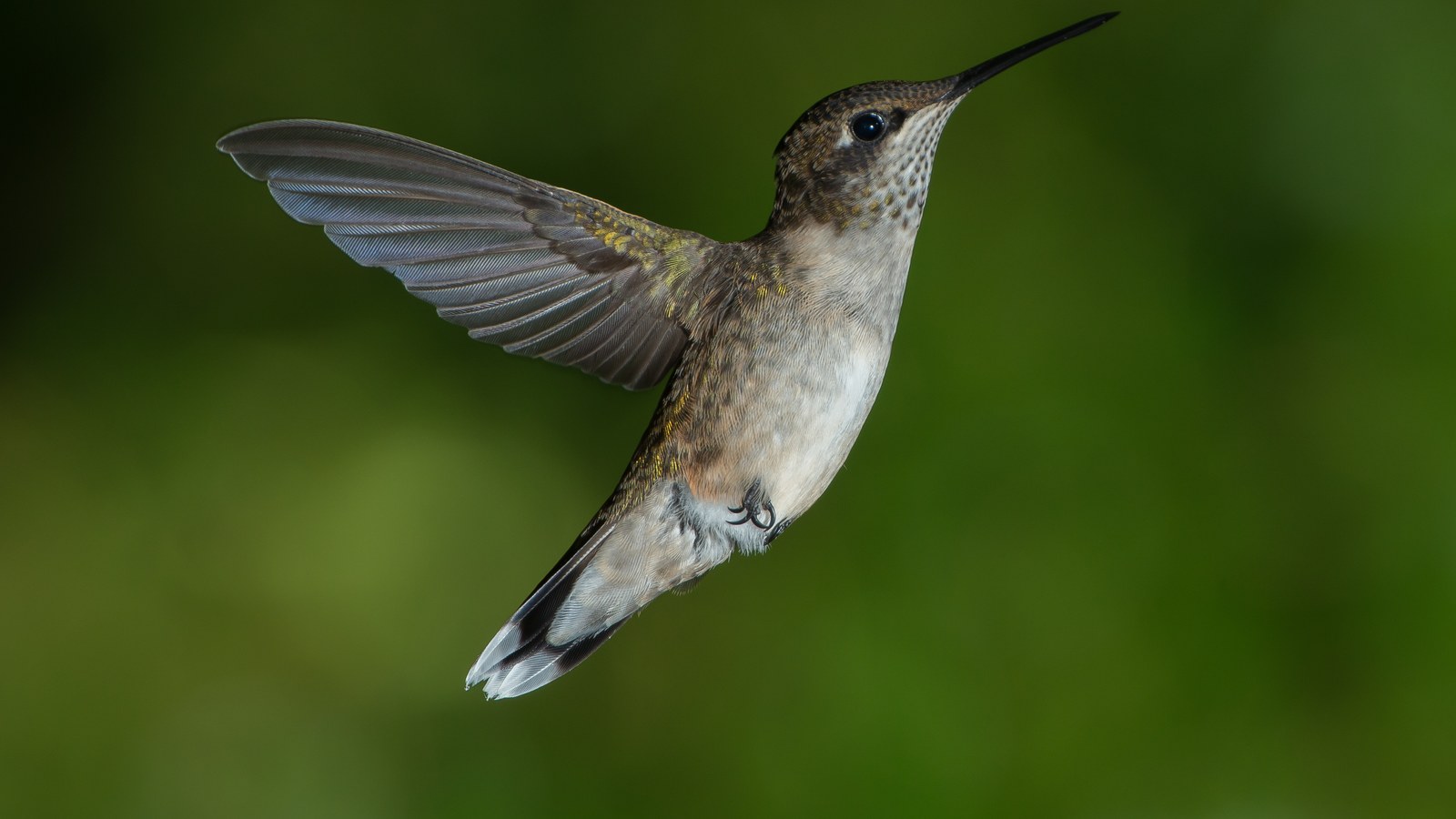
The ruby-throated hummingbird is Florida's regular eastern hummingbird, visiting flowers and feeders during migration and the breeding season.
Ruby-throated hummingbirds occur throughout Florida, with large numbers moving through during spring and fall migration. Some breed in northern Florida, and a smaller number remain through winter.
They depend on nectar-rich flowers and abundant tiny insects. Native tubular flowers, scattered perches, and pesticide-free garden areas provide far better support than a feeder alone.
Habitat:
Forests and Woodlands, Urban and Residential Areas, Mangroves and Salt Marshes
Area / Range:
Statewide
Diet:
They drink flower nectar and tree sap, then capture gnats, mosquitoes, small flies, spiders, and other tiny arthropods for protein.
Behavior:
These hummingbirds hover at flowers, defend feeding areas, and catch insects in midair. Males perform fast courtship dives, while females build tiny cup nests secured with spider silk.
Day
Active Times:
Best time to see:
Early morning and late afternoon during March through May and August through October near flowers or clean feeders.
Florida Native Status:
Native
Conservation Status:
Least Concern globally. Window strikes, habitat loss, cats, and poorly maintained feeders create preventable risks.
Safety Level:
Harmless
Safety Information:
Use plain white sugar and water in feeders. Never add dye or honey. Clean feeders frequently, especially during Florida heat, and place them where cats cannot ambush birds.
Benefits to Property:
They pollinate flowers and consume many tiny insects. A native flowering garden gives homeowners close views without creating property damage.
Property Concerns:
They cause no meaningful property damage. Fermented feeder solution, mold, ants, and territorial crowding become concerns when feeders are neglected.
Fun Fact:
Ruby-throated hummingbirds weigh only a few grams, yet many cross the Gulf of Mexico during migration in a single sustained flight.
Wildlife Laws:
Ruby-throated hummingbirds and their nests are protected by the federal Migratory Bird Treaty Act. Do not capture birds or remove active nests, eggs, or young.
Identification:
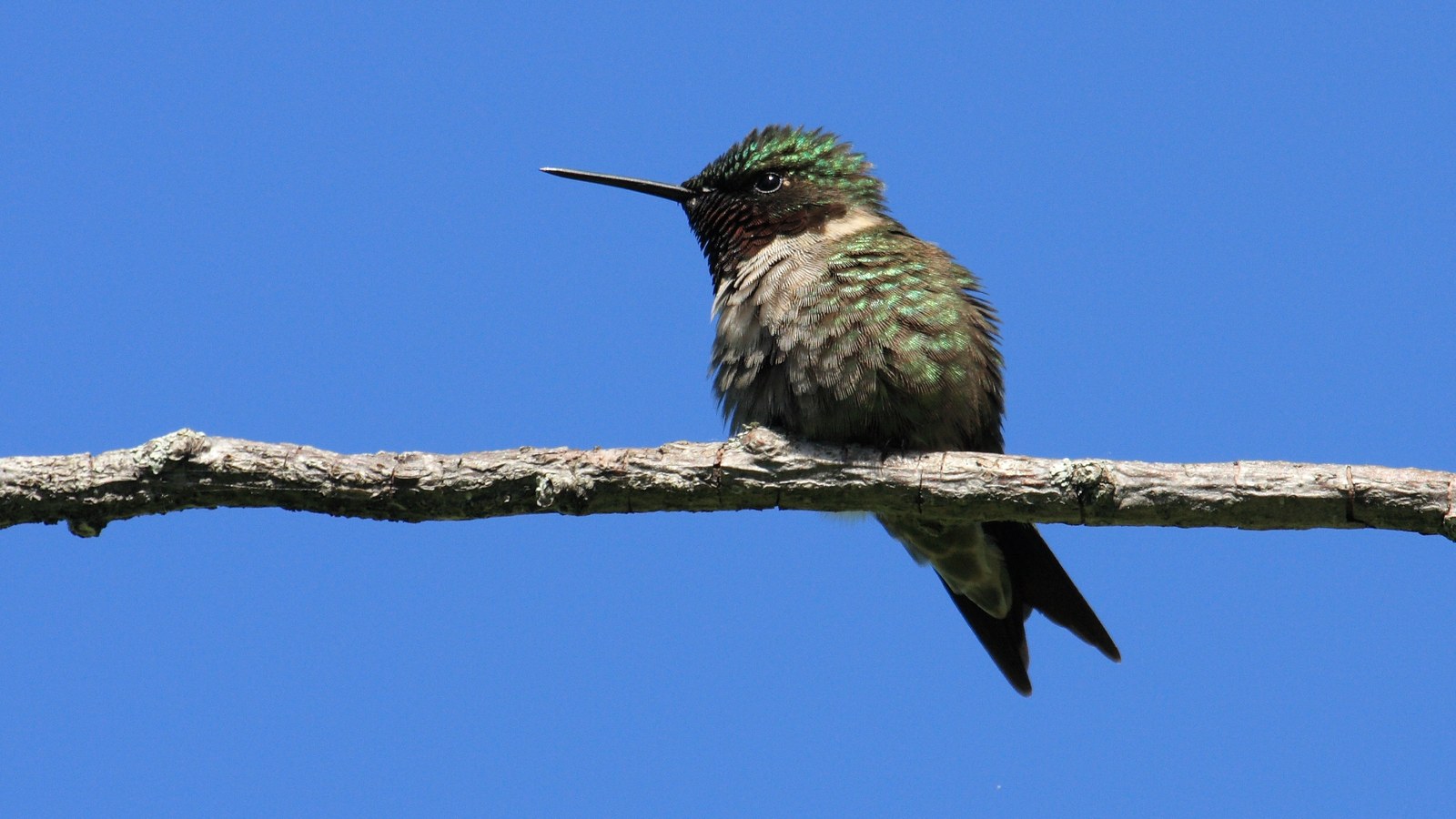
Both sexes have an emerald-green back and pale underside. Adult males carry an iridescent ruby-red throat that can appear dark when light strikes it at the wrong angle. Females and young birds have a pale throat.
Credits:
Facts: Cornell Lab of Ornithology. Images: primary and secondary, Wikimedia Commons.