
Sand Skink
Plestiodon reynoldsi
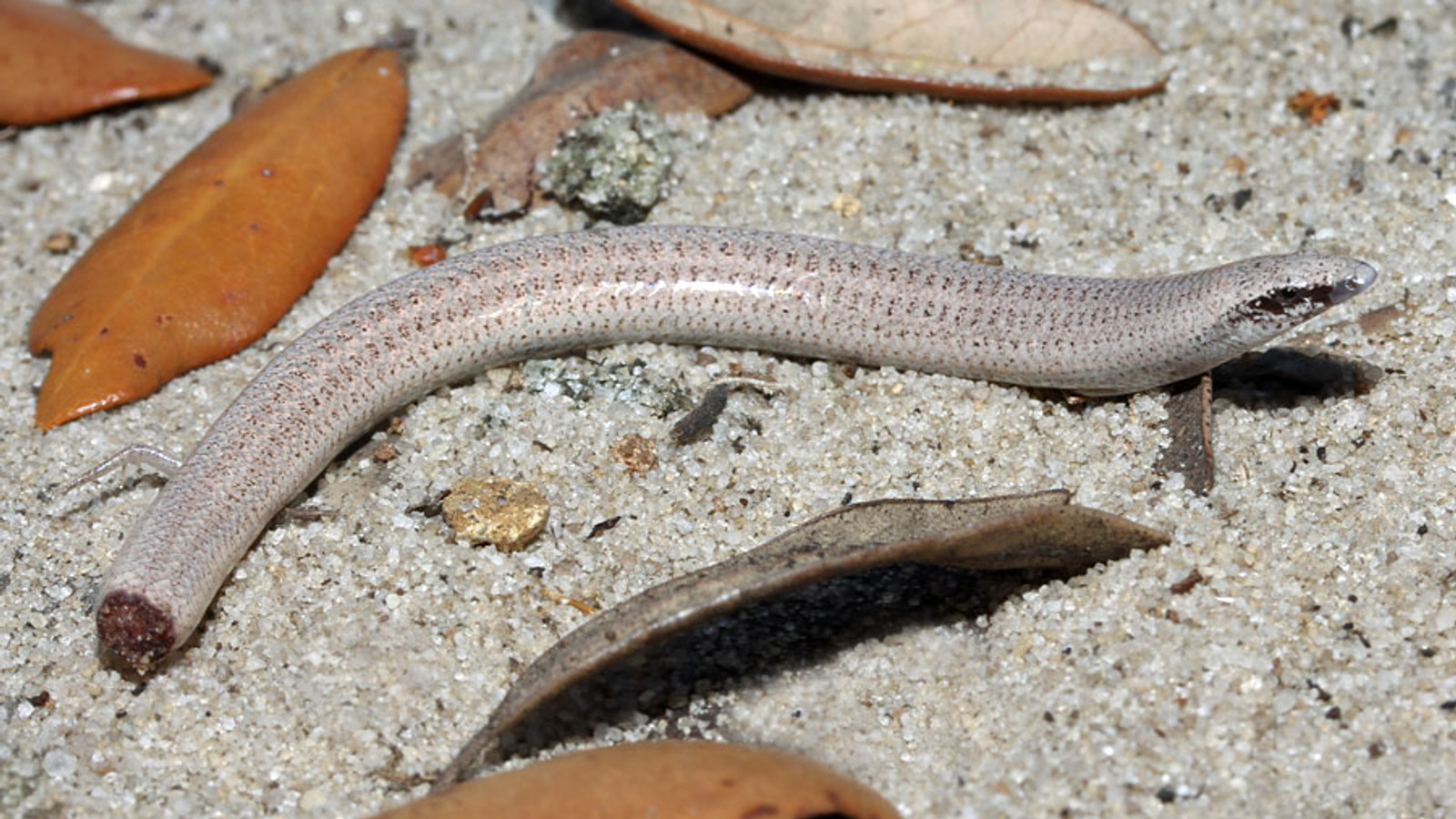
A tiny, federally threatened Florida endemic that swims beneath loose sand on the state’s central ridges.
The Sand Skink is a highly specialized burrowing lizard found only in peninsular Florida. Its smooth body, wedge-shaped snout, and extremely small limbs let it move through loose sand just beneath the surface.
It is closely tied to well-drained sandy habitats on central Florida’s ancient ridges. Habitat loss and fragmentation are the main threats.
Habitat:
Scrub and Dry Prairie, Pine Flatwoods and Sandhills
Area / Range:
Central Florida
Diet:
Feeds below or near the sand surface on small invertebrates, including termites, beetle larvae, antlion larvae, spiders, and other arthropods.
Behavior:
Spends most of its life beneath loose sand and moves with side-to-side undulations that resemble swimming. It is rarely seen above ground.
Mostly daytime and crepuscular beneath warm sand
Active Times:
Best time to see:
The species is rarely visible; trained surveys look for distinctive sinusoidal tracks in suitable sand.
Florida Native Status:
Native; Florida endemic
Conservation Status:
Federally Threatened under the U.S. Endangered Species Act.
Safety Level:
Low
Safety Information:
Harmless to people and pets. Do not dig for, handle, relocate, or disturb the animal or its occupied habitat.
Benefits to Property:
Consumes termites and other small soil-dwelling arthropods and indicates intact, well-drained sandy habitat.
Property Concerns:
The lizard does not damage property. Because it is federally protected, proposed clearing or construction in occupied habitat may require surveys, consultation, or permits.
Fun Fact:
The Sand Skink appears almost legless, yet it is a true lizard. It can disappear into loose sand without leaving an open burrow, producing only a wavy surface trail.
Wildlife Laws:
The Sand Skink is federally listed as Threatened. Harming, harassing, capturing, or destroying occupied habitat may violate the Endangered Species Act; consult the U.S. Fish and Wildlife Service before work in known habitat.
Identification:
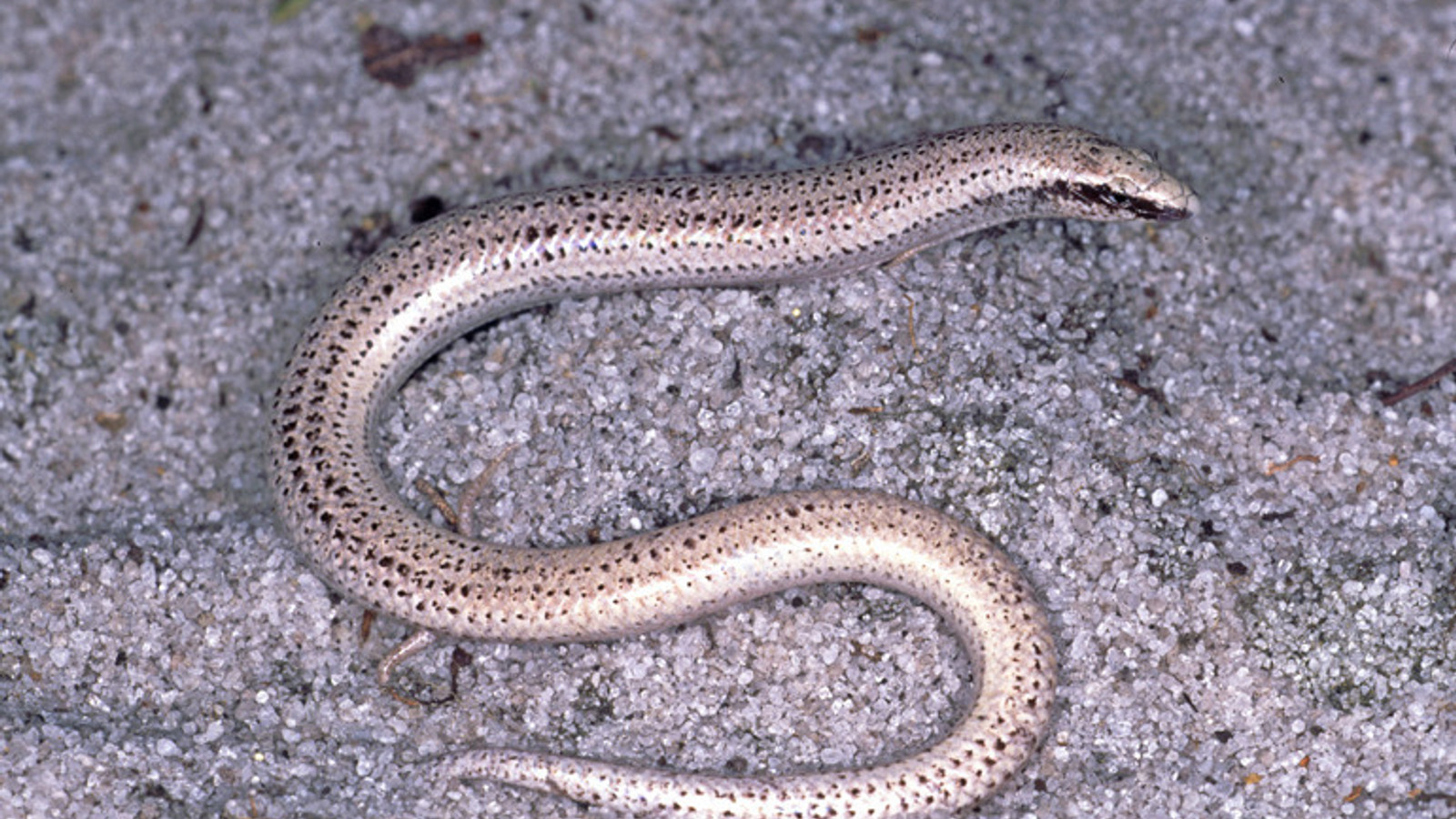
A small, slender lizard with a pale gray, tan, or silvery body, dark speckling, a pointed wedge-shaped snout, tiny eyes, and greatly reduced limbs. Its shallow wavy tracks are often easier to find than the animal.