
Scarlet Kingsnake
Lampropeltis elapsoides
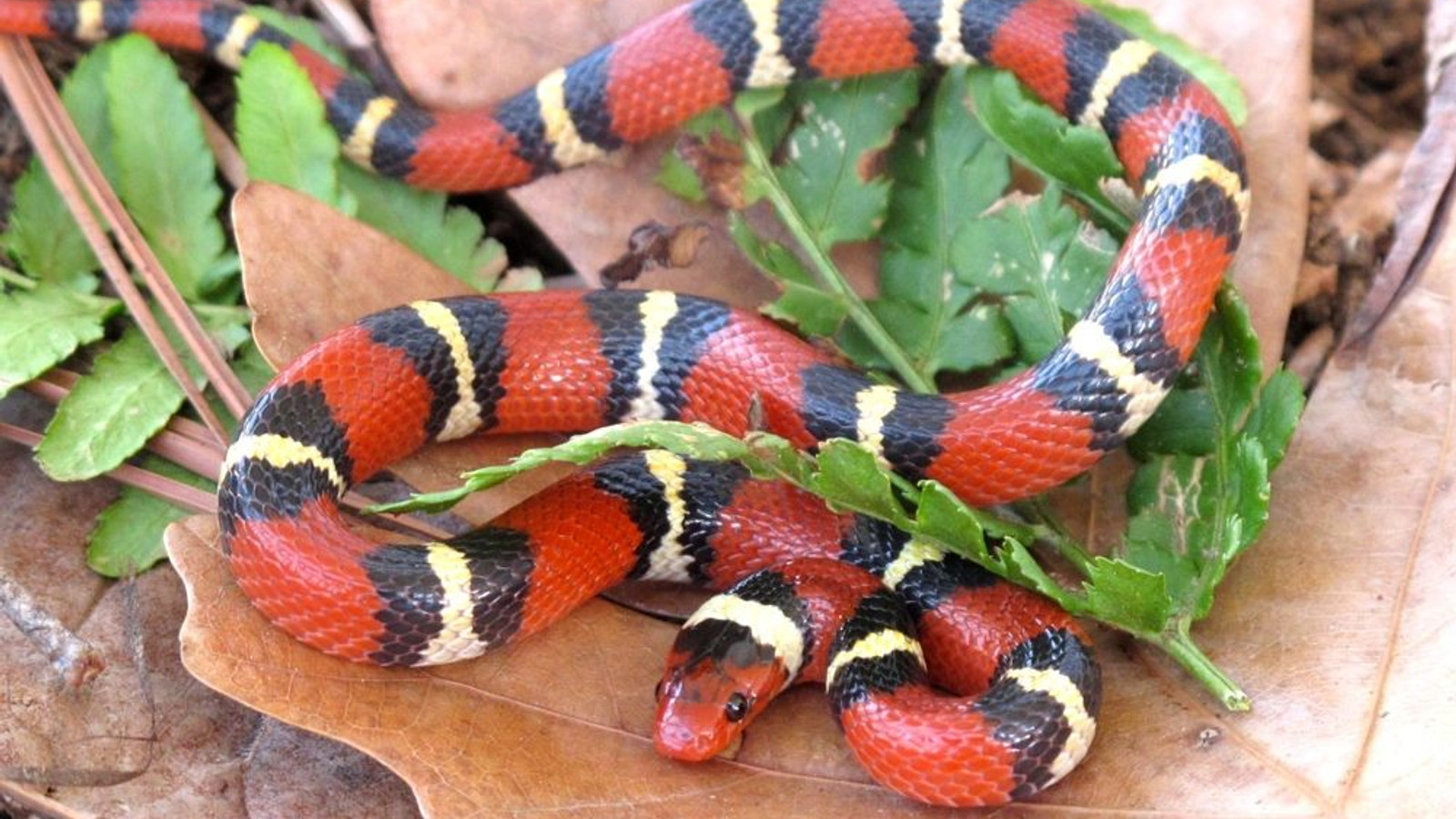
A small, secretive, nonvenomous kingsnake with bright red, black, and yellow bands.
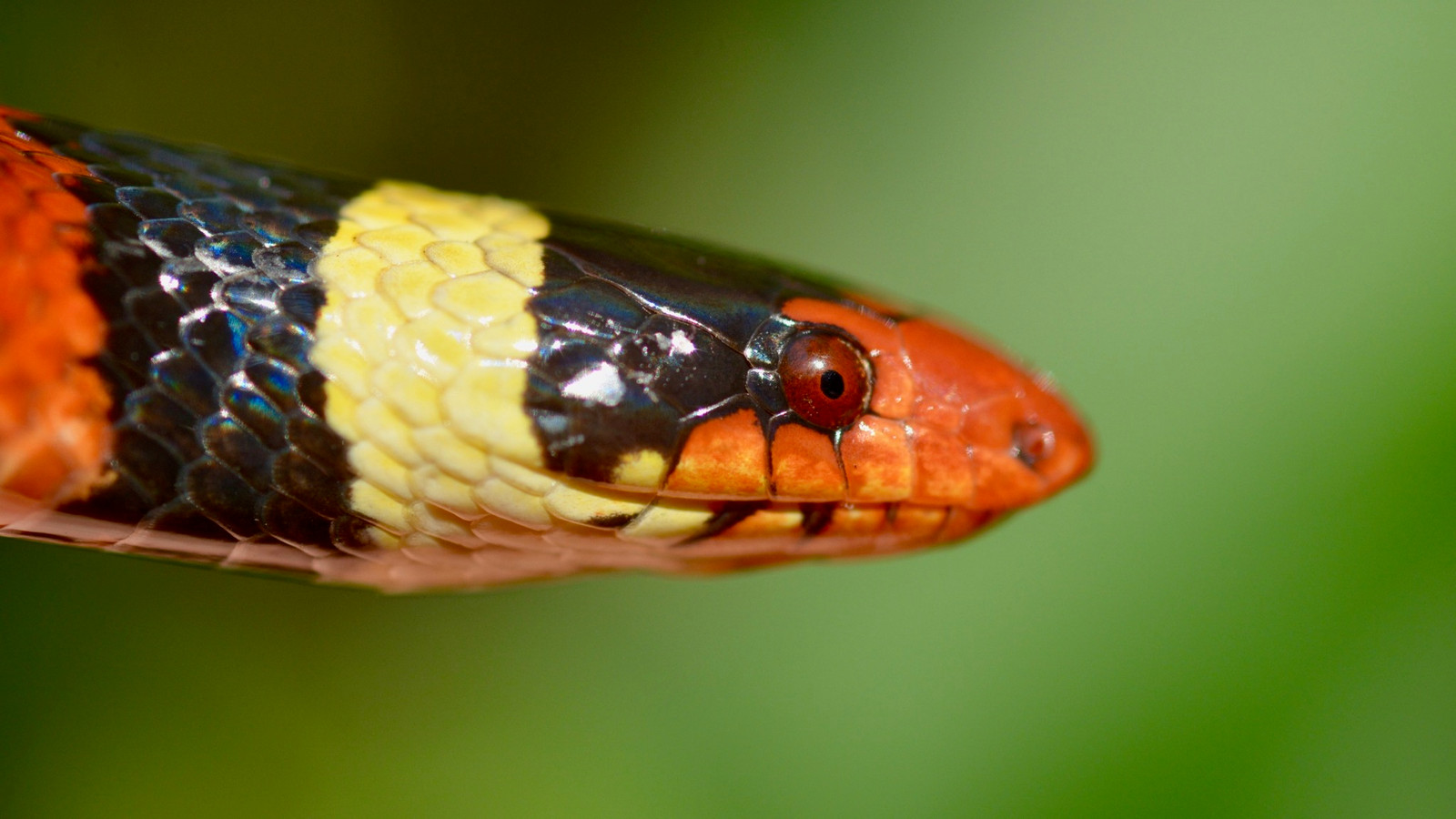
Scarlet Kingsnakes spend much of their lives hidden beneath logs, bark, rocks, and leaf litter. Their bright pattern resembles the venomous eastern coral snake, but the red bands touch black rather than yellow.
They occur in pinewoods, hammocks, and suburban edges where cover and small reptile prey remain available.
Habitat:
Pine Flatwoods and Sandhills, Forests and Woodlands, Urban and Residential Areas
Area / Range:
Statewide
Diet:
Feeds primarily on small lizards and snakes, along with reptile eggs and occasional small rodents.
Behavior:
Nocturnal and secretive. It burrows into loose soil and decaying wood, then constricts small prey.
Dawn and Dusk, Nighttime
Active Times:
Best time to see:
Warm humid evenings or after lifting natural cover during permitted field surveys.
Florida Native Status:
Native
Conservation Status:
Not federally or state listed; local populations benefit from intact ground cover.
Safety Level:
Low
Safety Information:
Nonvenomous and reluctant to bite. Do not handle an unidentified red, yellow, and black snake because venomous coral snakes occur in Florida.
Benefits to Property:
Consumes small lizards, snakes, and occasional rodents without damaging landscapes.
Property Concerns:
No structural concern. Mulch piles, loose bark, and landscape debris provide hiding places.
Fun Fact:
- Its color pattern is defensive mimicry.
- It spends much of its life underground or under cover.
- Young snakes look similar to adults.
Wildlife Laws:
No special listed-species protection applies, but collection and possession remain subject to FWC rules and land-manager restrictions. Never collect wildlife from parks or preserves without authorization.
Identification:
Slender snake with complete red, black, and yellow or cream rings. Red bands are bordered by black, the snout is usually red, and the head is not distinctly wider than the neck.