
Scarletsnake
Cemophora coccinea
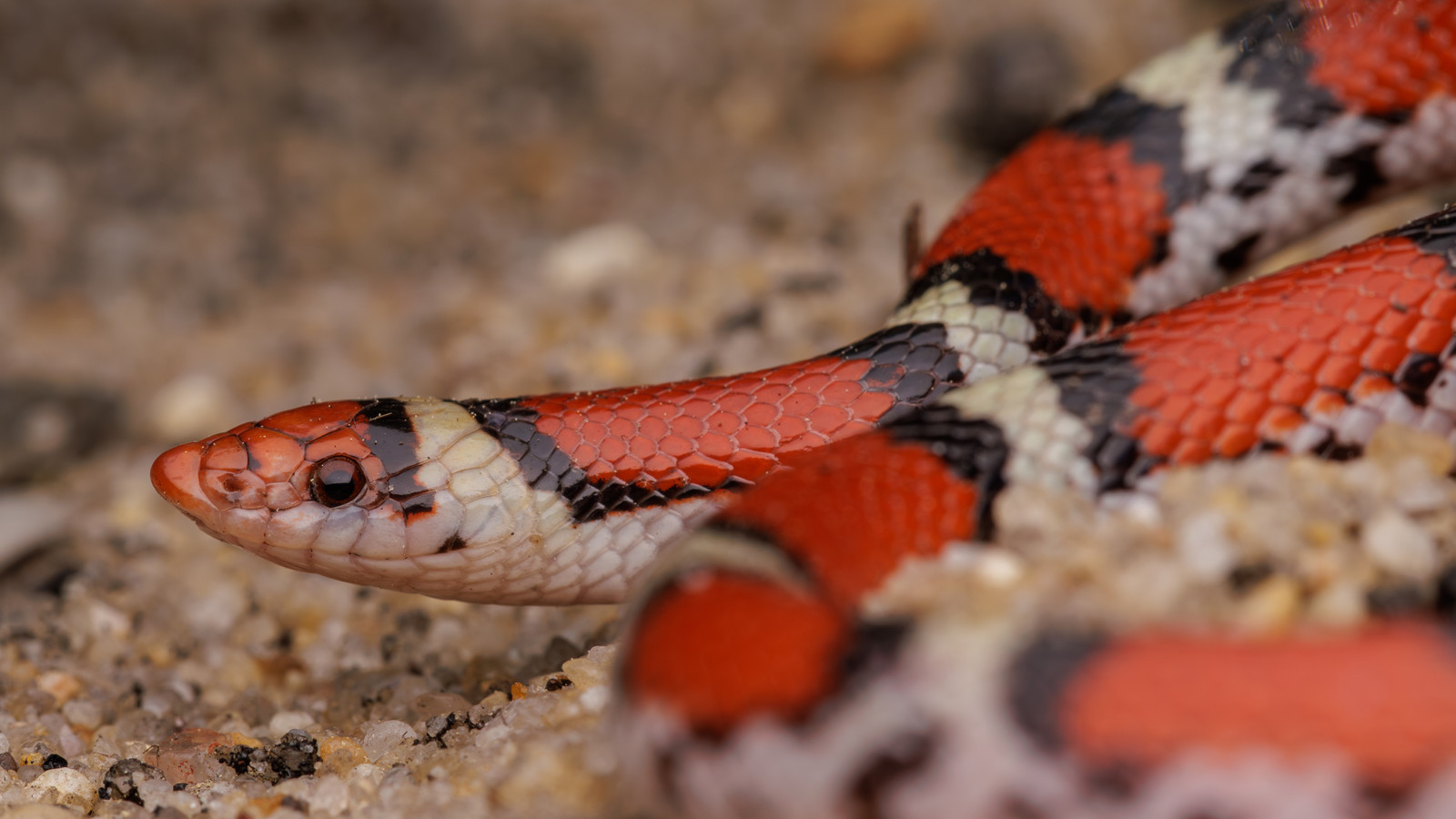
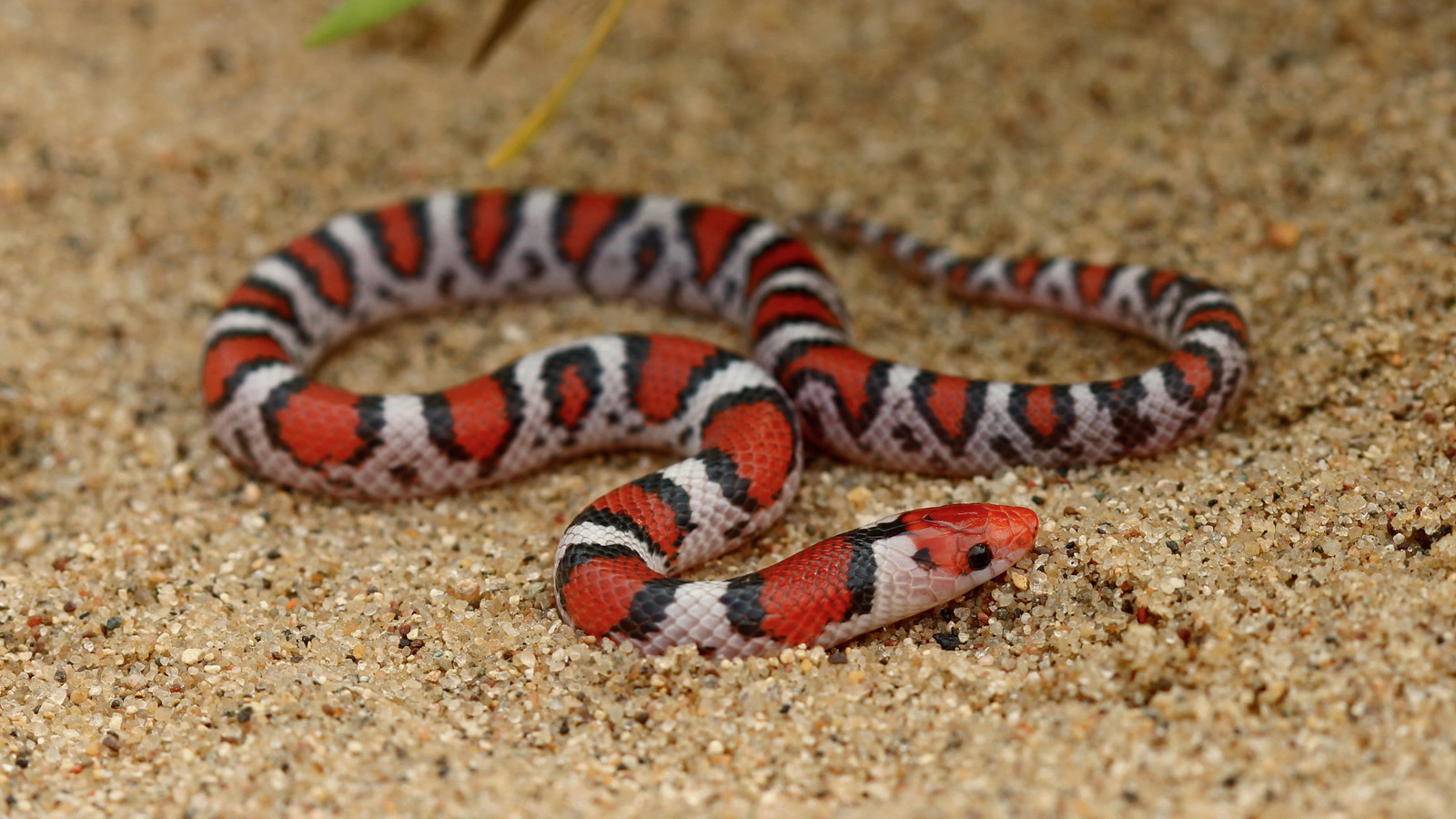
A secretive, nonvenomous Florida snake with red, black, and pale markings that spends much of its time below ground.
The scarletsnake is a slender, largely burrowing snake found across mainland Florida but not the Florida Keys. Its vivid red, black, and pale pattern is often mistaken for that of a coral snake or scarlet kingsnake; color alone is not a safe basis for handling an unfamiliar snake.
Pine flatwoods, sandhills, dry prairies, and hardwood hammocks provide the loose soil and cover it uses. It may also occur at the edges of neighborhoods adjoining suitable habitat.
Habitat:
Pine Flatwoods and Sandhills, Forests and Woodlands, Scrub and Dry Prairie, Urban and Residential Areas
Area / Range:
Statewide
Diet:
Reptile eggs are its primary food. Documented additional prey include small lizards, snakes, frogs, salamanders, small mammals, and invertebrates.
Behavior:
Scarletsnakes are secretive burrowers that shelter under logs, rocks, and debris. They are chiefly nocturnal and may cross roads after dark; in southern Florida they can be active through the year.
When restrained, an individual may hide its head under its coils, raise its tail, or release musk. It rarely bites in defense.
Night
Active Times:
Best time to see:
After dark on warm nights, especially where sandy habitat meets a quiet road or trail; observe without touching.
Florida Native Status:
Native
Conservation Status:
Not listed as threatened or endangered in Florida; suitable sandy habitat and ground cover support local populations.
Safety Level:
Low
Safety Information:
Scarletsnakes are nonvenomous and not dangerous to people or pets. Do not pick up a snake solely because its colors appear to match a rhyme: color variants and venomous look-alikes make that unreliable. Give it space and seek expert identification if needed.
Benefits to Property:
This native snake is part of the food web in sandy landscapes and consumes reptile eggs and other small animals. Retaining natural ground cover and avoiding unnecessary pesticides helps the surrounding wildlife community.
Property Concerns:
Its bright pattern can alarm residents who confuse it with a coral snake. Never attempt to capture, kill, or relocate an unidentified snake; keep pets back and allow it to move away.
Fun Fact:
Florida has two recognized scarletsnake subspecies: the Florida scarletsnake mainly from Marion County south, and the northern scarletsnake across north Florida and the Panhandle. Females commonly lay about 12–13 elongated eggs in concealed sites.
Wildlife Laws:
Observe native snakes without harming or collecting them. Rules for possession or collection may vary by species, land manager, and purpose; consult the Florida Fish and Wildlife Conservation Commission before any handling or removal.
Identification:
Adults are usually 14–20 inches long. Red blotches bordered by black lie on a pale gray to whitish background, and a light band follows the eyes on a small, pointed red head. The belly is pale and unpatterned.
Unlike the scarlet kingsnake, the scarletsnake's red and pale areas form blotches rather than complete rings around the body. Because look-alikes include a venomous coral snake, leave any uncertain identification undisturbed.