
Scissor-tailed Flycatcher
Tyrannus forficatus
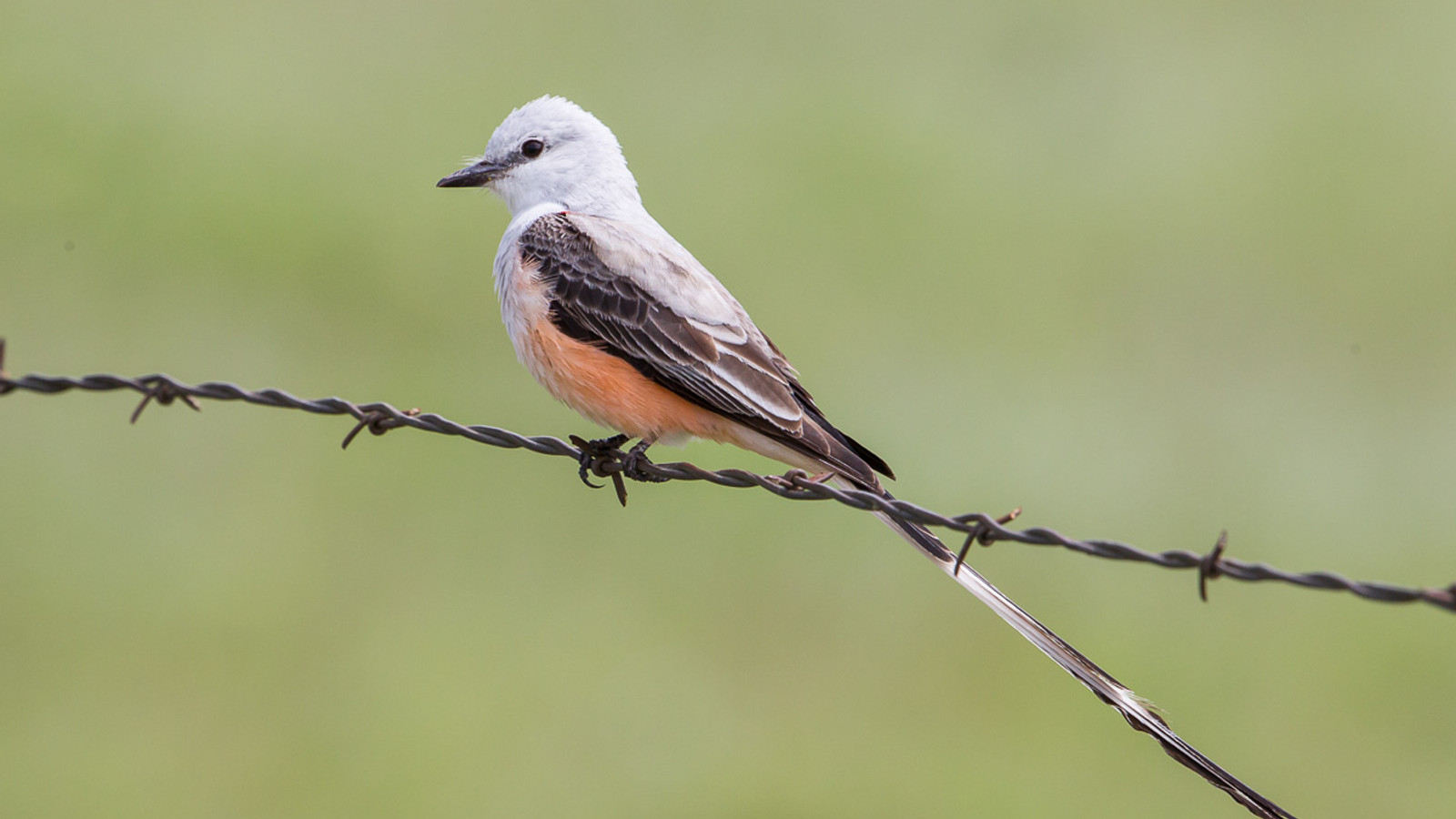
An unmistakable gray-and-salmon flycatcher with an exceptionally long forked tail, seen in Florida as an uncommon visitor.
The scissor-tailed flycatcher is a striking open-country bird named for its deeply forked tail. Florida lies east of its main breeding range, so sightings are uncommon and often involve migrants or wandering individuals.
These flycatchers perch conspicuously on wires, fences, and exposed branches before sallying into the air to catch insects.
Habitat:
Grasslands and Agricultural Areas, Urban and Residential Areas, Scrub and Dry Prairie
Area / Range:
Statewide
Diet:
The diet is dominated by grasshoppers, beetles, wasps, bees, dragonflies, and other insects caught in flight or picked from vegetation. Small fruits may be eaten when insects are scarce.
Behavior:
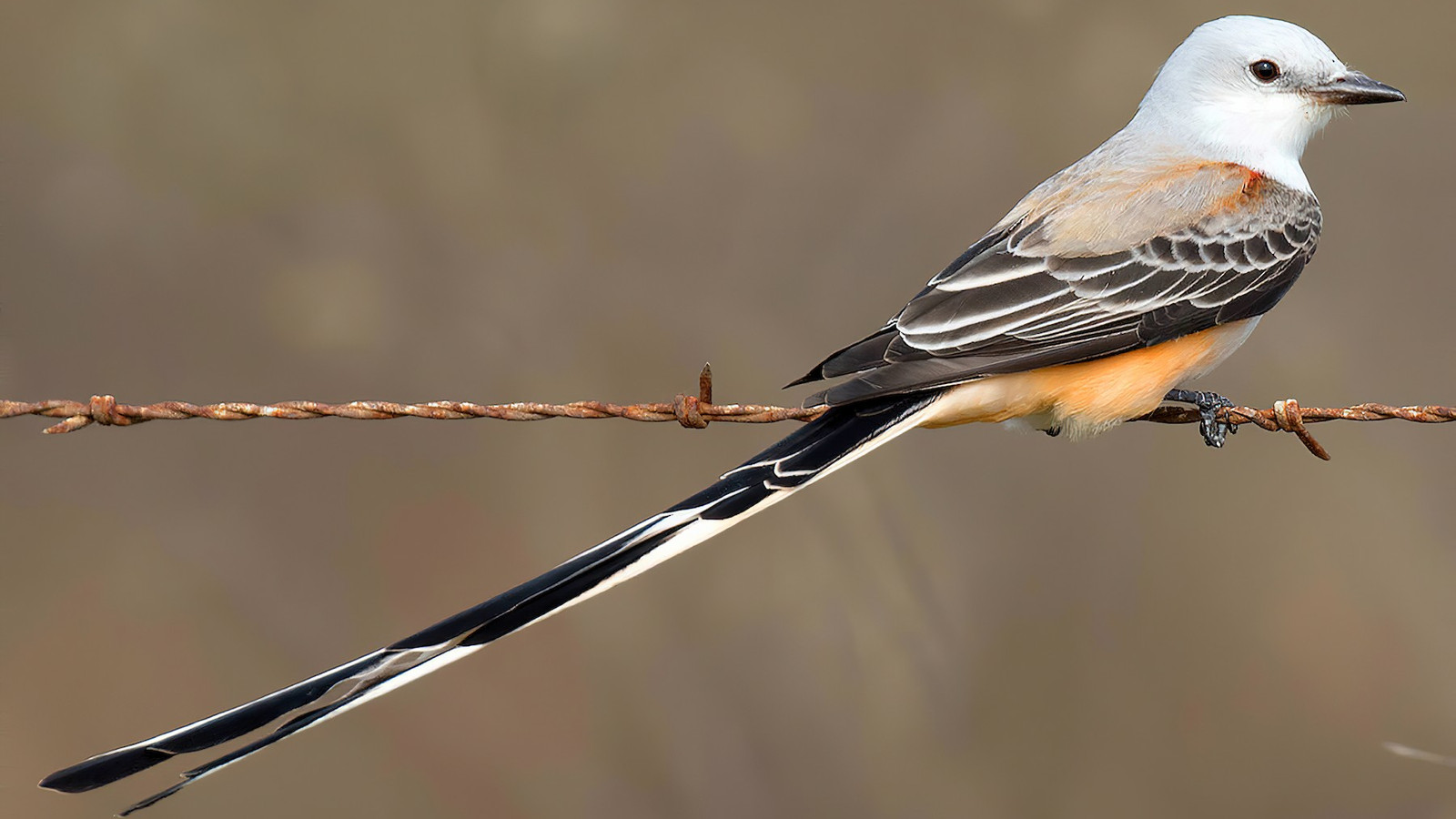
Scissor-tailed flycatchers watch from exposed perches and perform agile aerial pursuits. The long tail spreads and twists as a steering surface, allowing abrupt turns while chasing flying prey.
Day
Active Times:
Best time to see:
Fall through spring in open country, especially along fence lines, utility wires, pastures, and airfields
Florida Native Status:
Native rare migrant and visitor
Conservation Status:
Low Concern; not federally listed
Safety Level:
Harmless
Safety Information:
This bird is harmless. Enjoy unusual Florida sightings without crowding the bird or blocking roads, gates, or private property.
Benefits to Property:
It consumes large numbers of flying insects and adds value to open landscapes for birdwatching and wildlife observation.
Property Concerns:
It causes no significant property damage. Removing exposed perches or treating large areas with broad-spectrum insecticides can reduce feeding opportunities.
Fun Fact:
The species is sometimes called the Texas bird-of-paradise. Its tail can be longer than its body and is used in dramatic aerial courtship and insect-chasing maneuvers.
Wildlife Laws:
Scissor-tailed flycatchers are protected by the federal Migratory Bird Treaty Act. Do not capture, harm, possess, or disturb birds, nests, eggs, or young without authorization.
Identification:
Adults have a pale gray head and back, white underparts, dark wings, salmon-pink flanks, and a very long black-and-white tail that opens like scissors in flight. Total length is usually about 13 to 15 inches, much of it tail.