
Sergeant Major
Abudefduf saxatilis
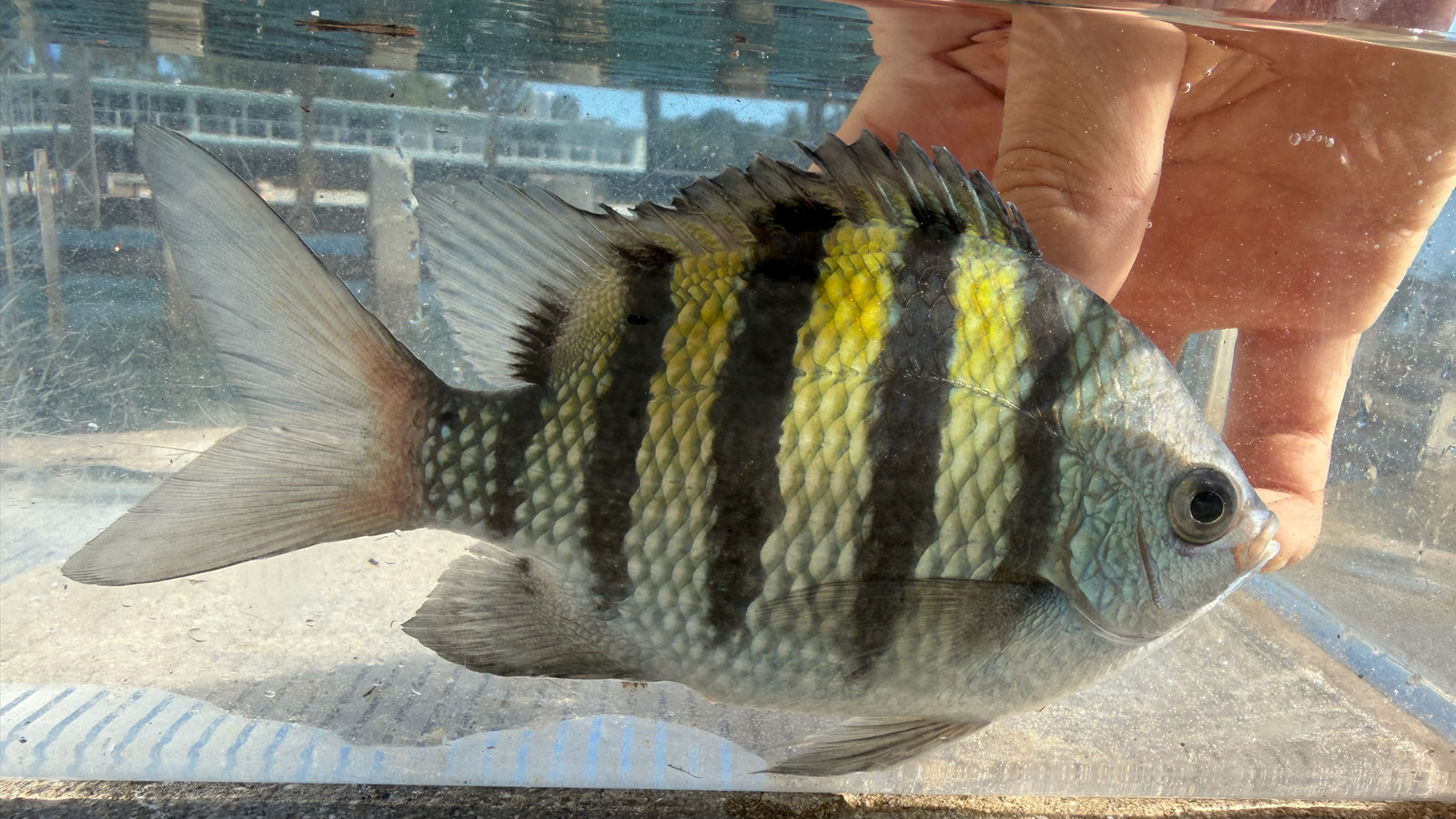
The sergeant major is a striped reef damselfish that gathers in conspicuous schools along Florida's warm coast.
The sergeant major is a native marine damselfish of shallow reefs and other coastal structures. Schools may gather over reef tops to feed, while individual fish retreat into crevices as evening approaches.
A bright yellow wash across the back and five dark vertical bars make this one of the easier small reef fish to recognize. Males guard eggs attached to rocks and other firm surfaces.
Habitat:
Coastal Waters, Estuaries and Bays
Area / Range:
Atlantic Coast, Gulf Coast, Florida Keys
Diet:
It grazes algae and takes plankton, small crustaceans, invertebrate larvae, and other small food items in the water column.
Behavior:
Daytime feeding schools can number many fish over shallow reefs. Near dusk they scatter to shelter in holes and caves. During breeding, males prepare nest surfaces and defend attached eggs.
Day
Active Times:
Best time to see:
Daylight over shallow reefs, rocky inlets, pilings, and similar coastal structure.
Florida Native Status:
Native
Conservation Status:
Not currently considered endangered or vulnerable by IUCN.
Safety Level:
Low Risk
Safety Information:
Observe without touching reef fish or feeding them. Avoid collecting animals from reefs or marine protected areas unless the current rules expressly allow it.
Benefits to Property:
A familiar reef-viewing fish, the sergeant major contributes to coastal food webs by consuming algae and plankton and by serving as prey for larger fish.
Property Concerns:
It is not a yard pest. Coastal runoff, damaged reefs, and disturbed shoreline habitat can reduce the quality of the places where it feeds and shelters.
Fun Fact:
Its five dark bars inspired a name likening them to military stripes.
A nest-guarding male may turn bluish and actively defend eggs laid on firm reef surfaces.
Wildlife Laws:
The sergeant major is listed among Florida marine life species used in the aquarium trade. Collection and harvest rules, licenses, gear restrictions, and protected-area rules can apply. Check the current FWC marine life regulations before taking any fish.
Identification:
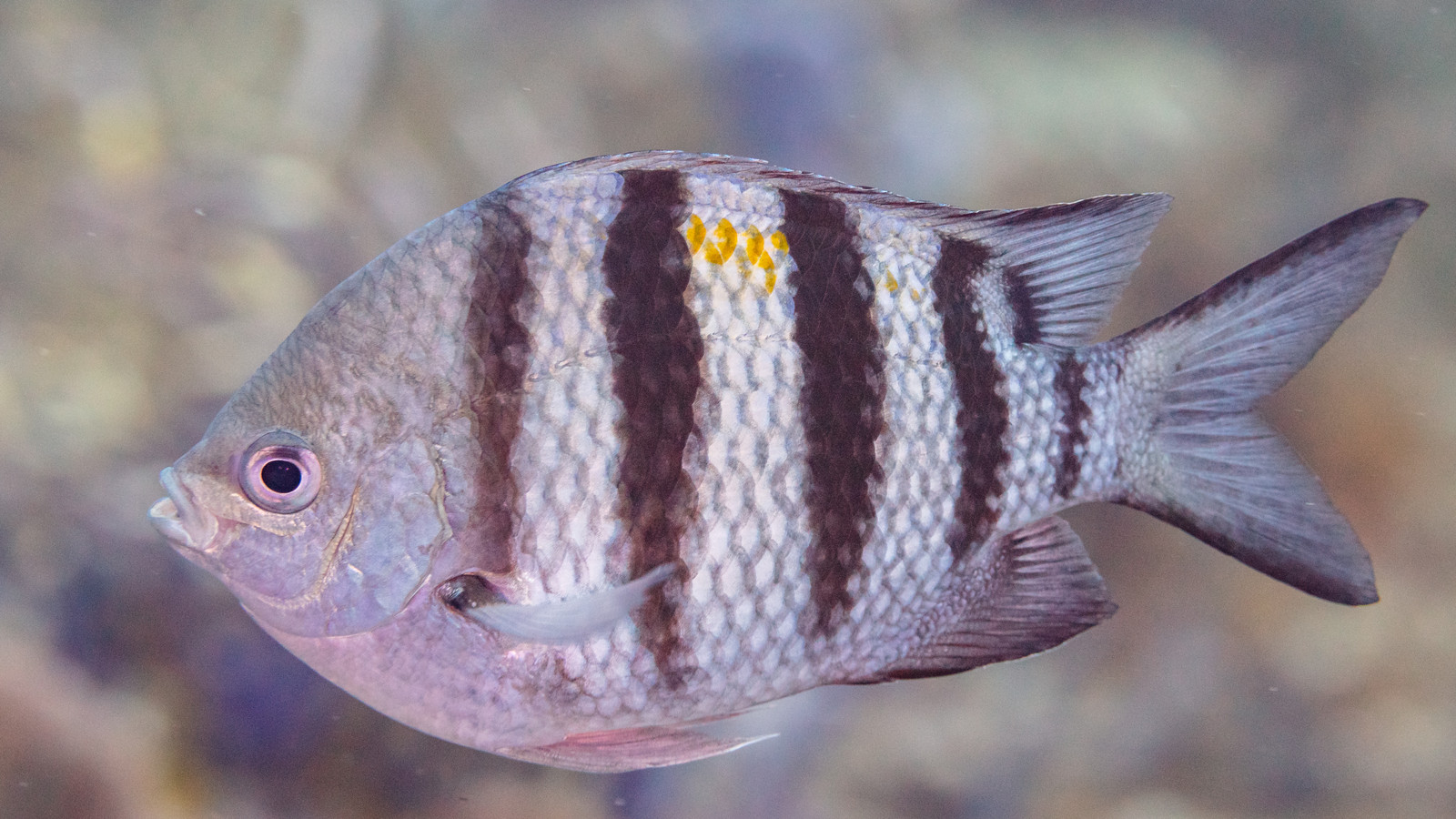
This small, oval, laterally flattened fish has five bold black bars that narrow toward the belly, a silvery lower body, and often a yellow upper body. A faint sixth mark may occur near the tail. Fish hiding in crevices or guarding nests can darken to blue-gray.
It is slimmer and more strongly barred than the similar night sergeant.