
Slender Glass Lizard
Ophisaurus attenuatus
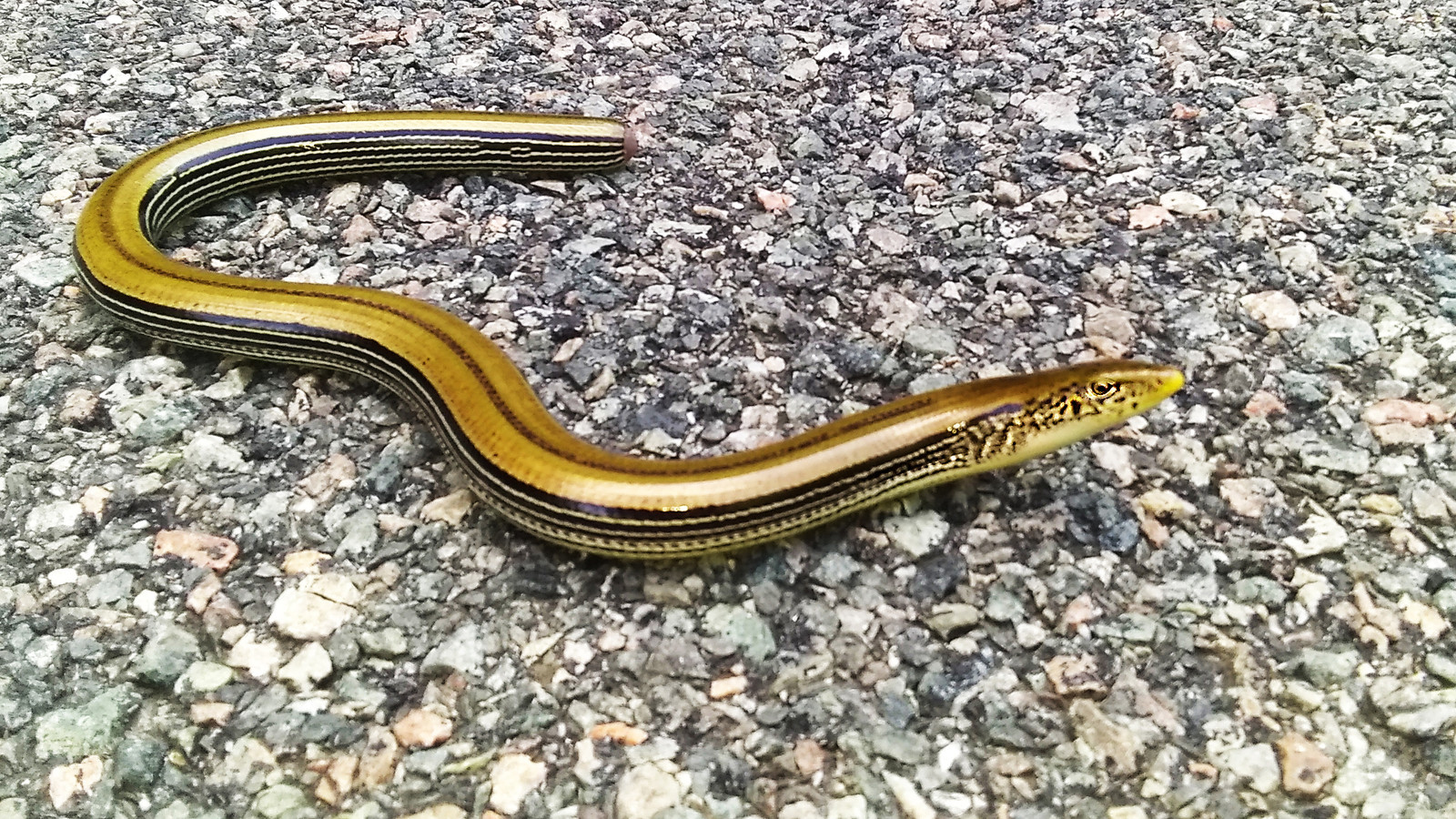
A long, legless native lizard of Florida’s grasslands, flatwoods, and sandy uplands that is often mistaken for a snake.
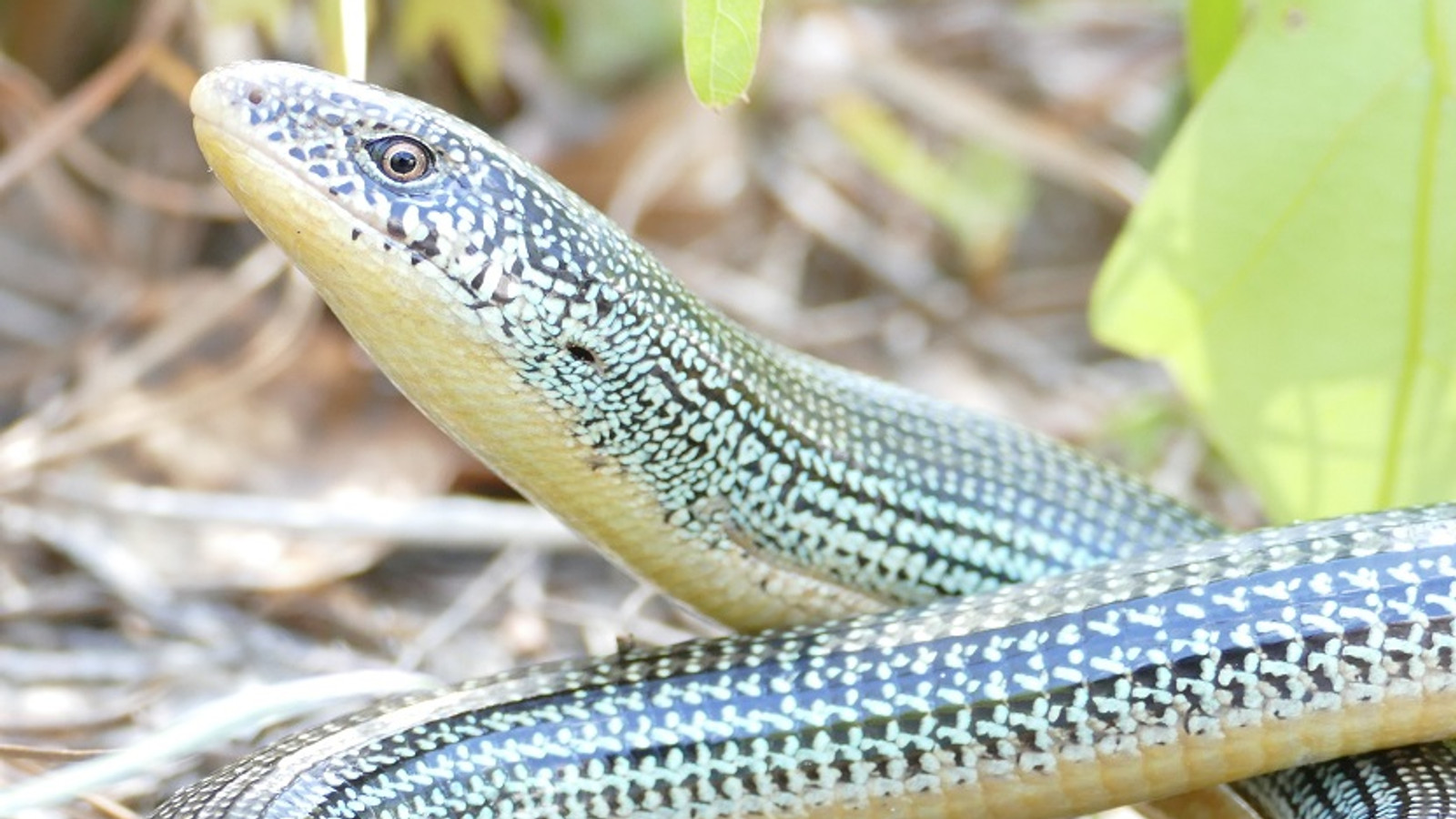
The Slender Glass Lizard is a legless lizard with movable eyelids, external ear openings, and a stiff body supported by small bony plates beneath the scales. Its very long tail makes up much of its total length.
In Florida the eastern subspecies occurs in open grassy and sandy habitats, including pine flatwoods, old fields, prairies, and some coastal uplands.
Habitat:
Grasslands and Agricultural Areas, Pine Flatwoods and Sandhills, Scrub and Dry Prairie
Area / Range:
Statewide
Diet:
Hunts insects, spiders, snails, and other small animals, including occasional small lizards or snakes. Its jaws do not expand like a snake’s.
Behavior:
Forages mostly during daylight and hides beneath vegetation, debris, or loose soil. When seized, it can break off part of its tail while escaping.
Daytime
Active Times:
Best time to see:
Warm spring and summer days in open grassy or sandy habitat, especially after rain.
Florida Native Status:
Native
Conservation Status:
Not federally listed; populations depend on maintaining open native habitat.
Safety Level:
Low
Safety Information:
Nonvenomous and harmless. Do not grab one by the tail, which can break easily as a natural defense.
Benefits to Property:
Consumes grasshoppers, beetles, spiders, snails, and other small animals that may be unwanted around landscapes.
Property Concerns:
Does not damage homes or landscaping. It is sometimes mistaken for a snake and injured unnecessarily.
Fun Fact:
The name “glass lizard” refers to its ability to shed a long section of tail. The regenerated tail is usually shorter and differently patterned.
Wildlife Laws:
Enjoy native glass lizards where found. Collection rules vary by land ownership and purpose; never collect on protected lands or move wildlife without permission.
Identification:
Look for a slim yellow-brown to olive body with multiple dark lengthwise stripes and a narrow dark stripe along the center of the back. Unlike snakes, it has visible ear openings, movable eyelids, and a lateral groove.