
Southeastern Lubber Grasshopper
Romalea microptera
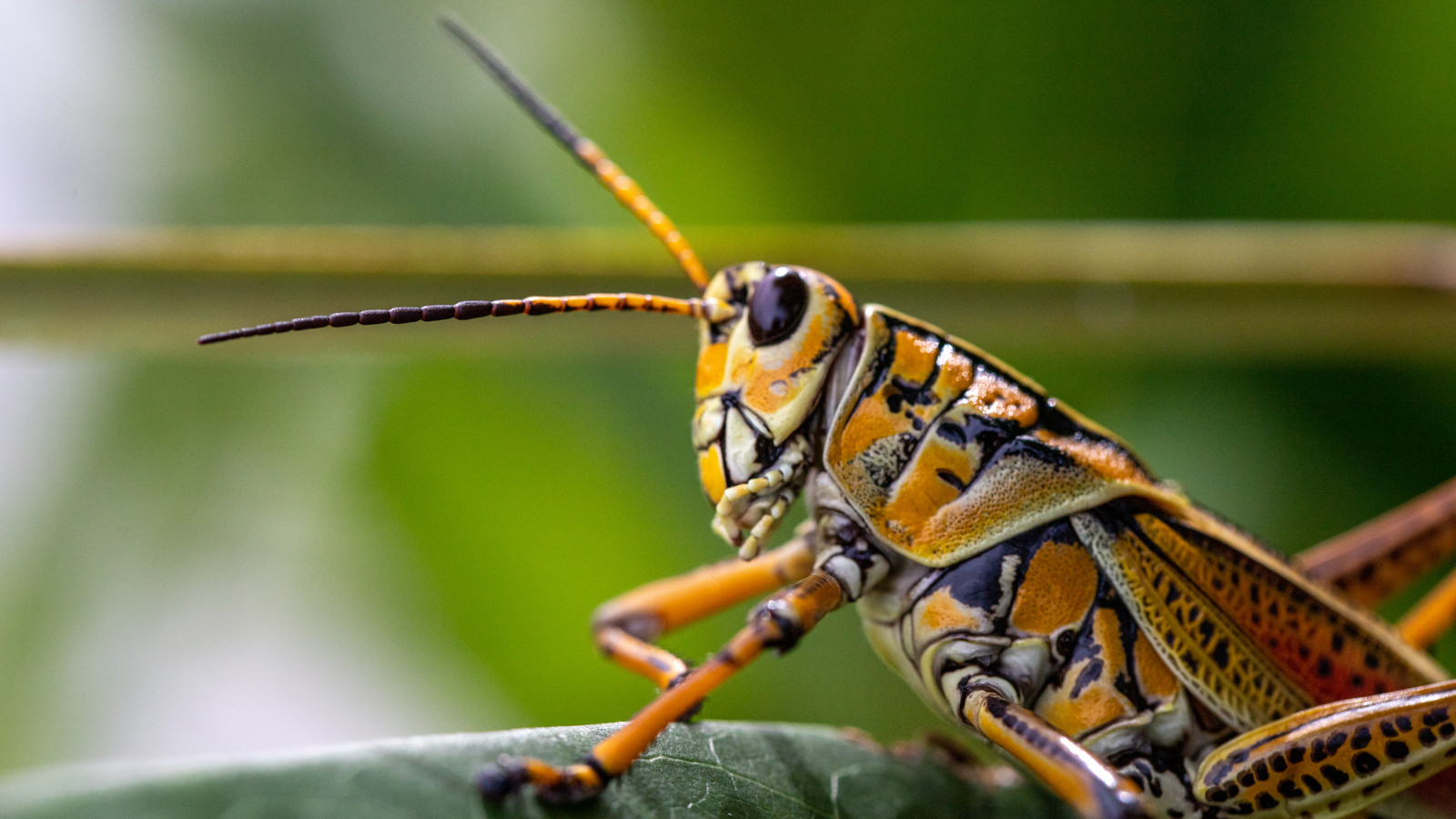
A very large, slow-moving Florida grasshopper with bright warning colors and short wings.
Southeastern Lubber Grasshoppers, also called eastern lubbers, are common in weedy fields, wetlands, pine edges, and gardens. Adults are poor fliers and move with a heavy walking or hopping motion.
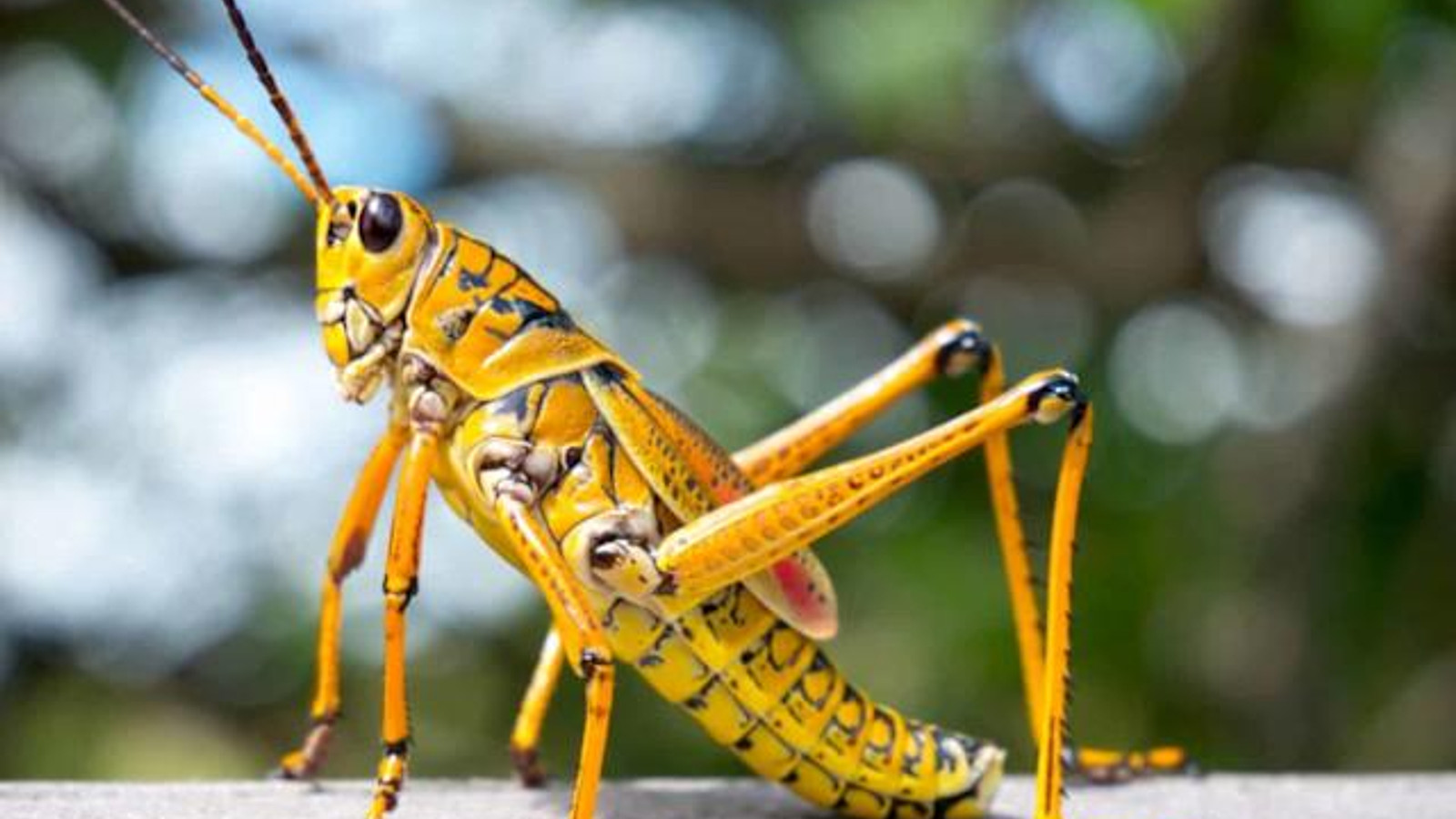
Bright black, yellow, orange, and red colors warn predators about irritating defensive secretions. Large outbreaks can defoliate ornamental plants.
Habitat:
Freshwater Wetlands, Pine Flatwoods and Sandhills, Grasslands and Agricultural Areas, Urban and Residential Areas
Area / Range:
Statewide
Diet:
Feeds on broadleaf plants, grasses, aquatic-edge vegetation, and many ornamental garden plants.
Behavior:
Walks slowly, gathers in groups when young, and displays warning colors. When threatened it can hiss, spread its short wings, and release foul defensive fluid.
Daytime
Active Times:
Best time to see:
Spring nymphs and summer adults in weedy areas, wetland margins, roadsides, and gardens.
Florida Native Status:
Native
Conservation Status:
Not federally or state listed; widespread in Florida.
Safety Level:
Medium
Safety Information:
Do not handle with bare hands or allow pets to bite or eat one. Defensive secretions can irritate skin, eyes, and mouths and can make pets ill.
Benefits to Property:
Provides food-web value for the limited predators able to tolerate its defenses and helps recycle plant material.
Property Concerns:
Groups can strip foliage from amaryllis, lilies, vegetables, and other ornamentals. Hand removal while wearing gloves works best when nymphs are small.
Fun Fact:
- Adults have wings but rarely fly well.
- Bright colors advertise chemical defenses.
- The word lubber refers to clumsy movement.
Wildlife Laws:
No special wildlife protection applies. Any pesticide use must follow the product label, site restrictions, and protections for pollinators and water.
Identification:
Heavy-bodied grasshopper up to three inches long with short wings, thick legs, and bold black, yellow, orange, or red markings. Young nymphs are mostly black with a bright stripe.