
Southern Skipperling
Copaeodes minima
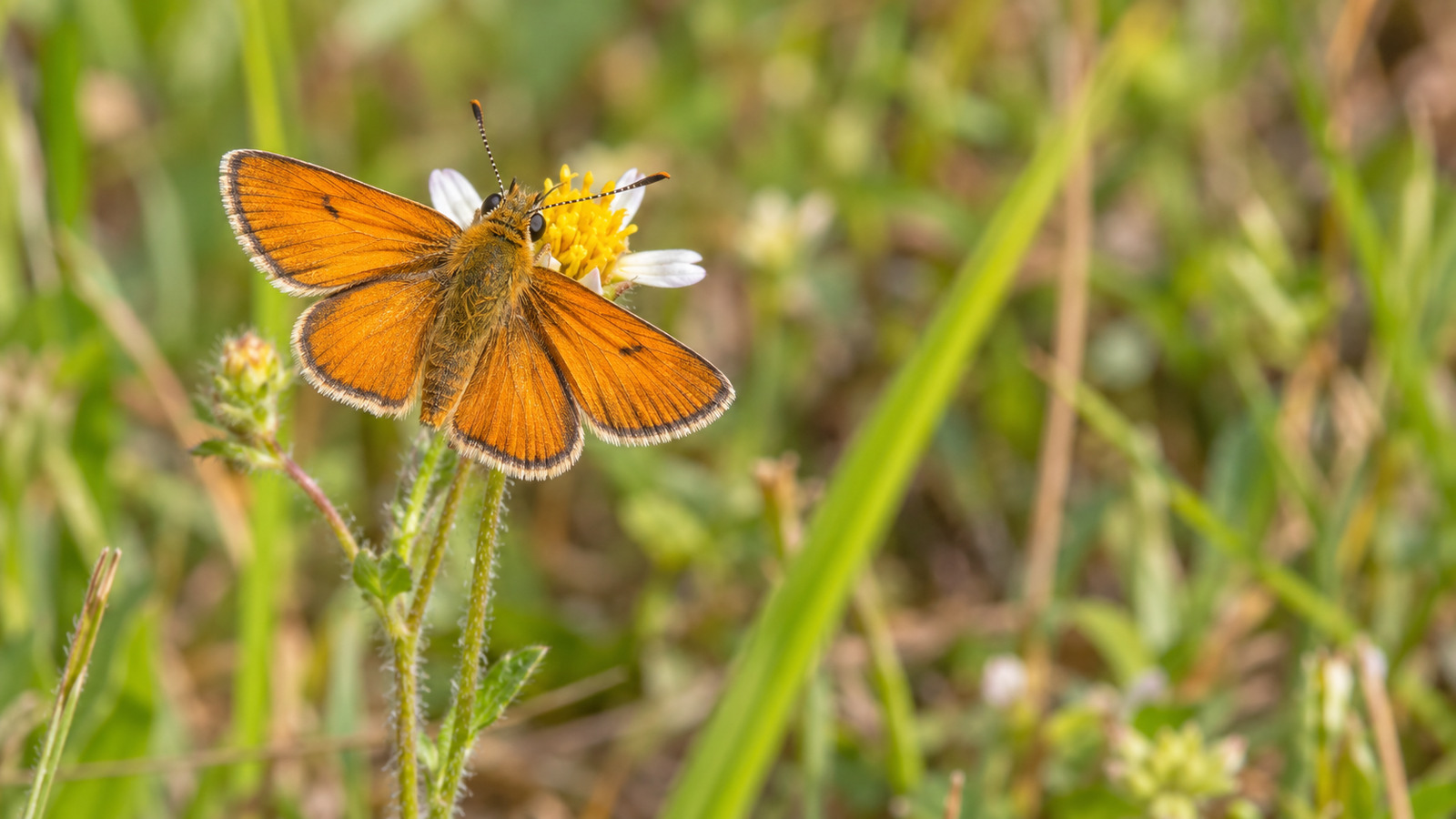
Southern Skipperlings are tiny orange butterflies that fly low through sunny grasslands, roadsides, lawns, and wet-meadow edges across Florida.
Southern Skipperlings are the smallest North American skippers and can be easy to overlook as they dart close to the ground. In Florida, adults may be seen year-round wherever low grasses and small nectar flowers occur.
Their compact bodies and hooked antenna tips identify them as skippers. Open, lightly managed grasslands and flower-rich margins provide both larval food and adult nectar resources.
Habitat:
Grasslands and Agricultural Areas, Freshwater Wetlands, Urban and Residential Areas
Area / Range:
Statewide
Diet:
Adults drink nectar from small, low-growing flowers. Caterpillars feed on grasses; Bermuda grass is a documented host, and related low grasses may support development in managed and natural open areas.
Behavior:
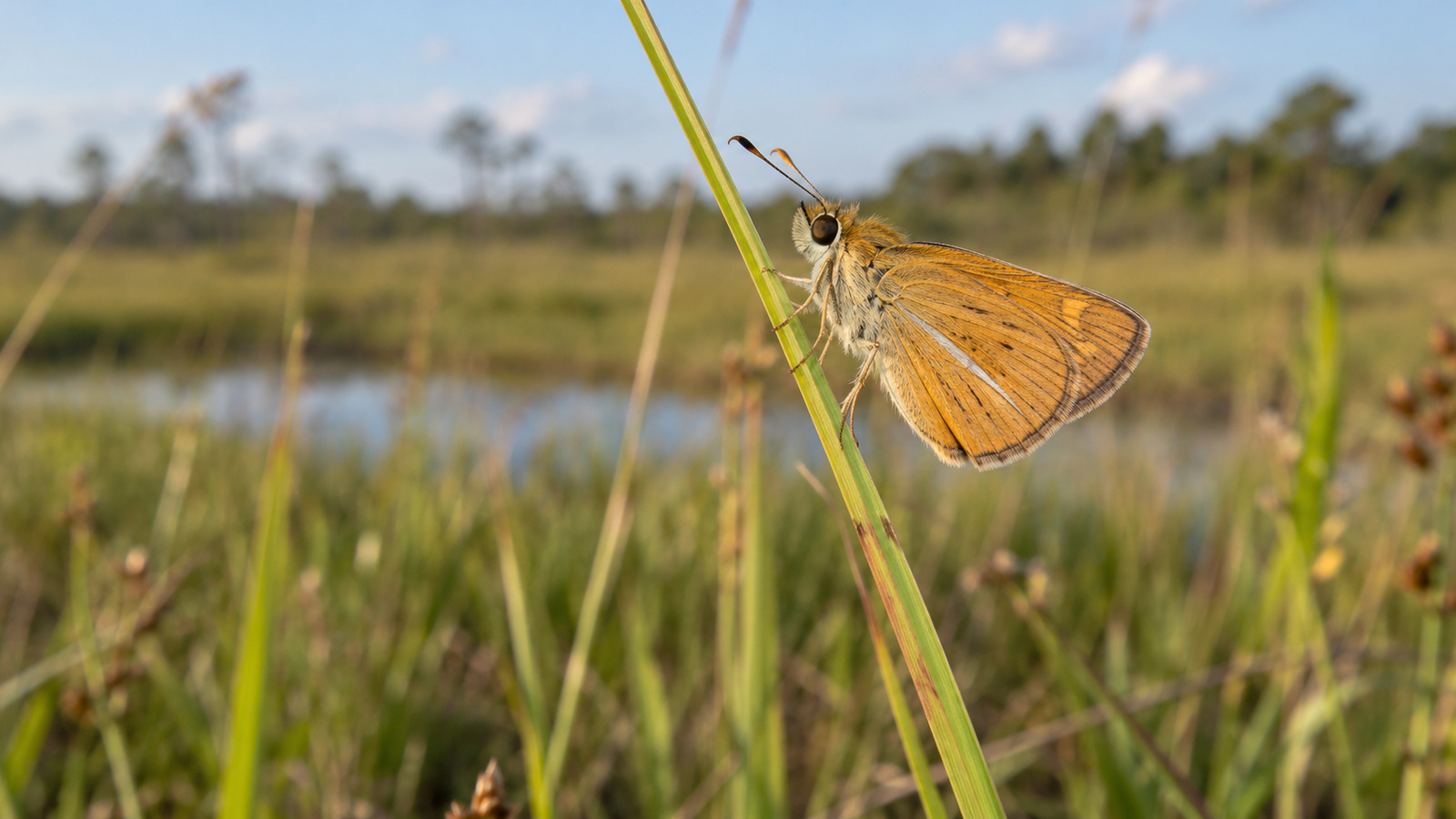
Adults fly rapidly but stay close to the ground, making short visits to flowers and grass blades. When resting, they may hold the forewings and hindwings at different angles in the typical skipper posture.
Day
Active Times:
Best time to see:
Sunny, calm periods from morning through afternoon in short grass, roadsides, lawns, field margins, and wet-meadow edges; adults can occur year-round in Florida.
Florida Native Status:
Native
Conservation Status:
Globally secure and widespread, with no federal or Florida threatened listing. Local numbers benefit from flower-rich grasslands and reduced insecticide use.
Safety Level:
Harmless
Safety Information:
Southern Skipperlings cannot sting and pose no danger to people, pets, or turf. Observe gently and avoid handling because their small wings and scales are easily damaged.
Benefits to Property:
Adults visit small flowers and contribute to pollinator diversity. Leaving some low flowering plants and using targeted pest control can support skipperlings and other beneficial insects.
Property Concerns:
They cause no meaningful landscape damage. Caterpillars feed on grasses but are tiny, sparse, and not considered a turf pest; broad insecticide use and frequent removal of all flowering groundcover are greater concerns.
Fun Fact:
With a wingspan often under an inch, the Southern Skipperling is considered the smallest North American skipper. Its old combination Hesperia minima and the variant Copaeodes minimus still appear in older references.
Wildlife Laws:
Florida wildlife may not be taken, transported, sold, or possessed except as authorized by state rules. Follow site-specific regulations on public lands and obtain permission or any required permit before collecting butterflies.
Identification:
The wings are bright to pale orange, elongated, and edged with a very narrow dark border. Males have a short, narrow black stigma on the upper forewing, while females may show darker scaling along the veins and a broader edge. The underside of the hindwing has a narrow white ray from the base toward the outer margin. Wingspan is about 0.6 to 0.9 inch.