
Southern Two-Lined Salamander
Eurycea cirrigera
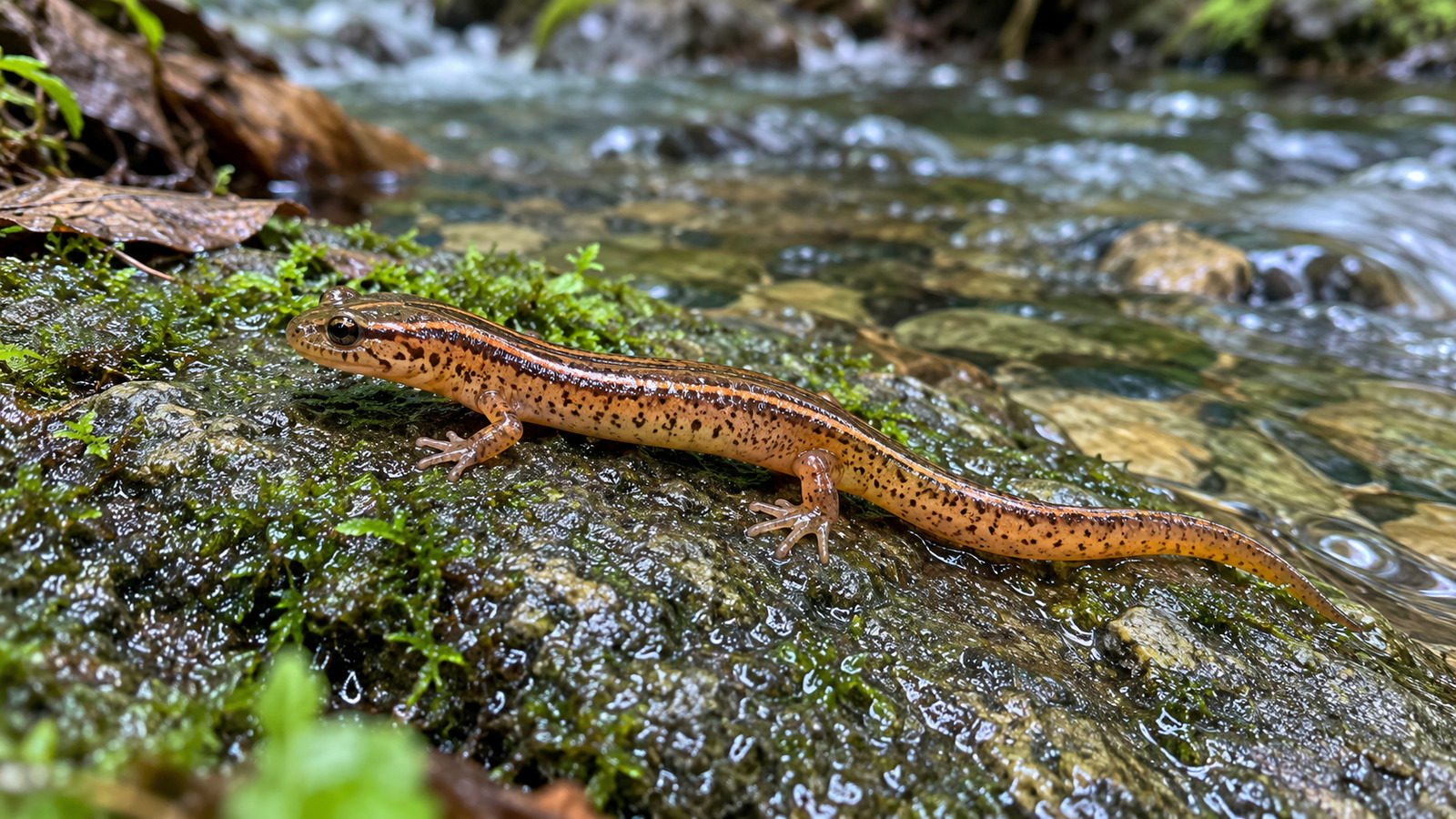
The Southern Two-Lined Salamander is a slender streamside amphibian marked by two dark lines running from its eyes onto its tail.
The Southern Two-Lined Salamander is a small lungless salamander of forested streams, springs, seeps, and wet ravines. It breathes through moist skin, so clean water, shade, and damp cover are essential.
Adults live under rocks, logs, moss, and leaf litter beside water. Aquatic larvae develop in streams before transforming into the land-dwelling adult form.
Habitat:
Rivers and Springs, Forests and Woodlands, Freshwater Wetlands
Area / Range:
North Florida, Florida Panhandle
Diet:
Small insects, insect larvae, spiders, worms, tiny crustaceans, snails, and other invertebrates found in streams and damp forest cover.
Behavior:
Usually hides beneath wet rocks, logs, moss, or leaf litter. Adults forage along stream margins and retreat underground or into saturated cover during dry weather.
Night
Active Times:
Best time to see:
Search after rain or during cool, damp periods by carefully checking rocks and logs beside shaded streams and springs in north Florida.
Florida Native Status:
Native
Conservation Status:
Not federally or state listed in Florida. Local populations depend on clean streams, shaded banks, natural flow, and intact forest cover.
Safety Level:
Harmless. Avoid Handling
Safety Information:
This salamander does not bite or sting. Observe without handling because dry hands, lotions, and chemicals can damage its delicate skin.
Benefits to Property:
Consumes small insects and other invertebrates. Its presence also signals moist habitat and relatively healthy stream conditions.
Property Concerns:
It causes no property damage. Clearing streamside shade, compacting wet soil, using pesticides, and allowing sediment runoff can remove suitable habitat.
Fun Fact:
Like other lungless salamanders, it has no lungs. Oxygen passes directly through its moist skin and the lining of its mouth.
Wildlife Laws:
Do not collect wildlife from parks, preserves, or other managed lands without permission. Check current Florida rules before possessing native amphibians.
Identification:
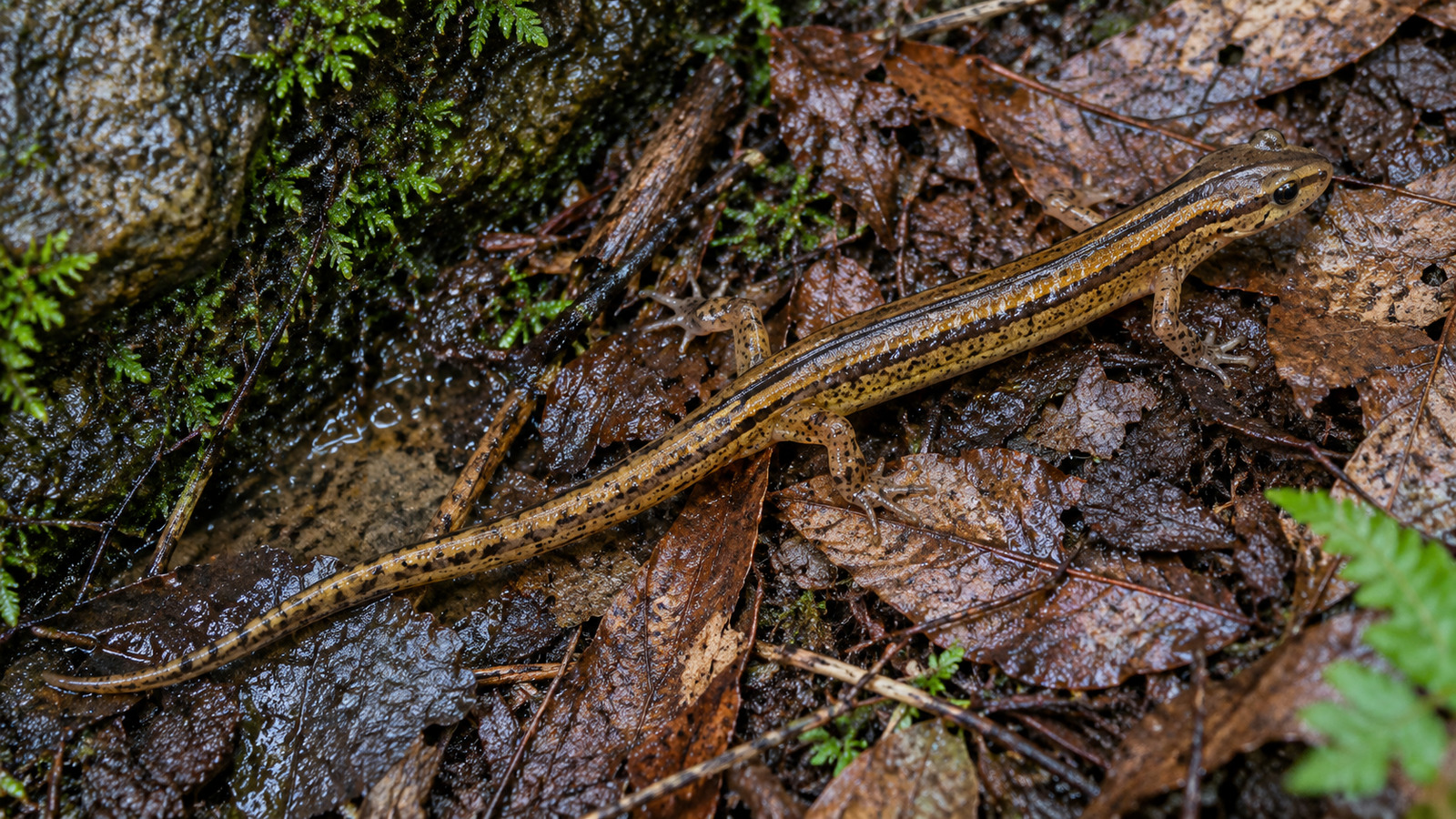
The body ranges from yellow and tan to bronze or orange. Two narrow dark lines begin behind the eyes and continue along the back toward the tail. Dark flecks often mark the sides and belly.
The species is slender with a long tail and small limbs. Its paired back lines and streamside habitat separate it from many other Florida salamanders.