
Stoplight Parrotfish
Sparisoma viride
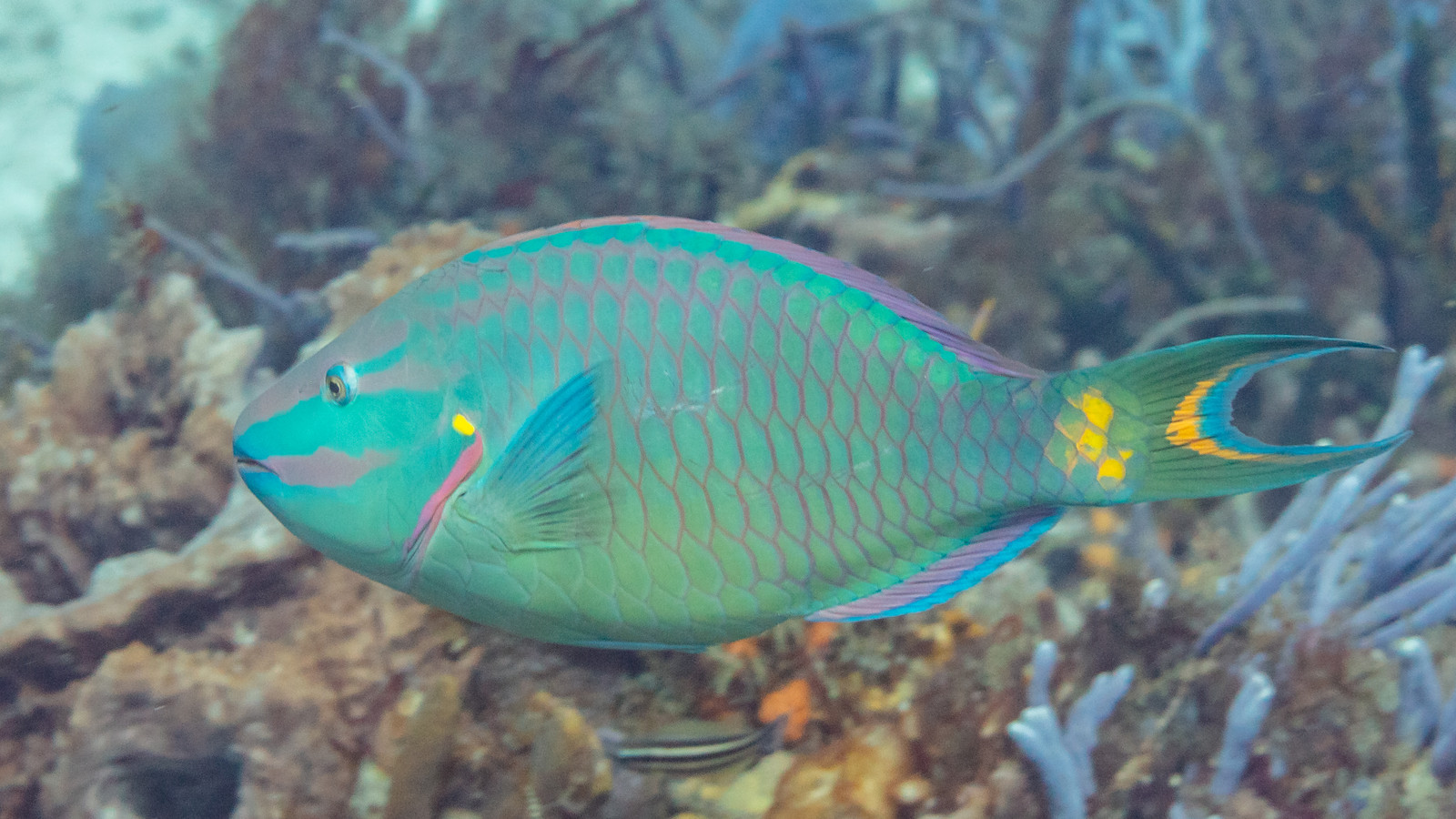
A colorful native reef fish whose fused teeth graze algae and coral surfaces and help produce reef sand.
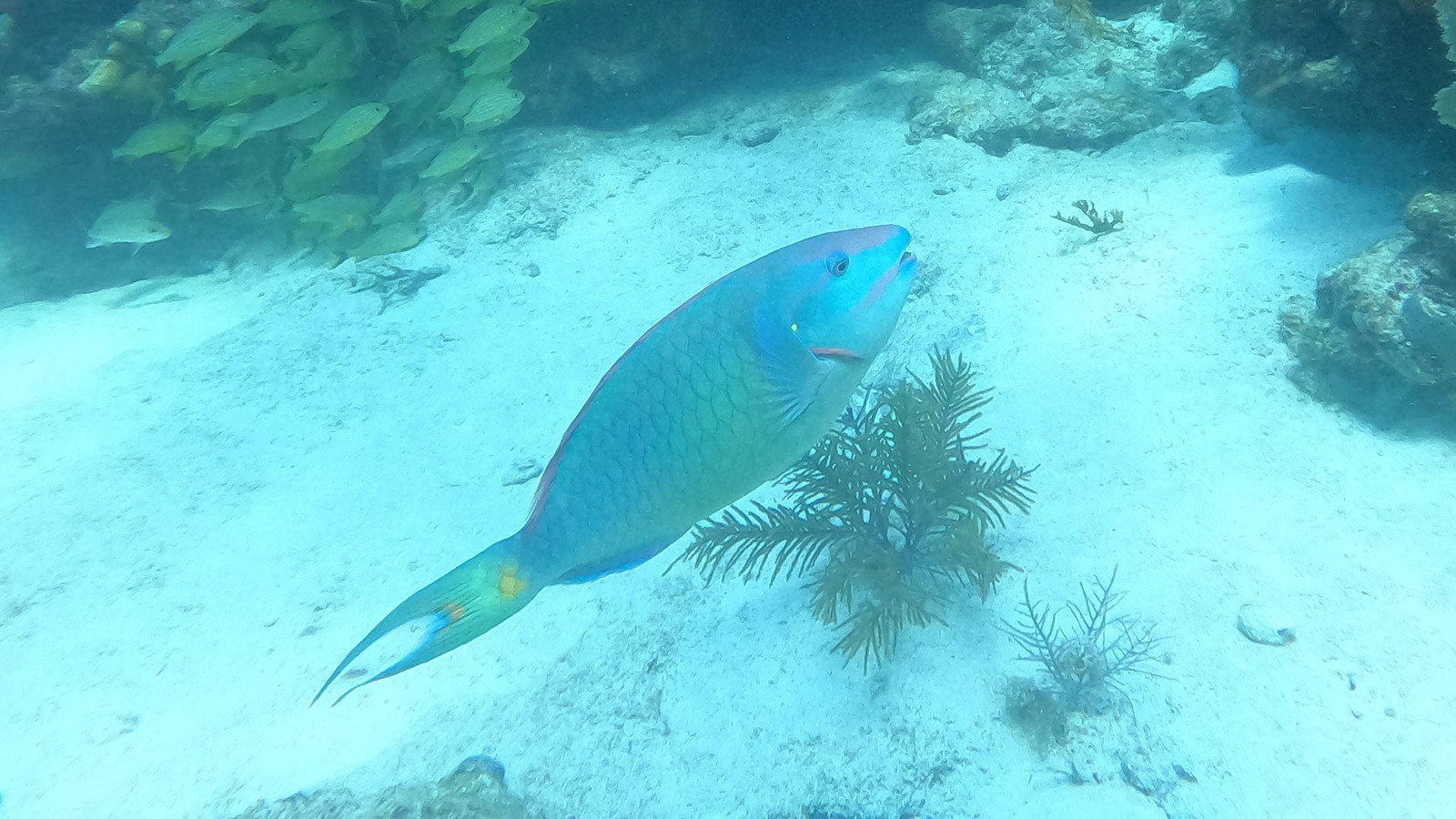
The stoplight parrotfish is a native western Atlantic reef fish found off southern Florida and in the Florida Keys. Its color changes dramatically with age and sex, from mottled reddish juveniles and initial-phase adults to green terminal-phase males.
It grazes reef surfaces by day and rests on the reef at night.
Habitat:
Coastal Waters
Area / Range:
South Florida, Florida Keys
Diet:
Grazes algae and living material on hard reef surfaces, sometimes biting coral. Its fused teeth scrape the surface, and throat teeth grind ingested material; indigestible carbonate is released as fine sand.
Behavior:
Active during daylight and rests in relatively open reef spaces at night. It usually propels itself with its pectoral fins, using the tail for short bursts of speed.
Day
Active Times:
Best time to see:
Daylight while snorkeling or diving over suitable coral reefs in South Florida and the Florida Keys; observe without touching the fish or reef.
Florida Native Status:
Native
Conservation Status:
Native reef fish; check current Florida and sanctuary rules before any collection.
Safety Level:
Low Risk
Safety Information:
Generally safe to observe from a respectful distance. Do not handle the fish or touch coral while snorkeling or diving.
Benefits to Property:
Reef grazing helps control algal growth, and processed carbonate contributes to reef sand. Its presence enriches wildlife viewing around healthy reefs.
Property Concerns:
Not a landscape pest. Local reef health, water quality, and habitat protection matter more than property-level control.
Fun Fact:
The same species can look so different across color phases that early taxonomists described some phases under separate names. Its beaklike mouth is made of fused teeth.
Wildlife Laws:
Florida marine-life harvest rules and Florida Keys National Marine Sanctuary zones may restrict collection or fishing. Sanctuary preservation and conservation areas prohibit removal of fish; check the current FWC and NOAA rules for the exact location before any harvest.
Identification:
A parrotlike beak of fused teeth and large scales distinguish parrotfish. Terminal-phase males are green with diagonal orange bands on the head, a yellow spot near the gill slit and another at the tail base, and an orange crescent on the tail. Initial-phase fish are mottled reddish brown with a brighter red belly.