
Summer Tanager
Piranga rubra
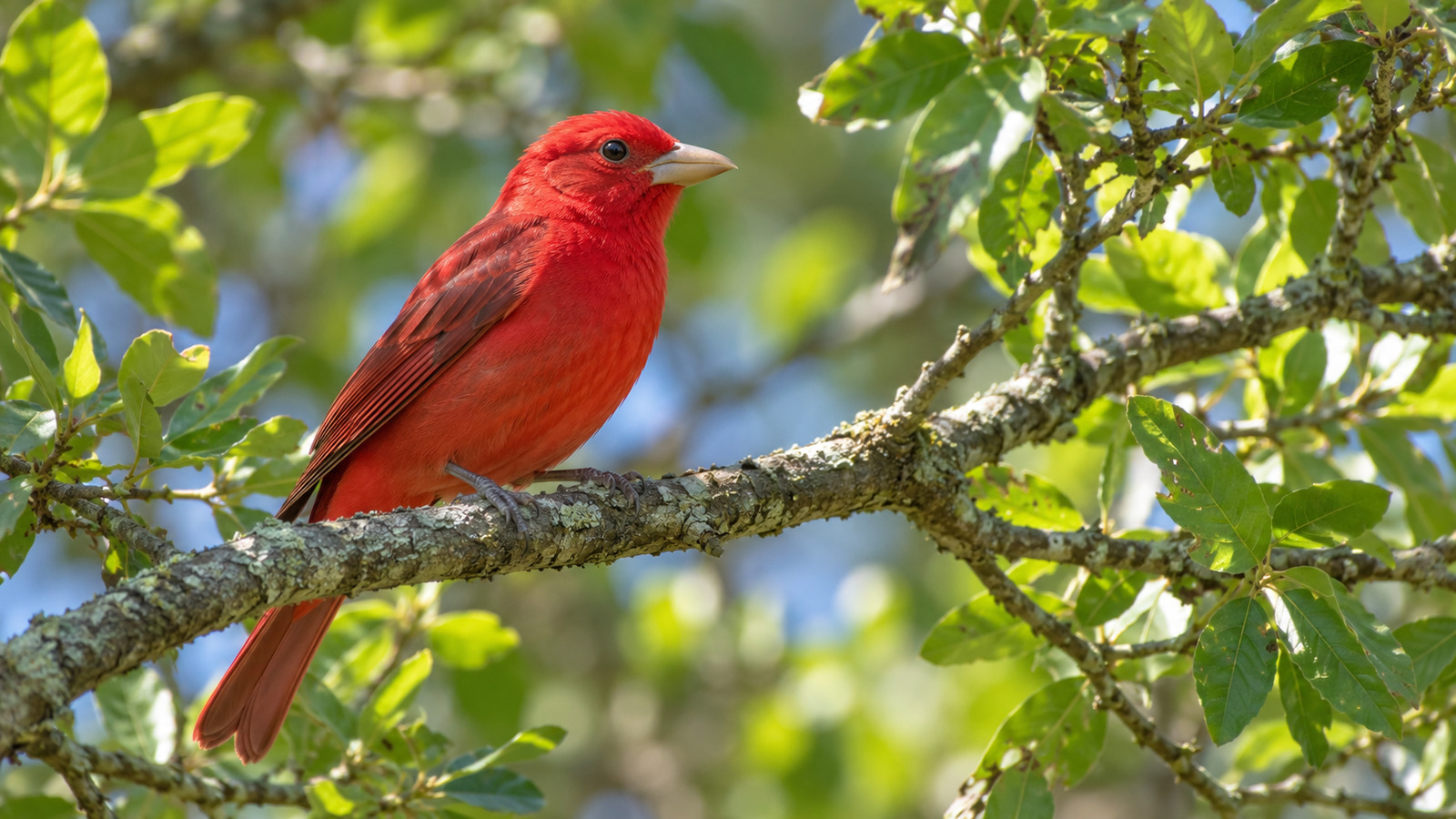
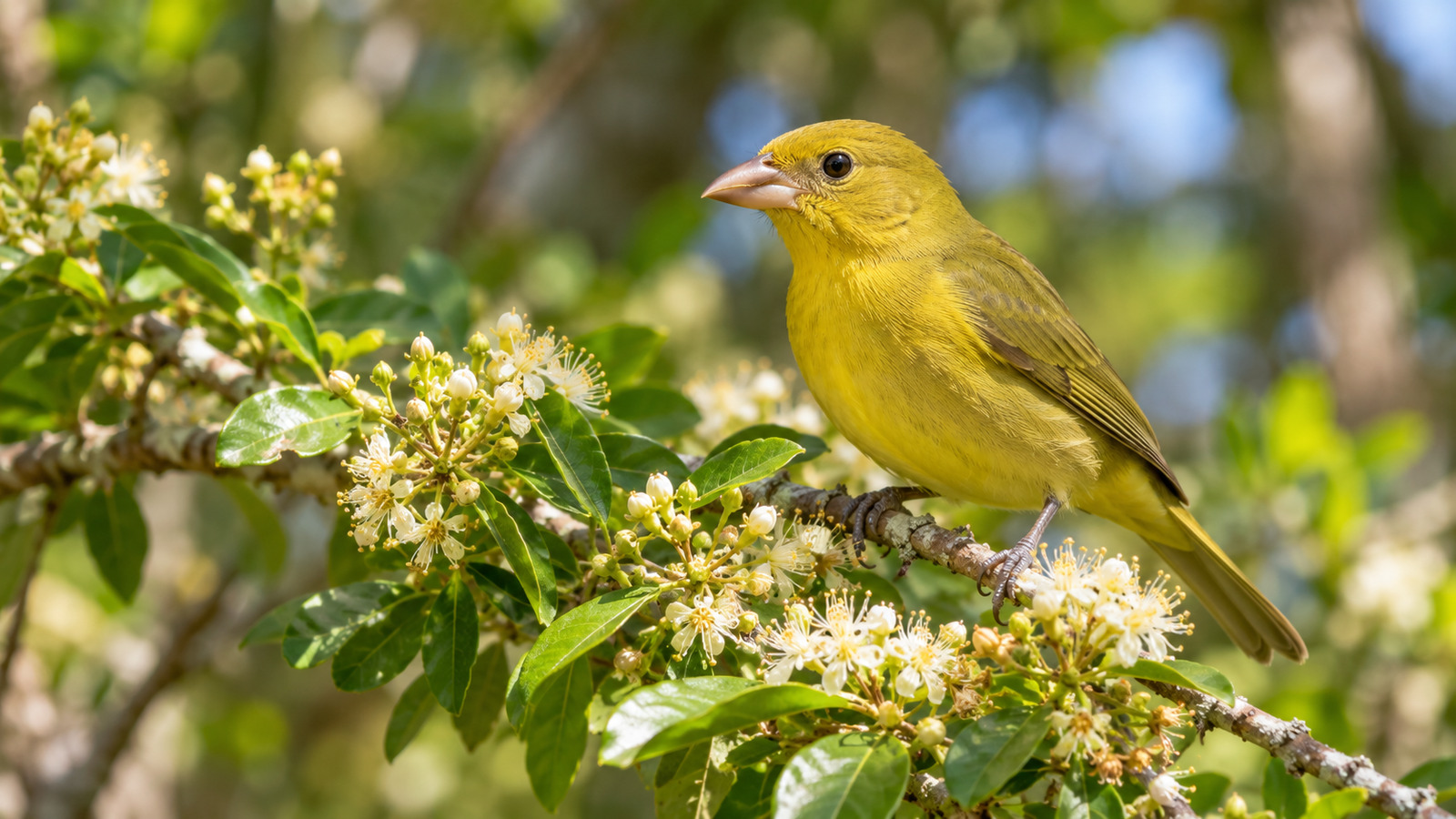
Summer Tanagers are chunky canopy songbirds: adult males are entirely red, females are yellow-green, and both use thick pale bills to handle bees and wasps.
Summer Tanagers breed in gaps and edges of open deciduous and pine-oak woods across the southern United States. In Florida they nest during summer and also pass through wooded parks, gardens, and coastal vegetation during migration.
Despite the male's vivid color, these birds often remain high and still in leafy canopies. Their robin-like song and distinctive pit-ti-tuck call can reveal them before they are seen.
Habitat:
Forests and Woodlands, Pine Flatwoods and Sandhills, Urban and Residential Areas
Area / Range:
Statewide
Diet:
Bees and wasps are specialties, along with beetles, cicadas, ants, termites, grasshoppers, flies, moths, spiders, and fruits such as mulberries, blackberries, pokeweed berries, and citrus.
Behavior:
Summer Tanagers sit quietly in the canopy, then sally out to catch flying insects or glean prey from leaves and bark. They beat bees and wasps against a perch and rub away stingers before swallowing them.
Day, Dawn, Dusk
Active Times:
Best time to see:
Spring and summer mornings in open oak or pine-oak woods; listen for the robin-like song and pit-ti-tuck call.
Florida Native Status:
Native Migratory Bird
Conservation Status:
Least Concern; the overall population is fairly common and stable to slightly increasing, although local habitat loss can cause declines.
Safety Level:
Low Risk
Safety Information:
Summer Tanagers pose no danger. Observe quietly, keep cats indoors, and avoid disturbing canopy nests or pruning occupied branches.
Benefits to Property:
They consume many wasps, bees, beetles, and other insects and also disperse some seeds after feeding on native fruits.
Property Concerns:
They cause no meaningful property damage. Removing mature canopy trees or spraying broad-spectrum pesticides reduces feeding and nesting opportunities.
Fun Fact:
Summer Tanagers can safely specialize on stinging insects because they beat prey against a branch and remove the stinger before eating it. Their genus is now placed with cardinals rather than the true tanagers.
Wildlife Laws:
Protected by the Migratory Bird Treaty Act. Birds, active nests, eggs, and young must not be captured, harmed, or removed.
Identification:
Adult males are bright red from head to tail with a thick pale bill and no black wings or crest. Females are yellow-green, brightest on the head and underparts, with greener wings and back. Immature males may show irregular patches of yellow and red.